What happened in October

Words in Ideas is taking a little break for the Christmas season. We take this opportunity to show you what was published in October, so you don’t miss out on anything.



WEEK 44 | from 27 October to 2 November


02.11.2025
Journalism should be the face of democracy and freedom. If journalists get killed, it means those values are in peril. Especially if the perpetrators are not punished. November 2nd is the International Day to End Impunity for Crimes against Journalists. Because journalists should be protected and killers should be brought to justice.

Also:

UNESCO: Observatory of Killed Journalists.

UNESCO: Safety of Journalists – What is being done?


01.11.2025
The Peace Ark is a medical ship (or, better yet, a Healing Ship) that crosses the sea around the world providing medical help for those in need. After 15 years of missions, we get to know how it works and what it has been doing. Watch the report here.

Also:

Mosul was destroyed by IS in 2017. It was rebuilt by its communities, with the help of UNESCO.


31.10.2025
How to combine technology (including AI) and city planning in addressing the challenges people face? That’s the discussion of this year’s World Cities Day. Follow the conference online, which will take place in Bogotá, Colombia.

Also:

Read how it is to be a war photographer.


30.10.2025
Polio is a crippling disease, affecting children and without a cure. Fortunately, there are vaccines. In 1988, the Global Polio Eradication Initiative was established to eradicate it all over the world. Today, there is only 0.1% left to go.

Also:

Good news! But still a long way to go…


29.10.2025
Esteban Chaves is a professional cyclist from Colombia. Coming from a difficult economic background himself, he co-founded the Fundación Esteban Chaves, FUN, to help kids with the same background become professional cyclists. The foundation provides all equipment, training, and support they need; the kids give all they have to fulfil their dream.

Also:

Is there a way to reduce pollution in a big city, improving the health of its population? Yes, says the Mayor of Bogotá, Colombia.


28.10.2025
Taiwan was a Japanese colony from 1895 to 1945. As part of his research about the Chinese resistance against Japanese rule, the Taiwan author Lan Bozhou traces the path of one of its heroes in a video produced by CGTN. Following his journey, we have a glimpse of how life back then was for Taiwanese people.

Also:

Is there a way to invest in protecting the forest and get a return of that investment? Yes, it is called the Tropical Forest Forever Facility.

Is there a way to renew old technology and eliminate waste? Yes, says ATRenew, the Chinese company making it happen.


27.10.2025
Join UNESCO and the Coordinating Council of Audiovisual Archives Association (CCAAA) celebrating the World Day for Audiovisual Heritage! Audiovisual products are not just entertainment, they are a way to get to know other cultures, other parts of the world, other stories. Check the events taking place around the world here.

Also:

Is there a way to rebuilt the borrow and investment international framework to address climate change? Yes, said Barbados’ Prime Minister.

See how preserving audiovisual material is protecting cultural heritage.


WEEK 43 | from 20 to 26 October


26.10.2025
The International Geoscience and Geoparks Programme is the UNESCO research programme in Earth Sciences. It includes the 229 Global Geoparks, places of unique geographical heritage. The Programme’s themes are: Earth resources; global change and the evolution of life; geohazards; hydrogeology; and geodynamics.

Also:

Why UN is important? Watch the video “The UN at 80: What Has It Achieved? | United Nations”.


25.10.2025
Photo competitions are traditionally about people or landscapes. Nikon Small World is about what is visible only through a microscope. Be amazed with the beauty of this small world and check the winners in photos and videos.

Also:

Watch the UN Trade & Development Conference closing remarks: “And because it matters, we did not give up. You did not give up. (…) This is what multilateralism looks like – not perfect, not easy, but possible. Always possible.”


24.10.2025
The Global Media and Information Literacy Week starts today. You can attend the online conference, take the MOOC, or simply get more information about Media and Information Literacy (MIL). Knowing how to navigate information from reliable and fake sources and access to scientifically proven facts can be a matter of life or death.

Also:

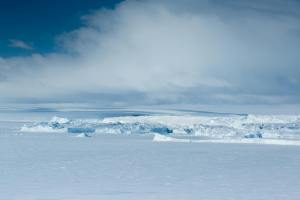
Watch how AI and humans are uncovering the secrets of Antarctica.

Watch the vide: “World’s largest seed bank marks 25 years safeguarding wild seeds”, by Reuters.


23.10.2025
Deconstructing prejudices is the goal of the Canadian documentary series “Face cachée”. In each of the 13 episodes, Karina Marceau brilliantly shows the viewer an uncharted and surprising side of a country.

Also:

What does UNESCO do? Watch the video “How UNESCO contributes to society by supporting Earth Sciences”, by UNESCO.

Reuters coverage of the Middle East: video and discussion at the Reuters NEXT Gulf summit [from 5:25:37 to 5:59:48].


22.10.2025
In 1964, UNESCO launched a very ambitious project: to write the history of Africa by African historians and experts. Thirty-five years later, eight volumes were published in 12 languages. Recently, three new volumes were added. Read more about the General History of Africa here.


21.10.2025
The winners of the Wildlife Photographer of the Year 2025 have been announced and the exhibition with the 100 best photos submitted to competition is already open. See the best ones here. You can also see here the best photos of the World Nature Photography Awards, which were announced in February. They are currently accepting entries for the 2026 competition (until October 30).

Also:

See the “Sumo wrestling at the Royal Albert Hall – picture essay”, by Tom Jenkins for The Guardian.


20.10.2025
Today is World Statistics Day. Demographics, clinical trials, political pools, financial reports, strategic planning… Statistics are everywhere and are essential for making decisions. To commemorate it, a 24-hour webinar will be live today. A continuous discussion about quality and access to everyone will travel around the world.


WEEK 42 | from 13 to 19 October


19.10.2025
Artists are fighting back AI! Watch how a photographer is beating it in its own game (with cats).


18.10.2025
Children in Bangladesh had a problem: how to go to school when facing major floods? The architect Mohammed Rezwan had the idea of transforming boats into schools that go and pick up students. It worked so well that his project won a UNESCO Confucius Prize for Literacy and used the same model for libraries, and clinics. Read more about it and watch the report from Reuters.

Also:

Check the organization helping Indigenous Peoples legally fighting for their rights: “Tenure Facility works alongside Indigenous Peoples and local communities to advance their community land rights while sharing the knowledge, innovations and tools that emerge.”

Get to know a new architectural trend: “But rather than simply demolish and rebuild, a visionary coalition of architects, engineers, building contractors, and developers chose a radical alternative for the building: deciding instead to upcycle and retrofit the iconic skyscraper.”


17.10.2025
Poverty is not just about lack of money. It is related to “dangerous work conditions, unsafe housing, lack of nutritious food, unequal access to justice, lack of political power, limited access to health care”. Read more about it here and attend the main event of the International Day for the Eradication of Poverty.

Also:

Check these activity books for children: learning and having fun.

Read the statement: “UNGA 2025 – Global cooperation in a fragmented world: proposals for action”, by The Elders – “… the Elders set out a series of recommendations to make global institutions more effective and representative, focusing on global security, public goods, solidarity, respect for international law and greater inclusion of women, youth and marginalised groups”.


16.10.2025
Food is a world. From farming to haute cuisine, there is knowledge, technology, innovation, passion, and dedication. Celebrate today the World Food Day by getting to know successful stories, attending one or more events taking place all over the world, or taking a look at the brand-new Food and Agriculture Museum and Network (which is opening today to commemorate FAO’s 80 years).

Also:

Watch the video: “World Food Day 2025”, by Food and Agriculture Organization of the United Nations.

The Astrid Lindgren Memorial Award “is given annually to a person or organisation for their outstanding contribution to children’s and young adult literature”. Check the nominated candidates for 2026.


15.10.2025
W. Eugene Smith was the photographer who initiated what is now known as photo essay. His best photo stories include “The Pacific War: 1942-1945” and “Country Doctor”. After passing away on October 15, 1978, W. Eugene Smith Fund was founded to carry on his legacy.


14.10.2025
How to monitor if the Paris Agreement is being achieved? Through the Global Stocktake. On its website, everyone can check the documentation that is being submitted and read the reports that are being published. Things are not going that great…


13.10.2025
This year, the theme for the International Day for Disaster Risk Reduction is “Fund resilience, not disasters”. It is a fact that disasters cost more to deal with than to prevent and prevention is increasingly more important due to climate change. Thus, risk reduction is an investment, not an expense.


WEEK 41 | from 6 to 12 October


12.10.2025
The World Health Organization (WHO) provides a service based on Geographic Information Systems (GIS) for countries to make decisions that improve health services by reaching their population more efficiently. Check here some of the successful stories.


11.10.2025
UNESCO has announced 26 new Biosphere Reserves. These Reserves are chosen due to the way nature and humans live in harmony. They are spaces of learning and examples on how to preserve the planet. Learn more about them here.


10.10.2025
Catarina de Albuquerque was a fierce and tireless advocate for water as a human right. The first UN Special Rapporteur on the human right to safe drinking water and sanitation, she was currently the CEO of the Sanitation and Water for All (SWA). She passed away last Wednesday, but her legacy will remain.


09.10.2025
Post Offices are both local (because it is rooted in the community in which it is located) and global (because it connects the local community with the world). Even in a world with a strong digital component, post offices are still relevant for the services they provide besides sending letters. Therefore, Happy World Post Day! To celebrate it, read the letters who won the International Letter-Writing Competition, whose theme this year was “Imagine you are the ocean”.


08.10.2025
The finalists of the Earthshot Prize 2025 have been announced. Founded in 2020, the Earthshot Prize aims to finance every year the best initiatives that effectively help tackle climate change and environment issues. It’s truly remarkable how many people are working to make the planet a better place for all of us to live in.


07.10.2025
Desmond Tutu was born on 7th October 1931 in a country where apartheid was implemented when he was a teenager. He did not accept it and fought it non-violently, but firmly. When apartheid was over in South Africa, and after receiving the Nobel Peace Prize, he kept going, advocating peace all over the world.


06.10.2025
Today is World Habitat Day. Besides sessions about the 2025 Theme: Urban crisis response, the winners of the UN-Habitat Scroll of Honour Award will also be known. It awards the best initiatives around the world that improve in some way human settlements.


WEEK 40 | from 29 September to 5 October


05.10.2025
Gone are the days when an apprentice would have to find a master to be trained in a certain profession. Nowadays there are teachers providing essential education for children to thrive in life. In such a complex world, collaboration between professionals is essential, not only within the national system, but also digitally with the entire world. This is precisely the theme of this years’ World Teachers’ Day. Check the events taking place around the world and participate.


04.10.2025
Ah, Space. The final frontier. What if it was possible to live there? That is the theme of this year’s World Space Week, which includes events around the world taking place from 4th to 10th October. Check what experts have to say and get to know how advanced technology really is.


03.10.2025
Dr. Jane Goodall was supposed to speak at an event in Los Angeles, USA, today. Unfortunately, she died of natural causes on 1st October. She was 91 years old. She started studying chimpanzees in 1960 and for the next 65 years she fought for protecting them. She was a world reference and her legacy will live on.


02.10.2025
Mahatma Gandhi was born on 2nd October 1869. He was the leader of the successful fight for India’s independence using non-violent means. As a way of honouring him, and as a way to promote his way of fighting, the General Assembly of the United Nations established 2nd October, the day of his birth, as the International Day of Non-Violence. Watch the commemorative event, which will be held in New York, USA, at 15:00.


01.10.2025
Happy International Coffee Day for all coffee lovers! The International Coffee Organization decided that the theme for this year is “collaboration”. There will be events around the word and a chance for everyone to share their love with the drink through posters on social media. Be involved!


30.09.2025
The 80th session of the United Nations General Assembly ended yesterday. Besides numerous meetings and events, every country had the opportunity to make a speech to the world. And there were many translators and interpreters making communication possible between people speaking different languages. Their work is paramount for diplomacy. Happy International Translation Day!


29.09.2025
CERN was officially born on 29th September 1954. In collaboration with many countries, it aims to make discoveries about the universe. Besides many great achievements, CERN was crucial for the research of François Englert and Peter W. Higgs that led to the discovery of the Higgs boson, which was awarded the Nobel Prize.


WEEK 39 | from 23 to 28 September


28.09.2025
Access to reliable information can be a matter of life and death, especially regarding environmental issues. For this reason, the International Day for Universal Access to Information (on 28th September) this year is focused on “ensuring access to environmental information in the digital age”, so people can have a say in their future.


27.09.2025
Today is World Tourism Day! Travelling the world to get to know other countries is great, but mass tourism is destroying places and communities. Therefore, this year’s theme is “Tourism and Sustainable Transformation”. Check the events and be part of the change!


26.09.2025
Interpol has launched the Operation Identify Me aiming to ask the public to send any information that may help identify murder women, whose identification has eluded police officers for decades. From the 47 cases presented to the public, 3 have already been solved.


25.09.2025
How do you balance maritime economic activities and the protection of the ocean? That’s the theme of this year’s World Maritime Day (25th September).


24.09.2025
Last Monday (22nd September), United Nations marked the 80 years of its establishment, followed by a high-level meeting to mark the 30 years of the Beijing Declaration and Platform for Action, aiming to advance women’s rights (read here the document).


23.09.2025
23rd September marks the International Day of Sign Languages. While learning whale language is fascinating, allowing deaf people to communicate between each other and with people who can hear is a crucial step to integrate deaf people in society. And it’s easy: it’s like learning a foreign language.


 

Ambassadors vs Lobbyists

The name says it all: lobbyists are people who linger at lobbies of law-making institutions waiting to meet lawmakers to pitch them something (check “The Origins of ‘Lobbyist’” on the link below). This practice began, on a regular basis, in the 19th century and it has been evolving ever since. Now, it is a recognized profession. The European Union has even created a way to officially interact with them, in the name of transparency. The idea is to give an opportunity for everyone to be heard. This means that environmental conservationists have the same opportunity as oil companies to influence lawmakers, for example. Except… oil companies have way more money and the possibility to provide more lucrative advantages. Is it equal? No, definitely not. Besides, in lobbying, the line between presenting arguments truthfully and presenting them using manipulative tactics is very thin. And manipulation usually wins.

Ambassador is a very old word, with an interesting evolution. The English word comes from the French word ambassadeur, which comes from the Italian word ambasciatore, which comes from the Latin word ambactus, meaning “servant” (at that time, servants were actually slaves). The first time the term was used was in the 14th century, when Europe was immersed in turmoil. Alliances were made and broken often, thus, kings needed to know what was going on in other countries. So, they would send “servants” to be their representatives. They had a limited scope to negotiate in the name of their king, being in constant contact to provide information and receive instructions. These ambassadors were sent in missions to different countries and could be called back or redirected to another country at any moment.

In reality, they were spies. As foreigners, they didn’t belong to any organization, but, as representatives of kings, they could access everywhere and talk to everyone. The information gathered could serve as leverage (or blackmail) in official negotiations. The ambassadors’ role was not to pitch anything, but to find ways to make their kings’ will prevail. It could be a kind of manipulation too, like lobbyists, although with a different focus: instead of defending a cause or the interests of a specific company or a specific industry, ambassadors defended a political view and the (economic) interests of a country.

Gradually, permanent embassies were built and steady diplomatic relationships between countries were established. The goal was still the same: defend the interests of their country and getting to know what was going on in that country (especially backstage). Of course, those embassies were also used by the secret services… unofficially, in most cases. Breaking diplomatic relationships is rare and it is usually mainly symbolic because it is important to stay present to achieve the goals mentioned. Over time, embassies’ duties were expanded and they became responsible to protect national citizens visiting or living in that foreign country.

Nowadays, ambassadors are definitely not servants (much less slaves). They are respected diplomats. Diplomat comes from the French word diplomatique, which comes from the Latin word diplomaticus, meaning “regarding official documents”. In other words, they are official agents. The term has expanded to other (diplomatic) domains, such as the United Nations. The UN has “Messengers of Peace”, “Goodwill Ambassadors”, and “Advocates”, famous people who champion a certain area. For example, Leonardo DiCaprio is the Messenger of Peace for Climate Change, Cate Blanchett is a Goodwill Ambassador for the UN Refugee Agency, and Petra Nemcova is the UNDRR World Tsunami Awareness Advocate. Recently, Professor Brian Cox was appointed UN Champion of Space. Their role is to raise awareness and positively influence public opinion, taking advantage of their public image. Other organizations, such as non-governmental organizations, are following the example and appointing their own ambassadors. Some organizations have ambassadors, to raise awareness, and lobbyists, to press lawmakers.

Although these concepts are very well defined and distinct from one another, in practice they can be mixed up. Ambassadors may act as lobbyists and lobbyists can become ambassadors. Nevertheless, in both cases, corruption has a very fertile ground here to flourish. When lobbyists or ambassadors are championing a cause, the corruption factor may be minimized (but not entirely eliminated, unfortunately). Temptations are abundant and, in some areas, a lot of money is circulating. However, when they are championing a company or an industry, anything goes as long as there is a win. Is it fair? No, of course. Partly, this is the reason why climate change is being ignored, for example.

 
Sources:


Many of us want to be more environmentally and socially responsible, but we don’t know how. Well, you can start by following “The lazy person’s guide to saving the world”.

As Mahatma Gandhi said: “We but mirror the world. (…) If we could change ourselves, the tendencies in the world would also change.”

 
Check the website daily to read the highlight of the day.


A book about consequences: “The Secret History”, by Donna Tartt

“The Secret Story” is a story about a murder. We learn that right in the first sentence of the book, so no surprises there. What we are going to discover throughout the book is what led to that murder and the consequences it had in the lives of those involved. Strongly based on Greek tragedies, the story is a tragedy of modern times.
It starts very innocently, when a young man is looking for a way out of what he considers his wretched life. By chance, as it was fate, he finds the brochure of a small and unknown university on the other side of the country. After earning a grant, he moves with the intention to never return again. Once there, he tries to enrol in a Greek class, to continue his previous studies. The problem is that the only Greek professor in the university takes very few students per year and registrations are already closed. Later though, almost as by change (or fate), he has an opportunity to be accepted, and he succeeds.

The class group is very restricted and soon they become very close and isolated from everyone else at the university. Yet, two elements of the group are going to be excluded from certain activities developed by the others. Such activities have dreadful consequences and those consequences lead to other consequences that lead to the decision of murdering one of them. The murder is planned for a long time and executed in a few seconds. After it is done, they live in peace with what they did for a while. When their Greek professor and some other students notice the murdered person is missing, the killers are asked if they know what happened to the missing person. Police are called and it becomes harder and harder for the murderers to deal with the secret they carry. In the end, each one follows their own path, quite different from the one they were supposed to follow. None of them really recovers from that murder.


QUIZ


1. Where did Richard spend his first Christmas holidays in the university?

    A. He accepted the invitation of one of his colleagues to spend it with their family.
    B. He went back home, spending it with his parents, because he didn’t have any other choice.
    C. He stayed in a room with no heating and with a hole in the roof, almost dying with a pneumonia.

2. What other options did they consider before deciding to kill Bunny?

    A. None.
    B. They thought of going to the police and confessing, but they didn’t have the courage.
    C. They thought of telling everything to Bunny’s parents to help them convince him to change university.

3. What happened to Henry?

    A. He moved to Argentina.
    B. He killed himself.
    C. He was arrested and accused of killing Bunny.

4. The activities developed by some elements of the group were encouraged by their Greek professor. How did he react when he learned the result of those experiences?

    A. He was happy because they yielded the results expected.
    B. He helped them to cover up what happened.
    C. He left the university and never contacted them again.

5. When did they realized the consequences of murdering Bunny?

    A. When the police started to investigate.
    B. When they were at his funeral.
    C. When the body was discovered.

Check the solutions here.


Tsunamis are rare, but they are highly destructive. It is cheaper to prepare for it than to deal with the devastation and loss of human lives. That’s why the theme of 2025’s World Tsunami Awareness Day is Be Tsunami Ready: Invest in Tsunami Preparedness.

Check the website daily to read the highlight of the day.


Words in Ideas Book 1: “Articles 2024-2025”

Words in Ideas website was launched on March 3rd, 2024 with a single purpose: to understand the world through the meaning of words. Human societies are based on language and language is based on the cultural background and the geographical region where it was born and/or evolved. The same word can have different meaning due to the different evolutionary path it has taken in a different geographical region. For example, English was born in England, but it has taken different evolutionary paths in Australia, in the USA, and in all other countries which were under the United Kingdom administration at some point in history. Likewise, Latin evolved differently in Italy, France, Spain, Portugal, and Romania, but it also influenced other languages, like English.

Words can clarify and they can deceit. Going back to the source and analysing its evolution was the challenge Ana Catarina Palma Neves, the author of this website, proposed herself. The articles were based on three main components: a book chosen according to a keyword, the analysis of a specific word, and the cultural background of a concept, every month. The first two years (2024 and 2025) had different approaches and 2026 has currently taken another avenue.

To celebrate the third year of existence, a compilation of articles related to the word meaning and the cultural background components was made and published in the book “Words in Ideas: Articles 2024-2025”. Online, some articles are available to the general public and some are only available to subscribers. In the e-book, you can read them in a sequence (or randomly) without restrictions.

 
Where is the e-book available?

 
Read the book, check the website.
 

Recognition vs Anonymity

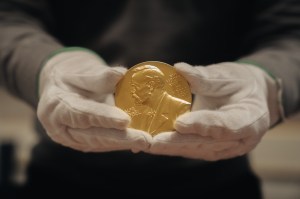
© Nobel Prize Outreach. Photo: Clément Morin
In the film “The Wife”, Glenn Close plays the role of Joan, the wife of Joe (played by Jonathan Pryce). Although the action is cantered on the fact that Joe was awarded the Nobel Prize in Literature, the focus is on Joan. Once in Stockholm to receive the prize, Joe is drunken with all the attention he is receiving and constantly belittles his wife. She clearly does not like it, but endures in silence. Until she is approached by a journalist who wants to know if the rumours that her husband’s books were in fact written by her are true. She denies it, but everything that she has hidden deep down inside herself starts to surface. During a particularly heated fight, Joan throws in Joe’s face that she was the one who had won the Nobel Prize. Then, in a flashback, we learn that, after they got married, Joan would spend more and more time locked in the studio writing the books, strongly encouraged by Joe and, as a result, neglecting their son.

It is a great film, with a lot more to be appreciated, but the focus here is the undeserved fame obtained by exploring the work of someone who remains anonymous. It did not start like that. Joan wanted to be a writer, but soon she understood that she would never be published because she was a woman. So, writing in the name of her husband sounded a good deal: she would write and fulfil her dream of being published, and he would become a world acclaimed author as he aspired. The film is fictional, but could easily be a true story. Joan’s dilemma happens more than people think, even today. For example, the publisher of J.K. Rowling decided to ditch “Joanne” in the author’s name for fear that boys would not want to read a book written by a woman. Many years later, Rowling chose a male pseudonym (Robert Galbraith) to anonymously send the first manuscript of a crime series (the Cormoran Strike series).

The Nobel Prize in Literature is the most prestigious award in this domain. It is part of a set of awards that also includes Physics, Chemistry, Physiology or Medicine, and Peace. In 1968, a new prize was added: the Sveriges Riksbank Prize in Economic Sciences in Memory of Alfred Nobel. Those original five awards were created by Alfred Nobel, a Swedish chemist, in a will where he established exactly how the prizes should be awarded and which were the criteria. When he died, in 1896, scientific developments and inventions were heavily dependent on individual reputation. Researches and discoveries were made with a lot of dedication and it could take many years before there could be a breakthrough. Most of the time, scientists worked alone in their lab, without any assistant. Those who were recognised could more easily obtain funding and carry on with their experiments. Therefore, public recognition and a good reputation were paramount.

Science today moves quite differently. It is not about a sole scientist pursuing difficult advances after several failed experiments anymore. Now, there are teams of scientists working together and basing their work on scientific articles written by other scientists and on knowledge being developed in other departments and institutions. Thus, although scientific Nobel Prizes are awarded to individuals, each one is in fact supported by many other anonymous individuals working with him/her that make him/her shine: colleagues, assistants, students, admin people. In the case of Literature, editors, translators, advertisers, graphic designers, typographers, logistics personnel, book shoppers, and librarians turn the writer’s manuscript into a book distributed and made available to readers all over the world. For Peace laureates, there are all those who were directly or indirectly helped by them.

Anonymity can be an advantage: one is free to explore and do whatever they want. Recognition implies playing by the rules, working at the right place and on the right issues, duly accepted by the “committees” in power. For example, Galileo Galilei was the first to state that the Earth (and not the Sun) revolved around the Sun (and not around the Earth). This statement got him in a lot of trouble with the Inquisition and he was forced to retract. If the Nobel Prize had existed back then, he would probably never have received it. Einstein won the Nobel Prize, but not for his famous theory of relativity, which the Nobel Prize committee has always rejected (read the article “Nobel Prize: 7 facts we bet you didn’t know” on the link below). On the contrary, there were laureates who later proved themselves unworthy of the prize (read the article “Here are the most controversial Nobel Prize-winners ever” on the link below). And, of course, the worthiest person to win the Peace Prize was not given such an honour, despite being repeatedly nominated: Mahatma Gandhi.

The Nobel Prize follows the “rules” and prejudices of European culture, for good and for bad. Alfred Nobel was Swedish and the prizes are awarded by Swedish committees, except for the Peace Prize, which is awarded by a Norwegian committee. One of the “rules” of European culture is to respect the power in place. At the beginning of the 20th century, the power was in Europe, especially Central Europe. After World War II, the power was “transferred” to the USA. Therefore, it is not surprising that most prizes were awarded in the USA, the United Kingdom, Germany, France, and Sweden, according to the World Population Review. Mahatma Gandhi was the one who led India’s fight for independence from the United Kingdom. Therefore, it would be highly improbable for him to win the prize… On the other hand, when Le Duc Tho, the Vietnamese diplomat who made the 1973 ceasefire deal with Henry Kissinger, was awarded with the Peace Prize, he refused. First, because it had been a ceasefire and not a peace deal (the war continued until 1975, proving him right). Second, the USA was the aggressor, therefore, not that peaceful.

Another feature of European culture is to be male-centred. According to the official website of The Nobel Prize, from the 1026 laureates, only 68 are women, which corresponds to 7%. Interestingly, 56% of those 68 women were awarded the Peace and the Literature prizes. Science decided to investigate the matter and wrote the article “One reason men often sweep the Nobels: few women nominees” (read it on the link below). Although these days there are many women who are scientists, published authors, and hold important positions in institutions related to peace, there are still very few nominations of women for the Nobel Prize. The rules were changed to address this problem, and women nominations doubled. Not the number of women laureates, though. Luckily, women are being recognized through other awards.

Unfortunately, women are used to remaining anonymous, whether they are willing or not. Vivian Maier chose to remain anonymous. Working as a nanny, she travelled the world, always with her camera hanging around her neck wherever she went. Despite never having had any formal training, she had learned the basics with a professional photographer. Then, throughout her life, she developed her style totally by herself. When John Maloof found her photos, she had just passed away. Since then, he has been tireless in finding all her photos, which are scattered in different places. Today, she is considered one of the best street pornographers of all time.

How many individuals remain anonymous and their amazing work never recognised? We will never know.

 
Sources:


In 1964, UNESCO launched a very ambitious project: to write the history of Africa by African historians and experts. Thirty-five years later, eight volumes were published in 12 languages. Recently, three new volumes were added. Read more about the General History of Africa here.

 
Check the website daily to read the highlight of the day.


Best of “Foreign Lands”

Dear Readers,

After renewing its website, “Words in Ideas” is preparing its 3rd year of fresh new articles, starting in October. While you wait, you can read (or re-read) the best articles under the category “Foreign Lands”. These articles aim to compare languages and cultures.


During the first year, articles described some traditional food around the world. Here are the 5 best:


In the 2nd year, we followed the discoveries of a group of language learners. Here are the 5 best:


This 3rd year, “Words in Ideas” will discuss some cultural crossroads.

 
If you wish to comment or send suggestions, please fill in the form at the end of each website page.

Thank you!
Words in Ideas
https://wordsinideas.com/
 

Best of “Word Chronicles”

Dear Readers,

After renewing its website, “Words in Ideas” is preparing its 3rd year of fresh new articles, starting in October. While you wait, you can read (or re-read) the best articles under the category “Word Chronicles”. These articles aim to clarify words’ meaning.


During the first year, articles were focused on words’ origin and meaning. Here are the 5 best:


In the 2nd year, keywords are analysed under two different perspectives. Here are the 5 best:


This 3rd year, “Words in Ideas” will confront two opposite concepts.

 
If you wish to comment or send suggestions, please fill in the form at the end of each website page.

Thank you!
Words in Ideas
https://wordsinideas.com/
 

Best of “The Intrepid Book Society”

Dear Readers,

After renewing its website, “Words in Ideas” is preparing its 3rd year of fresh new articles, starting in October. While you wait, you can read (or re-read) the best articles under the category “The Intrepid Book Society”. This “Society” is a fictional book club, analysing a book per month according to a keyword or a key place.


During the first year, articles were written as reviews. Here are the 5 best:


In the 2nd year, fictional members discussed the plots between themselves. Here are the 5 best:


This 3rd year, “Words in Ideas” will test your knowledge (or, hopefully, making you curious in reading) the book of the month.

 
If you wish to comment or send suggestions, please fill in the form at the end of each website page.

Thank you!
Words in Ideas
https://wordsinideas.com/
 

Keyword: MAIL | Post vs Mail vs Email

Email (or better yet, electronic mail) has been with us for several decades now and one can say that today it is essential for both professional and personal purposes. It is useful to digitally send and receive messages and files to/from other people, and much quicker too. The “e”, from “electronic”, refers to the fact that these messages are sent using electronic means. The term “mail” was not chosen by chance, although it may have been an unconscious act. Although with different meanings and different language origins, “mail” in this context came from the French word malle, meaning “bag”. As the letters to be delivered were carried inside bags, soon the term was expanded to the letters themselves.

“Post” has basically the same meaning as “mail”, but “mail” is used in American English while “post” is chiefly used in British English. This term also comes from French: poste, which in this context means “station for post horses”. If nowadays cars have to go to petrol stations to refuel, in the past horses would have to rest and get fed at regular intervals. These “posts” were located in strategic positions to make sure the horses would have places to “refuel” or to be replaced. As the horse riders would carry the “letter bags”, these posts became known as “post offices”.

Therefore, in the old days, the letters were transported inside bags on horses. The person who rode the horse with the bags full of letters, or just messages written on a piece of paper (especially in war time, which was rather often), was called a “courier”. This word came from an older version of the French word courir, which means “to run”. Obviously, the messages had to reach their destination as fast as possible, thus, the horse riders would have to “run” from “post” to “post”. Nowadays “courier” is connected to diplomacy, drug traffic or contraband, espionage, and tourism.

The couriers would ride the horses at all speed to make the delivery as soon as possible. In Europe, at least, they used to carry a horn to warn the post offices that mail was arriving. That is why many postal services in different countries have horns in their logos. Sometimes, the couriers would deliver the messages or letter bag to another courier who was ready to go and just waiting for the first one to arrive. The horse would stop just long enough for the exchange to proceed and the second rider would depart at full speed as soon as he had the message or the letter bag with him. This has inspired the relay races in sport. The English idiom “don’t shoot the messenger” has its roots in couriers. In truth, it is not clear if messengers would be killed when delivering bad news, but the receivers would surely be infuriated.

However, the postal system as we know it was not invented in Europe, but in Persia. Royal roads were built especially for couriers, covering the entire empire. Tests were made to know the distance a horse could run before it collapsed and then post offices were built accordingly. At the time, only official mail was delivered, thus, there was no personal correspondence.

At the beginning, messages were pieces of papers that were relayed from hand to hand. Later, the postal system expanded to include personal correspondence. Messengers on horseback were replaced by mail coaches and postal service was paid by the receivers. As most of them weren’t willing to pay, a new solution had to be found. Hence, the stamps, which were pre-paid by the senders and allowed for the letters to be delivered in mailboxes. In emails, mailboxes are called inboxes (the incoming or arriving email). The courier, in the meantime, turned into a postman or mailman or mail carrier.

The pieces of paper became “letters”, a name that came from the Latin litterera. It meant letters from the alphabet, the way someone would write, a message sent to someone, or literature. Nowadays, the letters have turned into emails as most people communicate digitally. This has led Denmark’s postal service to decide to stop delivering letters at all, with consequences. However, parcels may be booming. The orders people make online on shopping websites and apps are sent via post service, thus giving mail carriers extra hours at certain times of the year, like Christmas.

Times are changing and mail as we know it may change dramatically. Yet, postal service has undergone many changes over thousands of years, adapting to the needs of each epoch. In a globalized world, the exchange of correspondence between people in different parts of the world is more important than ever, and also faster than ever thanks to technology. No one is expecting to send a courier on horseback to deliver a message between France and Australia… but thanks to technology a message can travel that distance in seconds (by its own!). On the other hand, some packages cannot be sent by email. Of course, today, instead of horses, we have vans, trains, boats, and aeroplanes.


Jazz, rock and other tunes

Any given music fan who studies languages may become curious about the origins of the names of the different types of music, like “jazz” and “rock”. Strange and intriguing names. Music is music regardless of its category, but most people need to organize everything in clear labels. After all, names are important to identify the music and, thus, the people who enjoy that specific genre. Indeed, music is much more than tunes, it can be a lifestyle. It is hard to find individuals who don’t like music and/or who don’t identify themselves with a specific genre. “Tell me what type of music you like to hear and I’ll tell you who you are…”


CLASSICAL MUSIC

Classical music doesn’t refer to “old” music, not least because there are currently good composers who still create classical music. Strictly speaking, classical music refers to the period between the second half of the 18th century and the beginning of the 19th century. Until then, what is now considered classical music was in fact Western religious music. In other words, composers would create music to be played in churches and to praise the Lord. It’s no coincidence that composers like Bach are known for their religious pieces.

However, the “classic era” witnessed a change of the situation and composers like Mozart and Beethoven, with their major breakthroughs, paved the way for possibilities to be expanded. They have influenced musicians to this day. The following era was dominated by the introduction of the piano, which gave rise to big stars like Chopin. We could say that, at the end of the day, classical music is the Western evolution of human melodic composition.

FOLK MUSIC

Folk music is a very broad term that encompasses traditional music from all over the world. It is also known as “world music”, meaning music which is not English-related. In truth, each country has its own musical style with different categories. However, as they don’t usually reach international status, they are considered “folk”. This word comes from Old English and Old German, meaning “people”, as in “common people”. Therefore, folk music means that it is the music of common people (as opposed to classical music, for example).

BLUES

The blues is a musical folk genre originally sung by the Southern African-American, mostly slave descendants. It emerged in the second half of the 19th century to sing away the oppression and misery felt by them. The name comes from the expression blue devils, which refers to the feeling of melancholy and depression.

JAZZ

Jazz is a “child” of the blues, but with upbeat melodies. The true origin of the word is not clear, but it is believed it comes from unwritten (and unspeakable) slang. Besides the musical genre, “jazz” nowadays can mean enliven and “similar but unspecified things”. The music was designated as jazz unintentionally, but the name stuck.

COUNTRY MUSIC

If blues and jazz are considered “Black” music, country music can be considered “White” music, namely the music of white people living in rural areas. This musical folk genre was born around 1920 in the Southern USA and it sang the life of countryside people, especially using the harmonica and the banjo. Nashville is the capital of the State of Tennessee (USA) and it is also considered the capital of country music.

POP MUSIC

Pop is the abbreviation of “popular”, which is basically whatever is the most listened to at a given time. These types of songs tend to mix different genres and use key words, which is different from generation to generation. The melodies are simple enough to appeal to a large number of people and are created by using the technology available. It is believed that popular music was born with music hall shows, which were live musical shows performed in theatres during the Victoria time (in UK), with easy-to-follow songs. However, it was in the 1950s and in the USA that the term was broadly applied.

RHYTHM AND BLUES (R&B)

This name came directly from its roots (the blues) and the beat with which they were now played. In a time when Black and White people were segregated in the USA, R&B was the popular music of Black people. It was mostly played in cities and aimed to help escape the trouble times Black people were living.

A type of R&B for many, soul music aimed to strengthen the pride in belonging to that culture and it was based on blues and gospel. Gospel is a kind of religious music, which was adapted by Black people at the beginning of the 20th century to reflect their cultural heritage.

ROCK AND ROLL

Rock and roll (or rock ‘n’ roll) is a type of rock music, which, in turn, is a type of popular music. Probably, the term rock ‘n’ roll came first and, then, when it expanded, got its name abbreviated. Emerging in the 1950s in the USA, it was initially a mix of blues, jazz, and R&B, and was played by Black musicians. It is believed that the name came from an expression seamen used in the 17th century to describe the movement of boats. Just as jazz, this expression could have another meaning and, just as jazz, the name was unintentionally designated, but stuck.

Rock ‘n’ roll boomed when a white young man with a black voice, who played the guitar and had very characteristic dancing moves, came to the scene. His name was Elvis Presley and he dramatically changed the course of music in the USA. In the meantime, a group of young men from Liverpool, UK, did the same on the other side of the pond. Their name was The Beatles (which actually is the name of an insect). Rock was played in cities and soon became a way for young people to express themselves and rebel against what was established in society.

HEAVY METAL

Originally a rock sub genre, heavy metal became a genre of its own in the 1970s. It is not clear how the name came to be. The electronic guitar was a feature of rock music, but in heavy metal that sound was pushed to another level. Maybe it was due to this sound, maybe because the concept of “heavy metals” was in the air, no one knows. The fact is that this type of music characterized a generation and it was connected to a certain type of looks (men with long hair, black weird outfits and mean face). Led Zeppelin, Black Sabbath, Kiss, AC/DC, Aerosmith, and Alice Cooper are some of the most famous groups of this genre.

PUNK MUSIC

The first time the word “punk” was written (as “puncke”) was in Shakespeare plays. At that time, it meant “female prostitute”. Centuries later, the word evolved to mean a kind of male prostitute. Some centuries later still, the term expanded and became a general insult for all kinds of minor criminals or similar. By the 1970s, it was used to designate a rock sub genre that was emerging and taking a path of its own. Punk music was characterized by its strong social criticism, reflecting the disillusion and lack of perspectives of the younger generation at the time.

DISCO MUSIC

Although disco music was around since the 1960s, it was only in the late 1970s that it boomed, mostly due to the famous film “Saturday Night Fever”, featuring John Travolta. It was a genre connected to nightclubs and its name came from the French word discotheque, the place where people went to dance at night. “Discos” were what DJs played for people to dance. Later, disco music became linked to the LGBTQ+ rights’ movement.

HIP-HOP

The name of this music genre has many stories. The most told one is that of a man who enlisted in the army and his friend told him he was hip-hop-hip-hop, imitating the soldiers’ marching. True or not, hip-hop was not just a musical genre, but a cultural movement that started in the South Bronx, New York City, USA, in the 1980s, mixing cultural influences from the Black community, the Caribbean community and the Latin community. It includes rap, break dancing, and graffiti.

ELECTRONIC DANCE MUSIC

This type of music used synthesizers and was created to make people dance all night long. Although there had been some experiences since the 1970s, it was only in the 1980s that it officially emerged. It includes sub genres, like “house” and “techno”. It is also connected to “rave parties”, where people would party to the sound of electronic music sometimes for several days. Drugs were known to be used in those parties to keep up the pace.

CONCLUSION

As we can see, the 20th century was very prolific in terms of discovering new musical genres. This is connected to the profound social changes that were undergoing at that time. People left the countryside to live in the cities, creating a whole new cultural scene. The segregation between Blacks and Whites in the USA was reflected in different musical genres that evolved in parallel. Underground movements gave rise to new styles. Old tunes were reinvented to match the new social realities and make use of new instruments. Will the 21st century keep up the pace, or all the genres are already discovered?


** YOUR WORDS AND IDEAS **

By Isabella Muir | On 12 June 2025 at 07:52
A fascinating summary of music genres, which leads me to think that there really is something out there for everyone! I can’t imagine a world without music and to paraphrase Shakespeare…’if music is the stuff of life, then thank goodness for it!’

By Words in Ideas | On 12 June 2025 at 23:11
Indeed!

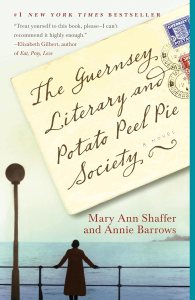
Keyword: MAIL | “The Guernsey Literary and Potato Peel Pie Society” by Mary Ann Shaffer and Annie Barrows

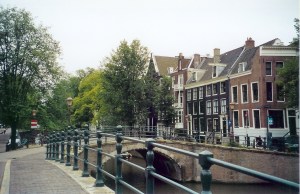
Ms Clara Smartest began the session summarizing the story of the book: “The author tells the story through the letters that are being exchanged between the main character, Juliet Ashton, and the other characters. Juliet is a writer and, naturally, she loves books. She is on a book tour when she receives a letter from a man living in one of the islands of the English Channel. He is contacting her about a book that used to belong to her. Conversation gets going and Juliet learns about an intriguing book club created unexpectedly during the Second World War. The letters are exchanged shortly after the war has ended and emotions are still running high.”
“It is easy for us nowadays to look back at that time and criticize what people did, during and after the war. I mean, common people. They were living in uncertain times and in fear. No one had any idea when the war was going to be over and they wanted to survive. Some tried to have fun and live to the fullest, without being concerned about the consequences. After all, they could be dead the next day. Others did what they had to do to feed themselves or their loved ones, especially feeding children”, said Ms Johanna Practicewell.

“Very true. But there were also very bizarre episodes as well. I think the book aims to focus on the funny ones, instead on the horror people were living in. In this case, the author focused on how creative people had to be just to be able to live their lives. Hence, the way the book club was created and, especially, its name”, said Miss Amelia Matterfis.

“And how they tried to encourage people by making fun of the war, kind of, like Juliet was doing with her books”, added Miss Martha Lovefeelings.

“The novel also shows how ‘fun’ was hand in hand with tragedy and loss. The story of the child is an example”, said Ms Johanna Practicewell. “That happened a lot. Sometimes the children were the result of love, but sometimes were the result of rape. In both cases, women were labelled as the enemy whores.”

“On the other hand, there were caring communities, whose members would protect the other members when something bad would happen to them. It is the case in this story”, said Ms Abigail Vooght. “Although, I think this is very rosy… Reality probably was crueller.”

“I had no idea that Guernsey had been occupied by the Nazis”, said Mr Matthew Barnepy. “Actually, I didn’t even know that island existed. And it is even more astonishing the fact that it is situated not far from the French coast, but it is in fact British. Occupying it should have made sense as it was a strategic location.”

“My surprise was the way the story was written: through letters. I didn’t even know that you could write a book like that, but then again, why not, right?”, said Mr Jeremy Toughready and laughed.

“It was a very popular genre in Jane Austen’s time. Actually, Jane Austen herself wrote a book using that technique, but she didn’t like it very much, so she dropped it”, informed Mr Mark Mindhearting.

“Wow. I had no idea”, said Mr Jeremy Toughready and many others agreed with him.

“Now, we can perhaps wonder if at that time the mail was that efficient. Naturally, it was more important than it is today. These days, we communicate digitally and the post offices deal more with packages than with letters. However, the war had destroyed most of what societies provided to the population. The mail never stopped being delivered (and a word of appreciation to all those who have succeeded in this great achievement), but may have not been so regular and not so fast”, added Mr Mark Mindhearting.

“I’ve watched the film”, said Sophia Vooght. “It was really good. In the film we can actually see a little clearer the brutality, but also how people would find ways to enjoy themselves, together, as a community. And to support one another, facing that horror. I can’t imagine what must have been like to see the Nazi army marching through the streets all of the sudden.”

“The love story is also interesting, isn’t it? I mean, they started writing to each other and then they fell in love… As a writer, Juliet was in her element, and Dawsey, the shy book worm, also found a way to express himself”, said Miss Martha Lovefeelings. “Plus, there’s the kid who found adoptive parents.”

“A nice story with a happy ending”, noted Leo Weave.

“But all traumatised, one way or the other”, added Ms Johanna Practicewell.

“War is always an awful thing. Even the positive, isn’t really, because it’s tainted by horror”, said Mr John Booklish, wrapping up.


** YOUR WORDS AND IDEAS **

By Isabella Muir | On 06 June 2025 at 07:59
Thanks so much for the excellent summary of the novel. I haven’t read the book, but I have seen the film several times. The story shines an important light on how dreadful it must have been for the people of Guernsey to suffer Nazi occupation for five long years. The story also highlights the threat of starvation that the people suffered, a threat that was only relieved when a Red Cross ship arrived with food supplies – but not until December 1944./p>

By Words in Ideas | On 06 June 2025 at 18:10
Thank you for pointing that out. Actually, that is related to the name of the book club. The film is really good and, although the book provides more details, it is very faithful to the book.


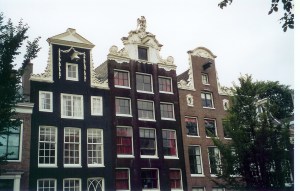
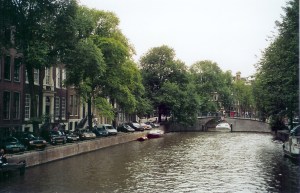
The Foreign Lands’ Explorers go to Amsterdam, Netherlands

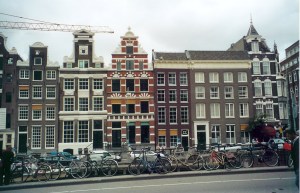
Amsterdam is known for its special cakes and colourful districts. Looking at its peaceful, village-like streets, it is easy to forget that this city was once a centre of world trade and an important place during the Second World War. The best approach to get to know Amsterdam is to keep all types of preconceptions out of one’s mind and pretend one has never heard anything about the city, which was what the members of The Foreign Land’s Explorers tried to do. It was an intense week, full of fun and cultural knowledge. They didn’t change the idea they had about the city, but they expanded it. Amsterdam proved to be much more than they thought it would be.

Subscribe to continue reading

Subscribe to get access to the rest of this post and other subscriber-only content.

The religion, la religion, die Religion, la religión

“So, ‘religion’ comes from the Latin (what a surprise!), meaning ‘scrupulous, conscience, honour and loyalty’. This means that it was a kind of moral conduct that people would follow by worshipping God”, said Jack. “During prehistoric times, there were many deities, God and Goddesses, each one representing a natural phenomenon, a quality, or an activity. For example, there was a God for thunder, a Goddess for beauty, a God for war, and a Goddess for hunting. Later, it emerged other religions that focused on only one God. Religions tend to personify the gods, representing them as if they were human beings, so people can identify with them and better understand the message being conveyed”.

“Whatever the religion you choose, you need to have faith, which basically is a belief in something for which there is no proof”, said Sophia. “Latin-related languages distinguish between ‘faith’ and ‘belief’, but German and Nordic languages don’t.”

“That’s interesting. Why is that?”, asked Elizabeth.

“I don’t know, but this reminds me of the war between the Roman Catholic Church and the Protestants. Protestant countries were the ones where there is no distinction. Maybe they are not very keen on believing in things without some kind of rationale”, said Sophie, shrugging her shoulders.

“Did you know that ‘Carnival’ was a big feast that Catholics would hold before the 40 days of penitence and fasting until Easter? They took the opportunity of that day to eat and drink as much as they could (especially meat) to endure the sacrifice that was coming”, said Jack.

“Fasting was only mandatory for those who couldn’t pay the fee to skip those duties…”, noted Elizabeth.

“Speaking of Christianity, when Jesus was alive, ‘bible’ designated a set of books that were bound together. I guess the other ‘bibles’ were lost or the term was glued to the importance of the book we now call the Bible”, said Michael. “It is interesting that the term has evolved to another meaning in slang language. When we want to say that one specific book is the foundation of a specific field of study, we call it the ‘bible’ of that field. For example, some say that the bible of economics is the famous book ‘The Wealth of Nations”, by Adam Smith”.

“Speaking of evolution of terms”, said Leo, smiling to Michael, “temple, as we all know, is the physical place where religious people worship God. Muslims worship Allah (that’s how they call God) in Mosques. Well, ‘mosque’ comes from the Arabic word masjid, which means ‘temple’. Minaret is the tall tower, which is part of the Mosque. The purpose of the tower is to call the congregation to pray. Catholic Churches have bells. The Muslim call for prayer is made by the Muezzin, who is the person who ‘sings’ at the top of the Minaret. They now have loudspeakers, so the Muezzin doesn’t need to go up there anymore. However, the Muezzin is not just anyone, he is chosen especially for that task due to its ‘singing’ qualities. Yet, he undergoes specific training after being chosen”.

“All Mosques are oriented towards Mecca because that’s where the Kaaba is located. Every Muslim is obliged to make a pilgrimage at least once in their lifetime to walk around the Kaaba. This pilgrimage is called Hajj. The Kaaba is a huge black cube with nothing inside. It is a symbol”, added Elizabeth.

“When Muslims and Catholics were engaged in war centuries ago, Muslims called ‘infidel’ to Catholics, and to all who didn’t share their faith. Catholics called ‘heretics’ to everyone who didn’t believe in their God“, added Jack.

“According to Statista, in 2022, Christians represented 31.6% of the world population and Muslims 25.8%. The third biggest religion is Hinduism, representing 15.1%. Hinduism is the oldest religion still in existence and it is practised mainly in India. At the beginning, there were no formal rituals or organization, just a set of written documents, now dated thousands of years”, said Sophia.

“A kind of ‘bible’, then”, commented Elizabeth.

“The religious teachings were called ‘doctrine’, especially those from the Catholic Church”, said Jack. “Nowadays, ‘doctrine’ can be used in other domains such as politics, the law, or military”.

“Anything to do with ‘doctor’?”, asked Elizabeth, laughing.

“Well, actually, yes. ‘Doctrines’ were taught by ‘doctors’”, replied Michael, looking at his computer. “This word comes from Latin and it then meant ‘teacher’. At the time, a ‘doctor’ was an eminent scholar specialized in a field of study. Nowadays, a doctor is someone who has a PhD, which, in a way, meets its original meaning.”

“Ok, this is interesting”, said Leo, looking at his computer. “The word ‘sin’ comes from Old English, which is similar to another word that comes from Old German. Probably, it is a similar word in German and in Nordic languages. However, the English language has a word that comes from Latin and it is similar to the word for ‘sin’ in Spanish, Italian, French, and Portuguese. You may have never heard of it, but you have surely heard the word ‘impeccable’, which means ‘flawless’. If ‘sin’ is something that goes against the laws of God, ‘impeccable’ is following the laws of God to the letter”.

“We could be here for a week talking about words related to religion and everyday words that come from a religious background. Unfortunately, it is time to go”, said Jack and everyone prepared to leave.


** YOUR WORDS AND IDEAS **

By Isabella Muir | On 26 May 2025 at 14:45
It’s fascinating to see the way so many of the topics you choose for your articles seem to mirror the topics of my studies. Just last week we were exploring the way that ‘religion’ is dealt with in historical research, and the difficulties with bias and subjectivity. Your article highlights the complexity of meaning – which is in itself full of subjectivity, as well as historical implications! What fun!

By Words in Ideas | On 27 May 2025 at 16:44
Yes, I think they are two fascinating and complementary perspectives: history and language! Combining the two gives new leads on what the future may be?


Keyword: RELIGION | God or no God, is that the question?

God is a supreme being that is above all other beings. Religion is a system that sets the rules for worshipping God. It is possible to believe in God and not follow a religion such as it is possible to follow a religion without really believing in God. Religions are social spaces that give people a place of belonging and an identity in society. Being part of such a community and following its rituals bring a sense of security and stability that is important for mental well-being.

Although nationality and religion are two separate concepts, religion is so deepened and entangled in a country’s identity that many people think religion is part of the national identity. However, even in religious countries, there are nationals who choose a different religion. This is the reason why Article 18 of the Universal Declaration of Human Rights states that people have the right of freedom of religion, including change of religion.

Before there were states with full sovereignty, people belonged to borderless communities, for example, tribes or clans. Some of these communities were bonded by blood, which was strong enough to keep the community together. Family is still very important nowadays and loyalty to the family is deemed paramount. Yet, people sometimes would change families due to marriage, due to orphanage (they would be adopted by a different family), or due to some other reason. Besides, different family members could have different ideas about the future of the community.

Religion was (and it is in some cases) the glue that would keep the community together, especially in the case of communities not bonded by blood. In a time when science was not very developed, religion gave the answers; when there were no therapists, religion provided mental support; when there was no humanitarian aid, religion helped people in need. In return, religion would demand loyalty and exclusivity, exercising its power by making people believe in dogmas, making threats and even terrorizing them. If someone would “sin”, God would punish him/her, religion would state. If someone would neglect the Church, God would destroy him/her crops. And if someone would change religion, he/she would be cursed forever.

Ritual ceremonies are designed to anchor believers to the Faith. Besides having a social component that helps people bond with each other, rituals are important to keep people calm and stable, encouraging them to face and overcome difficulties and challenges. For example, praying is a balsamic action to avoid despair, panic, and the feeling of powerlessness. There are also ceremonies of initiation and milestone achievements, providing a sense of purpose and evolution.

In the name of religion, many atrocities were carried out, for example: the Crusades (Catholics vs Muslims), Inquisition (Catholics against everyone else), the Thirty Years’ War (Catholics vs Protestants). In these examples, the aim was for the Roman Catholic Church to obtain power. Recently, we are witnessing Muslim fanatics carrying out acts of terrorism to gain a foothold on the world stage. There are also some local cults, whose spiritual leaders isolate the community from the world and commit all sorts of crimes. None of this has anything to do with religious purposes. Religion is a peaceful endeavour aimed to help its community.

If in the past it would be difficult to find someone who did not believe in any religion, nowadays it is very common to stumble across someone with no religion whatsoever. Societies today provide structures to support citizens in areas where religions used to dominate. Thus, religion is increasingly seen as an option and not as a duty. However, it is also common to find those who believe in God, but do not follow any religion. And then, there are the agnostics, who have doubts about the existence of God, and atheists, who do not believe in God at all.

Religion is important for believers, but those believers do not have the right to impose their religion on others. Likewise, it is not right to deny a community or a specific person the practice of the religion of their choice. There are different reasons why an individual chooses a certain religion (or no religion at all), family tradition may be the first one. Yet, if someone does not believe in God, he/she should not be judged by those who believe. Faith, in the sense of a “firm belief in something for which there is no proof” is personal: whether you believe or you do not. Non-believers should also not try to convince believers they are wrong. Rational arguments will not work in one way such as emotional arguments will not work in the other way. However, fanaticism of all forms is not religious and should be fought by everyone.


Belonging to a nation

Immigrants/emigrants, children and grandchildren of immigrants/emigrants, people that are born in a country, but move to another within their first month of existence, people that are born in a country, but are adopted by a family of another country, people who move from country to country for professional reasons and take their family with them… Belonging to a nation can be tricky. The concept of nationality includes other concepts like identity, language, territory, traditions. Below, these concepts are explored and shown how they are interconnected. After all, words are not chosen by chance. 


Subscribe to continue reading

Subscribe to get access to the rest of this post and other subscriber-only content.

The family, la famille, die Familie, la familia

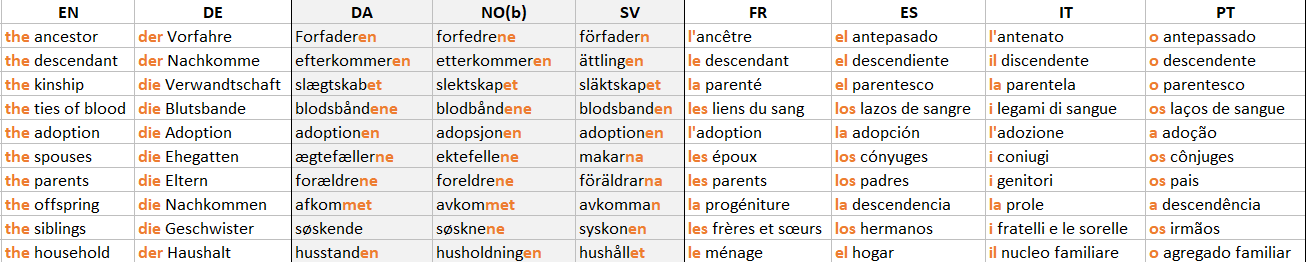
Family is a classic topic of every language learning syllabus. The members of “The Foreign Land’s Explorers” approached it the usual way initially, but they wanted to go further. So, they made a new table with terms related to family, but which were not learned in regular language classes. They built a table, knowing it was just a reference. Each word should not be taken as exact equivalents to the other languages. Once they had the table, they constructed the same sentences in every language, for example: “the spouses become parents and constitute a household with their offspring”.

[click to enlarge]

“Ah, ‘offspring’ in Italian is ‘prole’”, noted Leo. “Did you know that ‘proletariat’ comes from the Latin word ‘proletarius’, which means someone belonging to the lowest (and poorest) class that would only be considered as ‘citizen’ if they had children? I guess ‘children’ here would mean labour force or soldiers. Therefore, ‘prole’ in Italian comes directly from the Latin word meaning ‘children’”.

“Sometimes people don’t realize how much Latin language has influenced European languages, all of them”, said Elizbeth. “For example, ‘adoption’ is similar in these languages and comes from the Latin word ‘adopto’, which is the combination of ‘ad’ and ‘opto’. ‘Ad’ means ‘to’ and ‘opto’ means ‘choose’. So, basically ‘adoption’ is ‘to choose’”.

“I may be wrong, but it seems that word is the only word here in the table to come from Latin in what German, Danish, Norwegian, and Swedish are concerned”, noted Sophia. “Interesting that ‘offspring’ in Nordic languages is ‘of coming’. Well, in English it has a similar meaning: getting out of where they were made. Like the rivers that leave the place where they were ‘born’ and run until they reach the sea. They ‘come’ from somewhere.”

“Knowing where you come from has always been very important. Look at Royal families. Being part of a Royal family can determine if you will lead the country or not, whether you want it to or not”, said Elizabeth.

“Some Kings have renounced the post, so it’s not inevitable. But, yes, for them, it is something that is always there, since childhood. And they are also pressured to have a ‘prole’, a male heir to the throne and some ‘spare’ male children, just in case something happens to the oldest. It’s not exclusive for poor people, although it is different, of course”, added Michael.

“Poor people provide the labour force in sequence. Rich people build dynasties to rule the poor people. It is the system of castes. Once you are born in one, you have to play your role regardless of your wishes”, said Elizabeth.

“That is not entirely true nowadays”, said Sophia. “Royals can now marry commoners and commoners can aspire to climb the social ladder”.

“Dynasties still have weight in society. Being a son or a daughter of an important family is always a mark, even if that person follows a different path”, said Michael.

“Ok, remember I told you that we use more Latin-based words than we realize? Well, I checked the word ‘dynasty’ and it is actually a Greek word, although it was stolen by the Latin language’”, said Elizabeth.

“Let me see”, said Michael, looking at her computer and starting to read. “It says that a dynasty is ‘a succession of rulers of the same line of descent’ and it gives China as an example. Then, it says it can also be ‘a powerful group or family that maintains its position for a considerable time’. It meets what we were saying, I think”.

“Royal families are a reference. They are a symbol of continuity, tradition, and identity”, said Sophia. “That’s why they are so important for people. People see them as the leaders of the nation. It’s no coincidence that the countries’ history timeline is told through dynasties, especially in China. They say ‘this was done during this Dynasty’. For example, the Great Wall of China was constructed during the Ming Dynasty. You need to know when they ruled to know the respective period of time. In Europe, you talk about epochs, like Ancient Times, Medieval Times, Renaissance.”

“Well, in Europe, history is also made of dynasties, although they are named ‘Houses’, like in ‘The Game of Thrones’”, said Elizabeth and laughed. “For example, the House of Habsburg was one of the most influential families in European history. In the UK, the House of Tudor is one of the most famous Royal families due to King Henry VIII and his six wives. The current UK’s Royal family is the House of Windsor. And, of course, there were prominent families that didn’t belong to any Royal family, like the Medici, who ruled Florence for many years”, said Elizabeth.

“In the USA, they also categorize their history periods according to presidential administrations: the President Obama’s administration, the President Biden’s administration…”, noted Michael. “Actually, the story of the name ‘President’ is curious. When the USA became independent, they had to choose a name for their Head of the State. ‘King’ was suggested, but they didn’t want to give ideas of grandeur to a man who should be feeling humble. So, they decided to give him the name of ‘someone who chaired meetings’. They thought it was humble enough. Not any more”.

“Well, they also have dynasties of some sort there, like the Bushes and the Kennedys…”, said Leo. “Like the Medici, these families became powerful after they had become very rich.”

“In the end, money rules the world. And, sometimes, the families who have it”, concluded Jack.


** YOUR WORDS AND IDEAS **

By Isabella Muir | On 30 April 2025 at 12:08
Some very interesting insights into the meanings of ‘family’ – a term that has changed significantly over the centuries. Nuclear families (often blood relatives) contrasts with ‘blended’ families, where a wide range of relationships come together. It would be interesting to explore how ‘family’ contrasts with ‘community’ – both can be supportive networks, but both can be just the opposite!

By Words in Ideas | On 01 May 2025 at 21:19
That would be very interesting, yes. “Blended” families is a good term – maybe in future “blended” will replace “nuclear”?…


Keyword: FAMILY | It takes a village

If someone asked someone else what family was, that person would probably answer: the father, the mother, and their children (adopted or not). Or two mothers and their children, or two fathers and their children. This is what is called the “nuclear family”. “Extensive family” would include aunts, uncles, cousins, godparents, grandparents, maybe even family friends. If that someone wanted to go even further, he or she could talk about the “distant family”, which are second cousins, third cousins, great uncles, great aunts, and the like. People that you probably never met in your life.

The historian James Casey wrote the book “The History of the Family”, published in 1989, advancing the studies of Friedrich Engels, whose book “The Origin of the Family, Private Property and the State” was published in 1884. These studies were developed from different perspectives: while James Casey aimed to write the history of what is considered “family”, Friedrich Engels aimed to explain how the State came to be, as a result of an evolution of the primitive blood-related organizations.

James Casey began his book by defining what “family” actually is. His conclusion was: there is no clear definition. Etymologically, “family” comes from the Latin word familia, that used to mean the assets of a household: the man, the woman (each one with their own role) and everyone else who lived in that house, including the slaves. It was more like an enterprise than a “nuclear family” as we understand it today. Yet, this was not the first kind of family that existed. Primitive peoples had complicated structures that included all blood-related members under the same tribe or clan, although it was possible to “adopt” some outsiders.

There are a few traits we still keep from those primitive times, like loyalty towards our blood relatives. Back then, being part of a tribe or a clan would imply the duty to avenge a member who was attacked or killed by a member of another tribe. This is still important in some “tribes”, especially families, but also groups of friends acting as alternative families. Bloodline would also determine each person’s place in society and it is still very influential today, especially in some cultures or in certain circles.

These primitive peoples were matriarchies, meaning that bloodlines were defined by mothers. However, children were raised by the community. According to Engels, this changed when men became the owners of the agricultural equipment, which they wished to pass on to their children (in other words, heritage). This became even more important as men acquired more property. So, men decided that bloodline would stop being defined by mothers and became defined by fathers. To ensure that children born to their wives were theirs, women became their property, together with houses, equipment, slaves, and servants. Hence, the familia.

Engels proved that society was structured by the way families would relate between themselves and would exercise power socially and politically. In the feudal regime, each family would belong to a caste (the main castes were nobility and commoners) and their hierarchy would depend on their possessions. The concept of family as we know today (the nuclear family) is a product of the changes that took place from the 17th century onwards (during the Industrial Revolution) with the decline of the feudal regime. The private sphere detached from the public sphere and children started to go to school in order to become professionals. From an early age, children would learn about individual responsibilities and would acquire the skills to compete with others for a job and a position in society. By losing their central role, “extensive families” lost their power to influence social and political matters. As the individual became the social unit, his “family” became smaller: only his wife and their children, living in a domestic home. However, some things did not change: men remained the heads of the household.

Under this new society structure, people could marry whoever they wanted and were not obliged to have their parents’ consent (due to heritage purposes). Love turned into the main reason for marriage and divorce started to rise. Individuals were liberated from the bonds and duties of belonging to blood-related communities, but they also lost their benefits. For example, raising children is now the sole responsibility of parents when it was a community task. Social life was more spontaneous because the houses were open to everyone and several nuclear families lived in each house. Today, individuals are more alone and with more responsibility on their shoulders.

Yet, the concept of family is changing again. Men are losing their permanent position as heads of the household. Domestic roles are shifting and both adults are taking on equally household chores and raising the children. As divorces increase, people create new nuclear families that cross over with the nuclear families previously created. Grandparents are living longer, but they keep their independent lives after retirement. On the other hand, professional careers are getting more demanding, the internet is leading to isolation, and people are feeling lost. How will families adapt to these new times?


Information, knowledge, wisdom

Fake news is not a new phenomenon. Propaganda, falsehood, and pure lies have been around since human beings are human beings. The difference to our days is quantity. There is so much information going in every direction that it is hard to keep track of what is true and what is false. There is plenty of information about how to verify the authenticity of information circulating in the public domain. For example, media channels have teams to do just that.

Common people may feel lost with contradictory information. Besides distinguishing what is true and what is false, or deciding what to believe in, people also have to discover what is the best course of action for any given event. These are increasingly difficult tasks and basic concepts may help. Clarifying those concepts is the aim of the following.


Subscribe to continue reading

Subscribe to get access to the rest of this post and other subscriber-only content.

Keyword: FAMILY | “Hamnet”, by Maggie O’Farrell

“Hamnet” is the story of how the death of a child impacted a typical 16th century family living in England. The boy was living in Stratford-upon-Avon with his mother and his siblings. His father had moved to London to find better ways to provide for his family. The boy was called Hamnet, a variation of Hamlet, and his father was William Shakespeare. The boy’s death, and his father’s subsequent grief, gave rise to the renowned theatre play “Hamlet”.
“Maggie O’Farrell did extensive research to write this book”, said Ms Clara Smartest. “There are very few records about Shakespeare’s family and the death of his son, thus, she had to guess a lot. She deduced most of it from other information of the time. Although this is fiction, she wanted to be as accurate as possible.”

Most of the members of the Society had been completely unaware of Shakespeare’s personal and family life, let alone that he had a son who died aged 11.

“Sometimes people ask me what makes a masterpiece in literature”, said the Literature Professor Mr Matthew Barnepy. “Most of them think it is about the story. So, they go and write a very intriguing plot with a lot of action and many events happening in the background. Of course, the story is important, but it’s the way you tell the story that makes the difference. Maggie O’Farrell could have written the same story in a much simpler way, as a sequence of events, for example. Instead, she chose to take time to describe the details of everyday life as a way of casting a spell on us and making us captive to the narrative.”

“It must have been really hard to be away from his family, especially when a son dies. Life at that time was really hard”, said Ms Abigail Vooght. “I think the author wanted us to feel that. It was like we were part of the family, like we were there and it was happening to us as well.”

“It shows us the true meaning of ‘enjoying the little things’. The writer shows us how important they are, how much we should pay attention to them, for good and bad”, said Miss Amelia Matterfis. “We take a lot for granted. Like, we assume that children will grow up and prosper. Sometimes, they fall ill and die.”

“That is what happens in areas in conflict. People just don’t know if they will be alive the next day. In 16th century England, there was little hygiene and therefore many diseases. Death was just around the corner, but people would go on nevertheless. Nowadays, in the richest and most developed countries, people believe that medicine will cure everything. Sometimes we ask the impossible from doctors, who are just human beings, thus, not perfect”, said Ms Johanna Practicewell.

“Grief is grief regardless of the conditions or the time. Many deaths could have been avoided in the 16th century, it is true. However, children still die unexpectedly today and parents suffer the same. That’s what impressed me the most. Although she was describing a family from centuries ago, the same could be applied to a modern family”, said Miss Martha Lovefeelings.

“I think that the story is about love. Shakespeare married Agnes despite her being considered unconventional. She warned him many times until he was sure of what he was doing. Then, we can “see” the love between family members, including the father who is away for work”, said Mr Matthew Barnepy. “The focus is on Agnes, the mother, her relationship with her family, with society, and with her husband. How she coped with her loss, which was different from the way her husband coped. People react differently and sometimes that is not fully understood.”

“It’s interesting that no direct mention is made to Shakespeare. I believe the aim is to show that it’s just one family among many and the fact that it’s the family of the most famous playwright of all times makes no difference. They are just human beings, struggling to survive in an unforgivable world and trying to make the most of what they have. It could be our own family. It could happen to anyone”, said Mr Jeremy Toughready.

“Exactly, it makes us think how fragile life is and how fragile human relations are. It can all change in a moment. One minute the boy is alive and kicking and a few hours or a few days later he’s dead. Everyone is affected: the mother, the father, but also his sister, who was his partner of fun and accomplice of mischief”, said Miss Martha Lovefeelings.

After exchanging their first impressions, they discussed further some details of the story and how accurate they were to what is known. In the end, they concluded that it didn’t matter if the records showed a different perspective, for example about Shakespeare’s wife. Little was known anyway. Most of what was recorded were interpretations that could be wrong. Maggie O’Farrell had focused on facts.

“It is a great book, indeed”, said Mr John Booklish, ending the meeting. “Next month the book is ‘Three Daughters of Eve’, by Elif Shafak. Have a lovely week!”


** YOUR WORDS AND IDEAS **

By Isabella Muir | On 5 April 2025 at 15:11
Thank you for a wonderful review of what sounds like a wonderful book, which will now go to the top of my TBR book pile! Having read several of Maggie O’Farrell’s other books, I would agree that she is certainly an incredible author!

By Words in Ideas | On 5 April 2025 at 20:49
She is an amazing writer, indeed! I’m glad you liked the review and that it sparked your curiosity to read it. You won’t regret it!


Keyword: TIME | Diamonds are forever

Diamonds are forever, sparkling round my little finger
Unlike men, the diamonds linger

According to Shirley Bassey in her song “Diamonds are Forever” (from the James Bond film’s soundtrack), a diamond ring is more valuable than a romantic relationship. Considering that the ratio divorce-marriage is generally 50% nowadays, maybe she is right. Contrary to popular belief, the majority of relationships are not forever. And that is fine. They don’t have to be. However, it is paramount to have means of subsistence. Financial independence is crucial for both men and women. And diamonds are extremely valuable. Having a diamond ring means having an object that you can sell if you need a lot of money.

“Diamonds are forever” was actually a marketing slogan of a private diamond mining company. The message was: giving a (big stone) diamond ring when proposing marriage to your fiancée shows how much you love her and proves that your love will be forever. The marketing campaign was so well executed that people still believe in such an idea today. Which is false, obviously. The quantity of couples who break up after the man had given the woman such an engagement ring speaks for itself. In the meantime, diamond companies are making a lot of money.

Human beings like to chaise “forever”: they want to live forever, want to be forever young, want to love forever, want to be friends forever… But is there anything that lasts forever? And what is “forever” anyway? Until Earth ceases to exist? Yes, Earth will cease to exist when the Sun dies and engulfs Earth 4,500,000,000 from now”. Therefore, not even Earth will last forever.

In truth, “forever” can last until we die, until the relationship ends or until tomorrow. Forever is a perception, representing our wish for something (good, of course) to never end. Or representing something bad that seems to never end, regardless of our wish for it to end. At some point, it does end, both the good and the bad. The truth is: nothing lasts forever. Even diamonds can be damaged and destroyed and, if that happens, their lustre would wear off.

“Timeless” can be a less elusive term. It means that its value doesn’t change over time. For example, a song that is timeless is a song that is beautiful long after it was composed. Classical music is timeless: we still listen to and appreciate it centuries after it was first heard publicly. You can say diamonds are timeless too. Since that marketing campaign, diamonds have stopped being common minerals to become a precious piece of luxury jewellery. Its beauty and expensive cost are still the same.

Diamonds are not endless. At least, not the natural ones, the ones which are mined in places like Russia, Botswana, Canada, Angola, Democratic Republic of the Congo, and South Africa, among others countries. Researchers have found a way to fabricate synthetic diamonds. However, this process is too expensive, thus, its production is not massive. Besides, the natural ones are considered to be of higher quality. When the mining ends, and it will at some point, will the production of synthetic diamonds skyrocket?

Life is always changing. We get older, children grow up, we get promoted or fired, we get a new job, we move to another city or another country, we meet new people. Society changes too, as well as beliefs, traditions, perspectives. Therefore, holding on to “old stuff” can make us weak and vulnerable, as we lack the flexibility to adapt. “Forever” may not be as good as it sounds. Imagine what it would be like if Europe was stuck forever in the Roman Empire…

Forever can be especially terrible in harmful situations. For example, countries that are in war, marriages where there is violence, jobs with toxic cultures. It is good to know that these situations are not endless, although some problems can be timeless. Yet, negative situations can trigger evolution. They can actually be an opportunity to improve and find creative and innovative solutions. When everything runs smoothly, no matter how good it may sound, it leads to a standstill and standstill leads to decay. In reality, improvement is the guarantee for maintaining good stuff.

“Living in the moment”, “appreciate the little things”, “be in the moment”, are some of today’s mantras. These are other “versions” of “forever”, attempts to freeze the good things and ignore the bad things. We can see this to a great extent in social media, where people want to show how happy they are. There are common themes like (good) food, sunsets, drinks with friends, luxury holidays with romantic partners. In other words, the lifestyle which is considered ideal. And people are made to believe that this ideal lifestyle can last forever.

At the beginning of June 1940, the inhabitants of Paris were living their lives as usual. The echoes of war were still far away and many believed war would not get there. Suddenly, they were surprised with the news that the German Army was only a few kilometres away. Panic took hold of people and in two days two million men, women, and children filled the roads with the possessions they could gather in such a short time. Their “forever” life ended on the next day and no one knew what to do or what would come next.


** YOUR WORDS AND IDEAS **

By Isabella Muir | On 19 March 2025 at 15:21
Fascinating article and one that gets us thinking about time and the importance of moments. How would our priorities shift if we were told we only had a year left? And what we have told our younger selves if we knew then what we know now? And who can explain how it is that the older we are, the faster time seems to slip by?! If we could slow down ‘forever’ surely that would be worth more than diamonds?!

By Words in Ideas | On 20 March 2025 at 12:43
Thank you! I’m glad it made you think about how short-lived our life here on Earth is. Time is truly precious, more precious than diamonds. Einstein discovered that time is relative. As we get older, time seems to go faster, but it doesn’t. The pace is the same, our perception is what changes. We can’t slow down time, but it’s up to us to make it worthwhile. Like Gandalf said in the book “The Fellowship of the Ring”, by J.R.R. Tolkien: “All we have to decide is what to do with the time that is given us.”

By Isabella Muir | On 20 March 2025 at 15:41
Thanks Ana Catarina, yes, how fortunate we are to have the wisdom of Tolkein and other great thinkers and writers to help us to stop and re-evaluate! Thanks for all your great articles, they are well researched and thoroughly enjoyable!

By Words in Ideas | On 21 March 2025 at 12:02
Thank you so much for your kind words! That is exactly my aim 🙂 Yes, we should pay more attention to what great thinkers and writers had/have to say. They figured it out before us. Like a great Portuguese artist once said: “When I was born, the sentences that would save humanity were already all written, there was just one thing left to do – to save humanity”. This is actually written on the walls of Saldanha tube station in Lisbon.

By Isabella Muir | On 23 March 2025 at 10:43
What a beautiful quote and a wonderful sentiment!

By Words in Ideas | On 23 March 2025 at 13:12
Indeed! 🙂


Keyword: TIME | Time and Space

Einstein once realized that if a person and a ball would fall from a building at the same time, the individual would not be aware of the speed in which the ball was falling. For him/her, it would look like the ball would be still. The same phenomenon happens when we are in a speeding car. If a car next to ours is at the same speed, it seems we are both still. We are unaware of the space and the time passing by. This means that space and time are relative.

Objects in the universe are moving in a space-time continuum. As they move forward in space, time is also moving forward. We are not aware that Earth is moving, but it is. And we are not aware that time is passing unless we look at the clock or we watch the sun rise and set. For example, people lose track of time if they are living in a place where the sun is blocked and they do not have a watch (like in a bunker).

Seasons are dependent on the movement of Earth around the Sun. Through observation, humans realized that seasons would follow a cycle with four different phases. Astronomically speaking, solstices mark the most extreme points (Tropic of Cancer and Tropic of Capricorn), hence winter and summer. Halfway in each direction, the Sun goes through the equinoxes (on the Equator line), signalling Spring and Autumn.

Calendars were built as a way to measure this for agriculture purposes as it was necessary to plan when to sow and when to harvest. Different methods were used, and some are still in use simultaneously. The reference is the Gregorian Calendar, which is based on the movement of Earth around the Sun. After some adjustments, it was established that one year would correspond to a complete turn around the Sun. The year would be divided into 12 months and each three months would correspond to a season. Christianity determined the birth of Jesus Christ as the first year AD (Anno Domini, Latin for “in the year of the Lord”). That was 2025 years ago (or 2025 complete turns around the Sun). The years BC (Before Christ), or BCE (Before Common Era), are counted backwards from that first year.

There are other calculations, which consider other starting points. Assyrians are an ancient people from the Mesopotamia region (somewhere between today’s Iran, Iraq, and Syria) and are currently in the year 6773. According to the Hebrew calendar, Jewish people are currently in the year 5785. Buddhists are currently in the year 2565 and Persians in 1402. The Islamic Calendar is based on the Moon cycle and started its counting on the year the prophet Muhammad moved to Medina (the Hijrah). They are currently in the year 1446. In China, they built a calendar based on the lunar cycle, but taking the Sun cycle into consideration. Instead of indefinitely adding up years, they named them. The Chinese created a 60-year cycle combining the names of 12 animals with the 5 elements (wood, fire, earth, metal, and water). That was 4722 years ago.

Age (the number of years each individual has “completed the turn around the Sun”) is increasingly gaining weight for determining a person’s life. For any given age, there are certain types of duties and demands that are asked of people. It can be tough if you do not meet those age requirements and it can be a reason for discrimination. This is called Ageism. Discrimination towards older people is a known phenomenon, but it can happen at any age. Like many other discriminations, this one is “hidden” because these actions are considered “normal behaviour”. In other words, age discrimination is accepted. Like other discriminations, it should be censored.

For centuries, people organized their lives based on seasons because agriculture was the centre of their lives. Then, during the Industrial Revolution, people began to organize their lives based on years, months, weeks, days, and hours in a combination between the movement of Earth around the Sun (years) and the movement of Earth around itself (days). It was established that noon would be when the Sun would reach its highest point in the sky. The hours of the day were then calculated accordingly. Due to the rotation of Earth on itself, adjustments were made around the world to meet these criteria, hence time zones. Except in China. There, it was established that the whole country, which has five time zones, would use the same standard time. So, the Sun can reach its highest point in the sky in a different time, depending on the region.

Earth is about 4,500,000,000 years and homo sapiens exist for 200,000 years. In a way, there is no past and no future, only evolution. Earth has been evolving since its creation, going through different phases. Life on Earth has already been extinct five times in the “past”, but it was born again in different forms. If humans get extinct, Earth will keep moving through space and time and another type of life will be born.

We are connected with space and time as a tiny piece of a celestial object moving through the universe, interacting with other celestial objects. Whenever we take a step forward, a second has passed. If we travel to another country, we also travel into the “future”. Even when we are still, we are moving because we move with Earth, both in space and in time.


“Looking back into the future”, by Isabella Muir

I’ve been looking back as a way of looking forward! Studying history is a useful way to reflect on the past, to discover lessons that may be learned to prepare ourselves for the future. The more I look back, the more I can see that so many world events recycle themselves in a never-ending repetition of gain and loss.
My personal fascination with history is in events that affected Britain during and after the Second World War, and the more I learn, the more I see a familiarity in the arguments being posed today about the way forward for our increasingly fractured world.
But for now let’s focus on the 1960s, when more than a decade after the end of the Second World War, Britain was still reeling from the loss of life, the devastation, and the underlying fear that such hard-earned peace might be short-lived.
The sixties brought with it a generation of youngsters who believed they could put the past behind them and surge forward to a better life. Social and political attitudes began to change, with significant events acting as forerunners of even greater change.
I explore some of those changes in a series of fictional stories, entitled the Mountfield Road Mysteries where we meet some tenants who come to live in a tiny bedsit at Number 1, Mountfield Road, in the Sussex seaside town of Hastings. The tenants have little in common, except for their decision to rent a room from a certain Mr Humphrey, a landlord who is a stickler for traditions and protocols that were fast disappearing.
The first book in the series, Storms of Change [external link], is set in 1960. We meet Marcus Chase, a young man keen to throw off the constraints of his childhood and teenage years, breaking free from his home in London and moving south to Hastings.
He meets Fred and Gilly Barnes, the couple who rent the flat below, and is soon absorbed by their tales of adventure, impressed by their carefree attitude to life. But like everything in life, all is not as bright as it would first appear…
One year on, in Whispers of Fortune [external link], we meet Sally Hilton, a young woman who is certain 1961 could be her year.
‘You can be whoever and whatever you want to be,’ are her mother’s words to Sally throughout her childhood. But Sally doesn’t know who she wants to be. That is the problem.
When the thirty-fifth President of the United States is elected to office, Sally Hilton is worrying about the ladder in her stockings. It’s her only pair and needs to last until payday on Friday. In his augural speech, John F. Kennedy promises significant change to his fellow Americans. In Britain, the sense of euphoria is contagious. If not us, then who? If not now, when? Powerful words spill out from the skilled orator, and Sally Hilton, with her laddered stockings and empty purse, wants to believe they will make a difference. Change is coming, not just for Americans, but for the ‘free world’, whatever that means.
Then Sally notices a card in the newsagent’s window. It feels like a sign…
In the third book in the series, Flashes of Doubt [external link], we meet William Arnold. Forced into retirement, having to leave his cosy cottage and move to a tiny bedsit in Mountfield Road, Hastings, William Arnold wants nothing more than to remember the past, a time when he understood the world, when he had a role to play, a purpose. Then William meets sixteen-year-old Peter, a young lad who challenges William to revise his thinking completely…
The 1960s was a decade when young people were finding their voice and older people were struggling to come to terms with the newly defined ‘generation gap’.
Some say the ‘swinging sixties’ really took off in Britain in 1964, the year that saw the Beatles rise to international fame, but it was 1960 when the group first got together, playing sessions in the now world-famous Cavern Club in Liverpool by 1961. An explosion of talent emerged during the next few years, with a host of pop and rock artists, many whose music is just as popular today.
Mary Quant, among others, transformed the way young people dressed, as interior designers, such as Terence Conran, transformed the way many people furnished their homes, offering contemporary furniture at affordable prices.
As well as music and fashion, the growth of consumerism and the widespread availability of labour-saving devices meant people had more leisure time to enjoy.
It was also the decade when car ownership took off, with estimates suggesting the numbers of people owning cars rose during the decade from around nine million to fifteen million. Thinking back to my childhood, I recall so few cars passed by our house there was no danger for me to cross the road on my own at the tender age of eight. And yet, that same road now sees tens of thousands of vehicles pass along it every day, with young and old taking their life in their hands should they decide to venture from one side to the other.
A typical 1960s house was difficult to heat, with windows that let in as much of the weather as they kept out. Central heating hadn’t arrived for most families, leaving them with few options – a coal fire (with coal being an expensive commodity), a two-bar electric fire, which would eat up any money being put into the meter, or a paraffin stove with its fumes.
Young people had grown up in the shadow of war, with new threats being posed by the Cold War and growing tensions between the East and West. National Service was still in place, an experience that brought up conflicting emotions for many young men. What was right and what was wrong when it came to conflict? There were no easy answers then and many would say, there are no easy answers now.
With the threat of nuclear armaments circling, many young people joined the peace protests taking place across Britain. The term ‘teenager’ only entered into common usage in Britain during the 1950s. Around that time young people started to find their voice, with two distinct groups emerging: beatniks and teddy boys.
Both groups were strongly influenced by American music, Teddy Boys loving rock and roll, wearing long, draped jackets, and sporting the kind of hairstyle worn by Elvis Presley with his slicked back quiff, all kept in place with plenty of Brylcreem. Beatniks, by contrast, wore duffel coats and berets, long hair and preferred jazz. The ‘beat generation’ was said to have been inspired by writers such as Jack Kerouac, among others. Reacting to the experiences of the Second World War, this was a movement that sought to promote peace. Later in the sixties, the ideals promoted by beatniks were taken forward by another aspect of the counter-culture of that period – the hippies.
Both groups frequented coffee bars, vying over the jukebox. In the 1950s and 1960s, coffee bars were popular meeting places for teenagers. They were often the setting for live music, as well as the ubiquitous jukebox. Skiffle music was popular at that time, a type of jazz and blues-influenced folk music that was the precursor to British rock ‘n’ roll.
British teenagers made coffee bars their own; they were a cheap place to ‘hang out’, after all, coffee had no legal age limit. It’s said that London’s most famous 1950s coffee bar – the ’21s’ – famously launched, among others, Tommy Steele and Cliff Richard. In Liverpool, the Jacaranda club in Slater Street was a haunt for the Beatles in their early days, while Cilla Black waitressed at the Zodiac coffee bar in Duke Street, another musicians’ favourite.
Many women in their middle years who survived the Second World War came to realise they could achieve more with their lives than previously imagined. With so many men away fighting, women had taken on vital roles as mechanics, engineers, air raid wardens, bus and fire engine drivers. They took on dangerous work in munition factories and helped to build ships and aeroplanes. The end of the war brought an enormous change for them, as well as for the men who returned from the front. Attitudes had shifted, new horizons had opened up, and the years that followed confirmed that nothing would be quite the same again.
Aside from the changes that a strengthening youth culture brought about, Britain began to see the problems brought about by intensive farming, with nature beginning to suffer. Alongside the rise in car ownership, new towns were built where there was previously agricultural land. How much consideration was being given to the environment? We see the longer term effects now, with our loss of wildlife habitats and the very real fears about climate change.
Across the world, in China, as part of Chairman Mao Zedong’s ‘Great Leap Forward’ initiative that ran from 1958 to 1962, the Chinese people were ordered to eliminate rats, flies, mosquitoes, and sparrows. The order came as the authorities decided that these ‘pests’ were damaging crops and the sparrows were eating too much grain. Over that period some one billion sparrows were killed, including the total population of tree sparrows. However, it seems the Chairman’s plan would backfire. The sparrows were a vital part of the Chinese ecosystem, as well as eating grain, sparrows ate locusts. Without the sparrows the locusts flourished. By 1960, locusts decimated the rice crops, resulting in one of the worst man-made famines ever experienced. The exact numbers of people who died during the famine is unknown, but it’s suggested that it was between twenty and forty million people. It’s certainly a reminder that tampering with nature will inevitably create problems for our whole ecosystem, mankind included.
I will continue to explore the past, to learn from the good and the bad, and above all, continue to hope for a positive future. •

Isabella Muir [external link] writes novels, novellas, and short stories about post-Second War World Britain and she runs an independent publishing company, Outset Publishing. Some of Isabella Muir’s books are translated into Italian [external link] and Portuguese.


Keyword: ENTERTAINMENT | The weight of entertainment

Everyone wants to have fun, even those who take life too seriously and seldom smile. James Suzman’s study about work informs us that “leisure” was born after our ancestors learned how to master fire. This provided free time, which was spent by painting, building tools, and creating accessories (like necklaces). Just as working time evolved, so did leisure time. Nowadays, we have plenty to choose from: television, radio, cinema, amusing parks, museums, theatre, music, circus, comedy, ballet, workshops of different sorts, a wide range of parties, sports, literature, social media, video games, travelling… The list is very long.

What started as a way to pass the time (hence, the word “pastime”), turned into various industries. Entertainment means work for millions of people around the world. Moreover, the variety is so great that many people dedicate themselves to telling others what they should do to have fun: the dreaded critics. Of course, there are also journalists and bloggers who just recommend what they think is best. They are probably paid to do that. So, besides spending our working time being told what to do by our bosses, we end up being told what we should be doing in our free time: what books we should read, what films and TV series we should watch, what destination we should travel to, the amount of time we should play games, what sports we should practice, which parties we should go to… In a nutshell, we are constantly being advised on the right way to have fun.

The line between advice and censorship can be very thin. Throughout the centuries, there has been censorship for a numerous of reasons. Morality (often linked to religion) is number one. For example, the “Index Librorum Prohibitorum” was a list of banned books by the Roman Catholic Church, which existed between 1559 and 1966. Political regimes, especially dictatorships, are also very keen on banning books. The most terrifying event of this kind was the Book Burning on 10th May 1933 that took place in 34 cities in Germany almost simultaneously. Chosen by university students, thousands of books were looted from libraries, book stores, and publishing houses. Afterwards, the students piled up those books in public squares where thousands of people watched the students set the books on fire in a huge bonfire. And this was just the beginning.

Entertainment can also be used for propaganda purposes and for spreading a certain type of culture. That was the aim of the Ministry for Popular Enlightenment and Propaganda of the Nazi regime. They did not just censor information and culture, they spread their ideology via cinema, theatre, education, the media. All information was controlled by the State. After World War II ended, the USA used the film industry (especially, but not exclusively) to portray the Soviet Union as the “bad guys”. The Cold War was particularly fertile in spy movies, where the CIA would always be better than the KGB.

Discrimination and preconceived ideas can also be spread through entertainment. For example, Western’s image of Eastern countries is based on what is depicted on television, cinema, and fictional books, which are based on crystallized notions that are passed down from generation to generation without being questioned. Most of these notions were built during colonialism. The acclaimed writer Chimamanda Ngozi Adichie shared her experience in her TED talk “The danger of a single story”. Not only her American university colleagues were mistaken about her Nigerian reality, Chimamanda Ngozi Adichie also had a wrong image about other countries. Moreover, she tells us about how she became “African” in addition to being “Nigerian” and how she struggled with rejections about her writing not showing her “authentic” background enough. Culture can open our minds, but it can also limit them.

The weight of entertainment can be heavier than we realize. Having fun can become a political statement. Consuming entertainment products can shape your mind, limit your view of the world and twist your idea about “the others”. However, entertainment can also be an opportunity to get to know different realities, to open our minds to other cultures, to learn about ourselves and to realize that “the others” are basically like us, but with different backgrounds. Or, it can simply be a way to relax and stop thinking about serious things.


Keyword: WORK | The purpose of work

In his book “Work: A History of How We Spent Our Time”, James Suzman starts by defining what work is. He goes back and forth, discussing different angles, and comes to the conclusion that “work” is every activity living beings (humans, animals, plants, and fungi) do, for which they need energy. This means that, under this definition, what some people consider “leisure” is actually “work” (in fact, the same activity can be considered “leisure” by some and “work” by others).

According to James Suzman, the concept of “leisure” was born when humans learned how to master fire and they found time to spare between hunting and recollecting food. Instead of “doing nothing”, they dedicated themselves to painting, building tools, and creating accessories (like necklaces). This means that, just like other animals, plants, and fungi, humans have the compulsory need to be engaged in some kind of activity. Once the energy intake is secure, imagination is the limit of what one could do.

As imagination evolved, so did the number of activities and their complexity. After figuring out how to plant and master crops, everything changed. Humans were now able to store “energy” to consume later, which gave them even more time without being worried about hunting and recollecting. They began to plan yearly: there was a time to sow, a time to let crops grow (controlling pests and the like), and a time to harvest. Then, during winter, as humans didn’t hibernate, they were “free” to do what they liked. Usually that meant making big constructions (like Stonehenge, for example). For these purposes, communities were needed and societies were developed. Hierarchies and specializations were ever more consolidated. Besides, as the agricultural fields were being exhausted, people had to move to other lands. Thus, migration commenced.

Fast-forward to our highly complex and globalized society, in which people move around all the time, we can see where imagination and “free time” has led humanity. People still work to sustain themselves and their families (that haven’t changed) and they still use their free time to do other things they find more interesting (that haven’t changed either). What is changing is the purpose, the meaning of work.

At some point during the Industrial Revolution, workers fought for the idea of having 8 hours per day of work, 8 hours of free time (to have fun and spend time with the family), and 8 hours of rest (mainly to sleep). It was also believed that the 8 hours of free time was the most important of them all. Hence, the hobbies, the focus on the family, the holidays and day outs. People would work to make money to meet the needs of survival, and their compensation was to have fun in their free time.

Now, people are realizing that work is actually more important, that it builds their sense of self. So, it needs to have meaning to themselves and to the community. People relate to work more than it was expected during the Industrial Revolution and having fun after hours is just not enough. Besides, people are working increasingly more hours. The 8-8-8 balance is getting lost (if ever was a reality). As a result, the separation between work life and personal life is also getting lost. In truth, this separation only made sense during the Industrial Revolution, when people went to work in the factories and then went back to “their own life”. With the rise of “flexible working hours” and “working from home” it feels like we are going back in time, when people were developing agriculture and their own life was intertwined with the work they did.

As we can read in James Suzman’s book, developing agriculture throughout thousands of years was hard work filled with much frustration. Farmers would probably have felt they had enough of it many times over during the course of their lifetime. When the Industrial Revolution came, moving to the cities to work in the factories was like a promise of a better life. After all, they wouldn’t depend on climate to have their earnings; they would have a salary at the end of the week or the month. However, this type of work brought with it a number of new problems, and workers had to deal with them in new ways: hence Unions and social fights that are part of history.

Nowadays we have burnouts, stressful objectives to be met, toxic working environments, fierce competition, long hours of work… We are also witnessing the emergence of new ways of work, like: the 4-day work week, remote work, hybrid work. We have an enormous variety of different jobs and the possibility to change jobs. Specializations are not the end of the line. If we think back, before the Industrial Revolution, farmers’ children didn’t have much choice. And whoever started a trade would hardly switch to another trade. Today, there are infinite possibilities (or so it seems).

The future is unforeseeable, although many experts are busy trying to predict it. However, one thing seems to be certain: people need to work, whatever may that turn out to be.
 

The peaceful Switzerland

Cows gaze lazily at the high mountains surrounding them while taking full advantage of the sunshine. Soon it will be time to go indoors, when the snow starts falling from the sky. For the moment, there is snow only at the mountain summits. Down below, in the valleys, clusters of houses outline several villages and cities along the rivers and by the lakes. One couldn’t imagine that for centuries this region was the stage of fierce battles.

The Helvetians were a Celtic tribe that had settled here when Romans expanded their Empire throughout Europe. They couldn’t escape it, but they were granted enough autonomy to govern the different provinces of this land and manage the most important commercial routes that crossed the territory. This was a great experience for them, from which the Helvetians learned much. After the fall of the Roman Empire, they were invaded by the Germans, from the north, and by the French, from the west. In the meantime, the Helvetians, now converted to Christianity, agreed to fight in the German army in exchange for money and land. Yes, they had really learned how to make business.

Yet, their leanings would continue. Now part of the Holy Roman Empire, the former Helvetians were in charge of different pieces of land and, like in the Roman Empire, they enjoyed a certain degree of autonomy. However, this time, they came to the conclusion that they should work together to keep peace and economically prosper. A confederation began to take shape and Schwyz inspired them to become “die Schweizer” (the Swiss). To the first three “orte” (pieces of land), five more joined them in the 14th century. Ah, but men are greedy and selfish and internal battles for power were waged…

The next centuries were full of wars, inside the “Land of the Swiss” and outside. Fighting each other, fighting the invaders, and also serving as mercenaries in foreign armies were daily business. Finally, in the 17th century, Switzerland became an independent country de facto, kept out from other people’s wars, and dedicated themselves to agriculture, trade, bank activities, and watchmaking… until a French person named Napoleon and his troops invaded the Swiss Land and everything collapsed. The Old Confederation was dead…

… long live the New Confederation (after Napoleon had been expelled, of course). All the learnings were applied then. The “orte” became “canton”, each Canton became almost fully independent, and later the Confederation turned into a Federation. The Swiss people decided to focus on making money and not war, living in peace and harmony. In the meantime, they adopted the direct democracy political system, which means individuals decide by vote (via referendum or initiatives) the rules of the country. Oh, Switzerland looks like a very advanced country… except in what women are concerned.

It took 103 years of fighting, and a fear of “looking bad” internationally, for women to be granted the right to vote. It all started in 1868, when women in Zurich proposed to be granted the right to vote. They failed, of course, but they didn’t give up. An organisation was created and the fight turned national. Due to the direct democracy system, many petitions were presented to the Parliament. They were first ignored and then rejected over and over again by men (those who could actually vote), as men viewed women as not able to understand politics and whose place was at home taking care of the children.

At some point, Swiss men were on the verge of being humiliated internationally as almost all European countries had already allowed women to vote. In the meantime, Swiss women kept pushing and presenting initiatives while peacefully protesting on the streets. After much internal and external pressure, men finally approved the right for women to vote in 1971, even though in some Cantons this would only become official 20 years later…
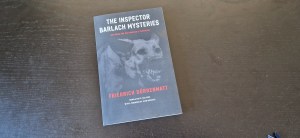
Ah, the peaceful Switzerland, with the placid lakes and the serene Alpine mountains, perfect for sanatoriums specialised in healing the body and the mind. A land where nothing much happens and people are focused on their farms and their business affairs…

 
Read more about Switzerland:

  • The History of Switzerland
  • Political system
  • Women’s suffrage in Switzerland: 100 years of struggle
  • The long road to women’s suffrage in Switzerland
  •  

    Keyword: INVESTIGATION | “The Judge and his Hangman”, by Friedrich Dürrenmatt

    Lieutenant Ulrich Schmied, working with the Police of Bern, is found murdered inside a car on the roadside. The police officer responsible to solve the case is Walter Tschanz and he is helped by Commissar Bärlach, who cannot investigate the case as he is very ill. However, Bärlach tells Tschanz that he knows who the murdered is and hopes that Tschanz can discover who he is by himsellf and bring him to justice. As the investigation progresses, the case gets stranger and stranger. Bärlach’s actions are bizarre and obscure until we reach the end of the story and everything is explained. Although it is a crime investigation and the main characters are all police officers, the short story is not about the investigation itself. In reality, it is about criminals who get away with murder… or at least try. It is about the good and the evil and the battle between the two. And it is about Commissar Bärlach’s relationship with a great criminal…
    Friedrich Dürrenmatt was born in Switzerland, in the Emmental region, moved to Bern when he was 14 years old, and ended his days in Neuchâtel. Travelling from east to west, he relocated gradually about 90 km. Despite always living in Switzerland, he travelled the world, like he had dreamed when he was a kid. In the meantime, he studied literature and philosophy while dedicating himself to painting. In the end, he decided to become a writer.

    When Second World War broke up, he was studying at the university, in Switzerland naturally. He wasn’t directly affected by the war, but his writings were influenced by it. They are dark and obscure, bizarre and strange. At the time, neutral Switzerland was crammed with war refugees, spies, and Nazis who wanted to hide their war looting in Swiss banks. It was perfect to study the dark side of people. The Cold War had also an impact on him.

    “The Judge and his Hangman” was published in 1952, at the beginning of his writing carrier. The story takes place where he lived, so he knew the landscape very well. The story reflects the WWII influences and the writing reflects his literature and philosophy studies. Likewise, “Suspicion” is under the same spells and has the same main character, the Commissar Bärlach. It takes place after “The Judge and his Hangman”, but this time in the Zurich area, where Dürrenmatt briefly studied and, thus, was also familiar to him. This short story revolves around a Nazi medical doctor that may or may not still be alive and may or may not have his own sanatorium. Dürrenmatt explores here the WWII traumas and the people’s attitudes before these issues.

    Friedrich Dürrenmatt died in 1990 as one of the greatest Swiss writers.

    For more information:

  • Friedrich Dürrenmatt – from Emmental to Broadway
  • Centre Dürrenmatt Neuchâtel
  •  

    Investigation

    When reading or watching a crime story we know there is always someone who investigates the crime and, at the very end, solves it. We follow that person’s investigation and sometimes we try to solve the crime before the character. After all, there are clues scattered around and the idea is to build the puzzle piece by piece until we get the big picture. Real police investigations are like that: they follow certain procedures that have been proven to be the best ones to solve the crime. In this case, they also need to gather evidence to put the criminal in jail.

    Academic investigation, also known as research, follows certain procedures in order to find new knowledge. In this case, the procedures are different because the purpose is different. Well, sometimes it also involves dead people, if it is an historical or medical research. In pathology, the dead person could have been the victim of a microbe. These microscopic creatures can be truly serial killers.

    According to the Cambridge Dictionary, an investigation is “the act or process of examining a crime, problem, statement, etc. carefully, especially to discover the truth”. There are two main components at play here: it implies a process and it aims to uncover the truth. Research, according to The Britannica Dictionary, is “careful study that is done to find and report new knowledge about something”. The difference is very thin, but it does exist.

    Apparently, the first police department was set by an Egyptian pharaoh in 3000 BCE, but murder is as old as humans. As society evolved, the police methods, forensic science and research methods (especially the scientific method) also evolved and they gradually became the norm to all forms of investigation. We hear that a company is opening an investigation on some wrongdoing, crashes (airplanes, trains, boats) are also being investigated, and banks are investigating financial frauds.

    Sometimes, common people do their own little investigations in order to find out the truth in their lives. For example: who ate all the butter? If you don’t have guests in the house, the culprit must be one member of the family. So, you start to gather evidence and ask questions. You establish the timeline of everyone to discover who was the last person to leave the kitchen… Sadly, scientifically identifying the fingertips on the knife is too expensive, so you can only apply empirical methods…

    Maybe inspired by this, British crime writers, like Agatha Christie, created a very peculiar sub-genre: cosy mysteries. These stories are characterized to have an amateur detective (or sleuth), who is minding his/her own business until a crime occurs in his/her little village and it’s up to him/her to find out who the culprit is. The main character doesn’t have access to forensics, so he/she only has his/her brains to figure out the solution. In the case of Agatha Christie, she invented a sweet old lady called Miss Marple who is nosy, but lovely.


    News, actualités, Nachrichten, noticias, notícias

    Reading the news in the language we are learning is a wonderful way to train that language and get to know the culture and the way speakers of that language see the world. News media around the world usually organize themselves in an identical structure. Furthermore, some of the world news is the same, so one can read the same news in newspapers from different countries. This will give you the chance to compare the way each country sees the world, what they value, and the words they use to describe the same things.

    Nowadays, some reference media have versions in different languages. For example, Euronews is available in 17 languages, including Arabic and Persian. However, be aware that it doesn’t necessarily mean that all versions have the same news or, if they have, the article will be exactly the same. Editions are independent from each other. National media may also have news available in different languages. For example, Deutsche Welle (DW) is a German TV channel and its website is available in 29 languages.

    Below, we compare the basic structure of news media in English, French, German, Spanish, and Portuguese.


    Subscribe to continue reading

    Subscribe to get access to the rest of this post and other subscriber-only content.

    Information

    Information is a two-step process. Firstly, data is collected. The data has no meaning as it is a list of numbers and/or words. Secondly, data is processed and transformed into information. The way information is created depends on the purpose for which it is created. This means that the exact same data can result in opposite results. It is not a question of denying or dismissing facts, it is a question of choosing the facts and using the wording that best fits the purpose. However, information must always respect the facts and be based on the data that is collected (assuming that the data were correctly collected).

    Sometimes, the result is misinformation, which is “incorrect or misleading information”. In this case, the data was incorrectly used. It is a little bit different from disinformation, which is “false information deliberately and often covertly spread (as by the planting of rumours) in order to influence public opinion or obscure the truth”. In this case, the information is not at all based on data, but in lies (or in manipulating information on purpose to make people believe in false information). Fake news is disinformation. That is why nowadays most media use “fact check” tools to verify if the news is based on lies and not on true data/facts.

    Then, there is propaganda, which is a specific type of disinformation: “dissemination of information—facts, arguments, rumours, half-truths, or lies—to influence public opinion”. It may have many different purposes, but usually is related to political motives. Interestingly enough, the term comes from a religious organization aiming to spread the Catholic faith (or better yet, to convince other people that the Catholic faith was better than all other religions). Propaganda sometimes may be confused with advertising (which also aims to convince people of something) as it can use similar techniques.

    A new concept is now emerging: information pollution. In today’s digital world, information is overwhelming and, as filters are removed, true information equals false information in so many different channels that people lose their capacity to distinguish between the two. These channels are also full of irrelevant and redundant information that help distract and confuse. The result in the long term is hate speech, disrespect of human rights, and general violence.

    António Guterres, the United Nations Secretary-General, stated that “[c]ountering disinformation requires lasting investment in building societal resilience and media and information literacy”. Measures and solutions exist and are available online (just search it on the Internet with “countering disinformation” as key words), but the problem is hard to fight. Knowing this, the United Nations published the report “Countering disinformation for the promotion and protection of human rights and fundamental freedoms”. In 19 pages, the report explains what disinformation is, what its legal framework is, and how states can tackle it.  

    Pamplona, beyond the bullfighting

    When walking the streets of Pamplona on a summer’s day, feeling the sun gently burning your skin and the quietude of a countryside town, one can’t imagine that every year the same streets fill with people running from angry bulls that were set free to run through a determined route. The city is then transformed, with thousands of people coming from all over the world, cheering those who are brave enough to run in front of the enraged bulls. Some get injured, a few may die, but all are full of adrenaline and exhilarate everyone around them.

    When a young American journalist, stationed in Paris as a European correspondent, arrived in this city, he got immediately and forever hooked. Ernest Hemingway was so impressed with it that he included it in his book “The Sun Also Rises”, turning the running of the bulls, the main event of the Fiesta de San Fermín, into a world attraction. Pamplona reciprocated his love and it still takes pride in Hemingway’s admiration for the city. Yes, because Hemingway didn’t just enjoy the bullfighting, he enjoyed the food and the people.

    Another foreigner, Gnaeus Pompeius Magnus, also known as Pompey the Great, passed through this terrain a very long time ago during military campaigns on behalf of the Roman Empire. He thought there was a good place to settle the troops and, in a not very original way, he gave his name to the place he was founding (well, sort of). Over the years, the town evolved, became Christian and turned into the capital of the Kingdom of Navarra. The Fiesta de San Fermín took shape in Medieval Times to honour a Christian Saint and now is part of the city as much as the buildings that were constructed throughout the centuries.

    After many battles and wars, Navarra became a Spanish region in the 16th century and, although not completely independent, it enjoys autonomy. Yet, walking through Pamplona, its capital, you could be foul into thinking that they are in fact independent. Navarra’s flag is hung everywhere and you can feel proud of being from Navarra, rather than being Spanish. However, contrary to Catalonia, people in Navarra seem to enjoy their status and they don’t wish to change it any time soon.

    Bordering France in the Pyrenees, there is an immense French influence in its core. It also borders the current Basque country region and it is influenced by the Basque culture too, especially in the north. Although there are many Basque people living there, and they are considered to be part of the greater cultural Basque region, people from Navarra like to keep themselves apart. The fact they were once a powerful kingdom may have something to do with it.

    In a nutshell, Pamplona is a quiet countryside town with a violent past, a unique cultural mixture, and a lively tradition.


    Keyword: WRITER | Ernest Hemingway

    Instead of going to study in a university, Ernest Hemingway preferred to go and work in a newspaper as a journalist, where he learned how to write objectively and to-the-point. Then, before turning 20 years old, he tried to be recruited by the army to go and fight in World War I. As he was refused, he found another way to be involved in the war: as a driver for the Red Cross. He was injured in the war and, after spending a long time in a hospital and being rejected by the nurse with whom he had fallen in love, he returned to the USA. These events forged his whole life.

    As a journalist, he went back to Europe many times as a foreign correspondent. He was stationed in Paris, France, for some time, but Spain was his favourite country. He covered the Spanish Civil War and World War II, when he landed in Normandy with the American troops on D-Day. In the meantime, he went to Africa to do a hunting safari and bought a boat to go fishing. He lived life to the full, survived wars and plane accidents, and travelled extensively, soaking everything and turning it into masterpieces, before he died in 1961. He had been born five months before the 20th century started and witnessed all major (and terrified) events of the century.

    Deep inside, he saw himself as a writer. Reporting was a way to achieve this (and make some money) and all his adventures were food for his novels and short stories. He wrote them in a style that was innovative at the time and had been inspired by his reporting: objective, without sentiment, with short sentences and without adjectives and adverbs. His mastery was in the rhythm of the words. Besides inspiring many subsequent writers, he was awarded the Pulitzer Prize and the Nobel Prize, mostly due to his best work, named “The Old Man and the Sea”. This was the last work to be published while he was still alive and it is considered his best work. It tells the tale of a fisherman that goes fishing and his struggle to catch a fish. The story is very simple. It’s in the way it is written, what it tells and what it implies, where genius lies. However, other books written by Hemingway are as good (or, at least, almost).

    “A Farewell to Arms” is a vivid description of his experience in World War I and aims to show the reader how war is in reality. It is heavily based on his own experience. The main character drives ambulances like he did and he falls in love like Hemingway did. Although the descriptions of the war are authentic, the romantic connection is not (maybe he wrote what he wanted to have happened).

    Also about war, but this time in the guerrilla point of view, “For Whom the Bell Tolls” is about an American who joins the Spanish resistance during the Civil War. It’s an intense account on how it is like to face death on a daily basis. These fighting men and women live lifetimes during short periods of time, living each day as if it could be their last, which would prove to be correct in most cases.

    Inspired by his time as a foreign correspondent stationed in Paris, “The Sun Also Rises” (or “Fiesta”) is about how young people got lost after World War I ended. Starting in Paris, the narrative takes the reader (via characters) to Spain and the bullfighting, an event very dear to Hemingway’s heart. They also go to the south of France and Madrid, roaming from place to place without purpose and without feeling.

    Those who wish to know how Hemingway’s hunting safari was, can read “The Green Hills of Africa”, his journal of the journey. However, if you don’t want to know details of chasing and killing animals, skip it. In any case, it is a beautiful view of the Africa landscape, and an insight on how humans can preserve (or destroy) nature.

    Sources:

    Writer

    A writer is someone who writes, but writing is not as easy as it seems. One has to know the language well enough to not make grammar mistakes and one has to know how to organize the ideas in order to build a logical text that its target audience will easily understand.
    There are different types of writers. The most noticeable are the authors, those who write books that are published. If the books are not published, they are not authors. However, sometimes “writer” and “author” are used interchangeably. Authors are seen as creators, even when it’s non-fiction, and the term can be applied to other artists. In literature, they can be called novelists, poets, short story writers/authors, playwrights, non-fiction writers/authors. There are also writers who are not recognized as authors, but are published. These are the ghost-writers. Song writers can be considered poets, like Bob Dylan who was awarded the Nobel Prize of Literature in 2016.

    Speaking of the Nobel Prize in Literature, there are lots of prestigious (and not so prestigious) literature prizes in the world. There are also national and local prizes, European prizes, bookshop prizes, prizes sponsored by brands that have nothing to do with books. From all of these, the top of the tops, the one every author wants to win, is the Nobel Prize. Then, there are others which are reputation builders: the Pulitzer Prize and the Booker Prize. If you want to keep up with the best in literature, but don’t have much time to check all the prizes, focus on these three.

    Actually, the Pulitzer Prize started as a prize to award outstanding journalists; it was later extended to include fictional and non-fictional authors. Journalists, especially newspaper journalists, are another type of writers. Often newspaper journalists become book authors for both fictional and non-fiction books. One of the most well-known is Ernest Hemingway, who won the Nobel Prize in Literature in 1954.

    Academics can become authors as well, as an extension of their research. Academic research implies a lot of writing. Like journalists, academics aim to investigate a theme and make their discoveries available to the public. The style is different, though. While journalists can write in a more creative and attractive way and they base their writings on sources, academics have to be very rigorous and base their writings on vast bibliography and scientific studies.

    Then, there are the bloggers and the content writers, whose mission is to “feed” the internet. Technical writers are responsible for manuals, help guides, instructions, specifications, plans, and similar documents. There are those who write reports and white papers. Copywriters focus on marketing and advertising and screenwriters are those who give the lines to the characters in films and TV series.

    A final note for editors and translators: the former use their writing skills to correct and improve the texts others have written and the latter make texts available to speakers of other languages.


    Homeland, patrie, Heimat, patria, pátria

    It is a well-known fact that Europe was devastated many times due to numerous wars throughout the centuries and, consequently, frontiers changed frequently. At that time, kingdoms and empires were really a collection of principalities and counties. The rulers of those territories would pledge their allegiance to the King or the Emperor and they were under their authority from then onwards. Common people didn’t feel they belonged to a country or that they had a nationality. They would feel they would belong to a religion or a region.

    Nationalism is a political ideology that aims to make people believe they have a national identity superior to all others. This means that only a group of people (those who are part of a certain identity and possess certain characteristics) are part of a “nation”. On the other hand, patriotism is the love for one’s country and includes everyone who was born there (or acquired its citizenship) regardless of the characteristics they may have. The difference may be thin, but it does exist.

    Below, we will discuss patriotism in a linguistic (and cultural) perspective.


    Subscribe to continue reading

    Subscribe to get access to the rest of this post and other subscriber-only content.

    Alien

    For most people in the world, aliens are those little green creatures that may come from Mars, or somewhere else from space. For English speakers, aliens are everyone and everything which is foreign. So, yes, everyone is an alien the minute they leave the country where they were born. According to the Merriam-Webster Dictionary, alien comes from the Latin word (via French) aliēnus, meaning “belonging to another”. Foreign comes from the Latin word (via French) foris, meaning “from outside”.

    Both concepts reinforce the idea of “us and the others”. “We” have a certain culture and the “others”, from the outside, have another. That is pretty obvious in the stories of extra-terrestrials. The little green creatures are either violent (they want to dominate the world and exterminate humans) or naïve (they want to understand humans and become one of them). In the latter, the extra- terrestrials are “accepted” only because they value humans’ culture and see it as better than their own.

    Naturally, this is not only applied to people from different countries. It is widely known the controversy a member of Buckingham Palace initiated when repeatedly asked a person where she was from and she kept replying she was from London. This can come to a surprise to many people, but it is actually very common in the UK. For the British, everyone who hasn’t had a family that has been born in the UK since the beginning of time is a foreign and they will always be, regardless of how long they have been living in the UK. There are British people and there are aliens. Both don’t mix.

    On a larger or smaller scale, this happens in all countries that used to have an empire and had colonized other countries. They “dominated” the aliens… or they were the aliens that invaded those countries to dominate them? In any case, although colonization has ended, there is still a feeling that there are those who were the colonizers and those who were colonized. Of course, theoretically at least, everyone is equal now and everyone is trying to get along, living side by side as if nothing had happened. However, this is not working very well.

    Yet, there could be aliens among people from the same country. Like in the movies, when aliens take a human body and possess it, there are also fellow countrymen that belong to another culture. This can be a different social class, a different subculture, a different regional perspective. Strangeness within can be as real as they were from a different country. Or the strangeness may be even greater because those people should be “like us”. The fact they aren’t can be problematic for some people, especially when aliens are seen as monsters.


    Keyword: EVIL | “The Help”, by Kathryn Stockett

    Kathryn Stockett was born in Jackson, Mississippi, USA, in 1969, in a time when there was segregation of black people by white people. The irony was that white children were raised by black maids, and black maids would raise them with love. However, after those white children would grow up, they would discriminate against all black people, including the black maids who had raised them. In the book “The Help”, the author intended to show that exact reality, a reality she knew very well. She was one of those white children who were raised by a black maid.

    Mississippi was where the racial issue was most dramatic (in a way it still is) and Jackson, as the state capital, was the centre of it all. The story of this book revolves around two distinct groups of women who, although living close to each other, don’t mix: the white rich women and the black poor women. These black women are hired as housemaids and babysitters by the white women. Little things are shown that portray things as they were: even though they are the ones who clean white people’s toilets, black maids are not allowed to use those toilets, they have to use the toilet outside the house.

    As the story unfolds, we get to know the lives of both groups of women and especially how different their lives are. We follow a young white woman who returned home after graduating from university and wants to find out what happened to the black maid that had raised her and suddenly had disappeared. She comes closer to the black maids that serve in the houses of her white married friends. She then builds a friendship with one of those black women, someone who has a vocation to write and tell stories. The young white woman decides to write a book together with the black woman and both of them soon discover how dangerous and scary that simple job is. But they don’t give up, and they start to collect stories of black maids serving white people.

    “The Help” is about the writing of that book with the maid stories. It’s about injustice and discrimination, segregation and inequality. It’s also about true friendship and false friendship, people being evil while thinking they are being good, and the courage it takes to change things.


    Evil

    Etymologically, evil means everything which is not good: wars, diseases, misfortune, crime, mistreatment, abuses, shortcomings, disabilities, irresponsibility, inconsistency, disloyalty, immorality… ugliness and poverty. You name it. For example, “pretty” is good and “ugly” is evil (but, in truth, pretty people can be evil and ugly people can be good).

    When we are little, we are told that there is Good and Evil in the world. Children’s stories are filled with battles where Evil tries to dominate the world, but Good always prevails, even when all seems lost. Good doesn’t want to dominate, only Evil does. Good doesn’t want to fight, it only does it to stop Evil. As we grow up, the stories become reality and the metaphors we’ve learned help us navigate the world. Supposedly, we should aim to do Good and fight Evil whenever we encounter it. However, Evil is smart and seductive and we end up joining the Dark Side most of the time.

    Here’s where Evil sometimes takes you to the Dark Side: when it becomes righteous. In the name of Good, people become Evil. Wars are a great example, especially wars in the name of God or, most ironic, in the name of peace. Censorship is another great example: to promote morality and good behaviour, one takes away everyone’s freedoms. The feeling of being superior to others, for whatever reason (race, wealth, high morality, religion, being older, being prettier, being more competitive, being more successful, being smarter…), leads people to belittle others, to dehumanize, to be cruel.

    There are many theories and philosophies, stories and points of views, rational justifications and religious beliefs about what is evil and what is good. Some say good can be evil and that evil can sometimes be necessary in order to do good. The concept of “Realpolitik” emerged as a way to explain why sometimes governments pursue “evil things”. It kind of justifies the doing of “necessary evils”, stating that governments have to do what they have to do regardless of ideals, what is right, or the values defended by them.

    Basically, the concept of what is evil and what it is not revolves around power. So, to maintain power (“dominance”), people might “have to” resort to Evil. This is not just true to governments, it also applies to individuals. People can become cruel not only to retain power, but also to comply with the norm, especially in institutionalized environments. The “herd mentality” and the crowd psychology demonstrate and study how people can be led to behave in a certain way. Obviously, in the latter, if the behaviour is Good, then it can be a good influence. The problem is to distinguish what is Good and what is Evil and, most importantly, to avoid be influenced by Evil.

    Evil is everywhere, but, then again, so it is Good.  

    Freedom

    Every year on 25th April there is a parade in Lisbon, the capital of Portugal, to celebrate the coup d’état that ended dictatorship in 1974. Since then, this day is called Freedom Day and people walk down Freedom Avenue to celebrate Freedom. So, yes, freedom means a lot to Portuguese people, even for those generations who were born in a democratic regime and never witnessed dictatorship (thankfully!).

    In a way, everyone knows what freedom is, even if they struggle to define it in words. The Oxford English Dictionary has 15 entries with different examples from different periods of time. Basically, freedom means not having constraints. Portuguese people instinctively understood this on 25th April 1974, when they learned that the military were there to end the highly restrictive regime they were living in.

    If you look up the meaning of the word freedom, you will find many different types of freedom and many associated concepts. It is also interesting to note the relationship between freedom and responsibility. As an example, you can read the (small, but meaningful) article of Seth Godin about it. At a time when the far-right is rising again throughout Europe and other parts of the world, it is worth recalling three fundamental types of freedom we all must fight to maintain.

    The first is Freedom of Speech, which is the freedom of saying what you want without fear of retaliation, prosecution, or punishment. In the workplace, it is the freedom to state your opinion about the matter being discussed without fear of being devalued just because you are a woman, you are young, you are not part of the privileged group of people who make decisions (and play golf together). It is the freedom of drawing attention from your boss about a procedure that is not working right or it is heading to a disastrous outcome without fear of being fired, being blamed for it, being told not to say anything because that could raise alarms no one wants to be raised. In social life, it is the freedom of talking to your friends about anything without fear of someone outside the group listens and denounces you to the police (and you being arrested for it), your friends stop talking to you because you said something different from everyone else, being marginalized because “you’re weird”. However, as stated in a poster in the 2024 Freedom parade in Portugal, “hate speech is not freedom of speech”, meaning, you are free to say whatever you want as long as you respect other people. Insulting, humiliating, dehumanizing, inciting to violence is not freedom of speech.
    The second is Freedom of Press, which is the freedom for journalists to publish or broadcast what they think is important without any kind of censorship or external interference. States or companies (trying to “maximizing profit”, for example) that control what should be published or broadcasted are violating this principle. This doesn’t mean that all pieces should be published or broadcasted. The role of editors is to choose what and in what order should the pieces be published or broadcasted. The violation of the freedom of press is when someone from outside (a politician, a public official, the owner of a company) tries to replace the editor in such a task (or pressures them to do what they want). In addition, journalists should not be threatened or killed because they are doing their job. In conflicts, and especially in wars, journalists are clearly identified precisely because of this. Of course, journalists must have strong evidence (documents and/or reliable sources) to support their information. Releasing information without verifying it first can be considered defamation or lying. This can hurt the reputation of the journalist or the media where they work.

    The third is Freedom of Association, which is the freedom of you to associate with whoever you want to discuss something, do something, or defend a cause. It ranges from a simple book club, where a (small or big) group of people come together to talk about books, or a group of friends that gather once a week to play a sport, to an association aiming to do something that can transform society for the better (for example, end poverty, end the mistreatment of animals, end domestic violence, encourage cultural education, encourage sport activity, defend the environment). This includes political parties. In a free country, people have the right to state and defend their opinions and beliefs as long as they respect other people’s views. Democracy is made of a plurality of parties. In a country where some political parties are forbidden, other freedoms such as freedom of speech or freedom of press are compromised as well, for sure.


    Places, lieux, Orte, lugares

    When learning a foreign language, it is advisable to use it in context. That is why books and classes have simulations of situations such as “in the airport”, “meeting new people”, “daily routine”. You can do the same in real situations. Imagine you are going to travel. You can recreate the “in the airport” scenes and write and perform them in the language you are learning. All you need is the vocabulary, simple sentences, and a willingness to practice.

    The airport is a good place to start. From there, you can go to different countries and different sceneries. You can make up travels, describe trips you have already made, or journeys you are about to start. You can also talk about your city or your country. The possibilities are endless.

    Below we provide a list of vocabulary that you can use (in a pdf, which you can download) and some examples in English, French, German, Spanish, and Portuguese. You can compare and get inspired.


    Subscribe to continue reading

    Subscribe to get access to the rest of this post and other subscriber-only content.

    Cartography

    Nowadays there are many people who can’t get around in a car without using the GPS. Funny enough, 30 years ago not many people would have heard about Global Positioning Systems. Back in the earliest days, the error between one’s position and the position given by the satellite was big enough to require a series of calculations. Today’s systems do the calculations automatically and way more accurately, so we don’t need to worry about it.

    GPS shows where you are, where you want to go, and which route you should take on a map. Today, maps are digitally designed, but mapping is still an art. Cartography (which comes from the French word carte, meaning “map”, and graphy, meaning “draw”) started in prehistoric times. Back then, humans would draw maps on cave walls to determine hunting and fishing grounds. Slowly, the drawing of maps got better and during the Age of Discovery they became essential. Exploring the world in search of raw materials and precious goods has led to an explosion of different maps. These maps were especially used for navigation purposes, but soon geographers were drawing maps reflecting what they were discovering all over the world on land.

    Gerardus Mercator was a geographer that lived in the 16th century. He is famous for the Mercator project, which is basically the map we all know and use these days. At the time, it was the most accurate, particularly for navigation purposes. This projection was the result of extensive travelling and many mathematical calculations. Today, this map is contested because it does not respect the true proportionality of continents and countries. For example, Greenland is too big and Africa is smaller than it actually is. Many other projections have been made, especially in the 20th and 21st centuries. One of the most controversial is the Gall–Peters projection, which is a kind of Mercator’s with the right proportionalities.

    Google maps have revolutionised maps for the general public because it made them interactive. You can zoom in and zoom out, have different views, analyse different routes. It is not perfectly accurate, but it is enough for people to use it with confidence. Currently, there are many other similar platforms that provide the same services. It now seems that maps are essential for our life: to go from point A to point B, to run on the street, to find the best route, to locate something.

    In a globalised world as it is today, it is fundamental that we know the location of the countries, the cities, the villages. In politics and international relations, maps have become crucial to understand the complex relationships between countries, which are limited by their own geography. Although the concept of geopolitics is relatively new, geography has always been important in war (therefore, at some level, in politics, as war is a political matter). The Chinese war general Sun Tzu mentioned it in its book “The Art of War”, which dates from the 5th century.

    The idea of mapping the world has expanded to other areas. There are projects to map the ocean and even the universe.


    Keyword: PLACES | “Prisoners of Geography” by Tim Marshall

    “Prisoners of Geography” is a book about geopolitics. It is written in a very easy-to-read manner, but with all the depth needed to fully understand what really is going on in the world. Most of the time, reporters fail to give us the news with the necessary depth for us to comprehend the events which are unfolding. Many grey areas are left unexplained and many layers remain to be unveiled.

    In this book, we can find answers to some of the most pressing geopolitical issues that shape the world today. Why is Russia always looking to expand its territory and influence the neighbouring countries? How is China challenging the USA as a world superpower? How did the USA become a world superpower? Other topics are also explored about Europe and the geography that shaped its nations, Africa and its difficulties for developing itself economically, the Middle East and its eternal conflicts, India and Pakistan and their constant mutual threats as well as their relationship with Afghanistan, the history of Korea’s division, Japan after the World War II, the geographical reasons why Latin America struggles in the global economy… and the Arctic. The readers’ view of the world will definitely change.

    Tim Marshall is a British journalist specialized in foreign affairs. He was in the field during the Balkan wars in the 1990s, Kosovo’s bombardments in 1999, and the “Arab Spring” in 2010. He also followed on site the wars in Iraq, Afghanistan, Libya, and Syria. Besides reporting throughout Europe, USA, and Asia, he was a Middle East Correspondent in Jerusalem and a Europe Correspondent in Brussels. After more than 30 years interviewing different people, from those in the field doing the fighting to world leaders making the decisions, he now dedicates himself to writing and analysing.

    Tim Marshall wrote a second book, “The Power of Geography: Ten Maps that Reveal the Future of Our World”, detailing issues regarding some of the regions analysed in the first book plus other regions that were not included, like Australia… and the Space. Then, he furthered the Space topic in a third book, “The Future of Geography: How Power and Politics in Space will Change our World”.


    Keyword: MONASTERY | Bread

    One of the most widespread foods, bread is greatly differentiated from region to region. As a base of probably all countries’ diets, it is sometimes a synonym of food or meal. For this reason, bread is metaphorically used on several occasions. It is a token of sharing and socializing, a way of saying that people are earning money, a religious symbol.

    Bread is as old as the Neolithic. Back when humans settled in the same place and began farming and raising livestock, mixing flour (crushed grains) with water seemed a very good idea to make a nutritious food. Since then, it has evolved in terms of the flour used and the ingredients added. Egyptians found out that if the dough would ferment, the bread would be lighter. Romans invented the concept of bakery shops: shops specialised in baking bread to sell to customers. Then, during the industrial revolution, bread began to be mass-produced. Nowadays, it is recognised that artificial ingredients are not healthy and new solutions are being sought. Furthermore, people with allergies can already choose types of bread that take that into consideration.

    Although quite ancient, bread has managed to remain modern. Sandwich, pizza and calzone, bun, toast, crouton are some of the dishes based on bread, but there are also soups, salads, main dishes or even desserts. You can buy bread everywhere and you can also bake it at home. There are even machines to help you with it. If you are imaginative, you can bake your own bread using different types of flour and adding original ingredients.

    A life without bread is unthinkable for the majority of humankind. The truth is, few things make you feel at home like the smell of fresh bread. Therefore, bread has a past, but also a future, definitely. What future that will be, we will have to wait and see.


    Monastery

    Today, the need to “disconnect” and to “isolate” from the world is increasingly advertised as the solution for the stress caused by the Internet and social media. Technologies are modifying the way we work, the way we live, and the way we entertain and relax. Going to the countryside and spending some time in an isolated house seems to be the cure for the diseases related to this reality. You can go to a yoga retreat, to a SPA weekend, or to a holiday week with your family. The options are endless.

    The idea of isolating oneself from society is not new. Centuries ago, it was applied for those who wished to dedicate themselves to religion. This is true not only to Christianity, but also to other religions like Buddhism, and Hinduism. The concept is the same: monks go to live, permanently or temporarily, in a building in the middle of nowhere to pray, study, and work. “Monk” comes originally from the word monos, which means “alone”. A “monastery” is the place where “monks” live. Originally, it came from the Greek work monazein, which means “to live alone” or a “hermit’s cell”. In a way, monks were “forged” in the idea of being hermits, those who went to live in caves totally alone and without any contact with the outside world. However, in monasteries, monks usually live in a community, although they have their own “cell” where they sleep and spend some time alone, like a bedroom. And celibacy is mandatory.

    Monasteries are usually located in idyllic places, surrounded by nature, often on top of mountains. Curiously, the connection between “God” and “nature” is very strong. The top of mountains is considered to be closer to “Heaven”, thus, closer to “God”. And it is true that by being in the middle of nature one is further from the noisy society and it is easier to concentrate on divine matters.

    Meditation is regularly practised by Buddhist and Hindu monks whereas Catholic monks pray several times a day. Although a little different, the aim is similar: to detach oneself from earthly matters and give yourself to something beyond oneself. Besides praying/meditating, work is also very important, especially cultivating vegetables and aromatic herbs, cooking, and producing beverages. Delicious desserts, cheeses, bier, and wine are among well-known monks’ creations. They had time to think about it during theology’s breaks. They also had time to copy important books and built distinguished libraries.

    Monks are men and live in monasteries. In the case of women, they are called nuns and live in convents. In addition to the same roles as monasteries, convents had another role in society. Before disobedient women were considered hysterical and were locked up in psychiatric institutions by their fathers or husbands, they were locked up in convents and forced to follow a “life of faith” as a solution for their “sins”. Although contact with the outside world was cut, many nuns would become pregnant. Then, they would say it was the Holy Spirit who impregnated them. Yet, the truth was different and sometimes the babies were actually from monks… as monks and nuns would work together many times. All in the name of God.
     

    Lawns, cherries, cows, and chickens

    Proverbs or sayings are one of the best ways to get to know the culture of a country, or a language. A language is developed according to the place where it is born. That is why snowy countries have many words for snow and words and expressions related to the sea are common in coastal countries. Of course, with colonialism and the imposition of European languages in other parts of the world, this got a little distorted. However, European languages are evolving differently in each part of the world where they were introduced. This means that European languages are adapting themselves to other realities. That is why we have British English, American English, and Australian English, for example. It is the same language (English), but with specificities in each region. Even British English is not as harmonious as people might think.

    As people are similar everywhere, some proverbs or sayings have the same meaning although they are presented differently, according to the reality of each language. On the other hand, there are those which are unique and don’t have a direct equivalence. When translating these, chances are they need to be explained rather than translated.

    Let’s analyse a practical example, comparing an English proverb with its equivalent in French, Germany, Spanish, and Portuguese:

    The grass is always greener on the other side of the fence.


    Subscribe to continue reading

    Subscribe to get access to the rest of this post and other subscriber-only content.

    Deceit

    Deceit is “an act of keeping the truth hidden, especially to get an advantage” (Cambridge Dictionary). This means that people deceive with a purpose. They want something and think that only by deceiving others will they get what they want. “Hidden the truth” can mean “lying” or “omit”, although some people say that “omitting” is a way of “lying”. There are many reasons for lying or omitting. In fact, deceiving is a daily activity. From little lies (for example, telling someone we meet on the street that we are fine when we are not), to living a double life and lying about it to everyone. Some say that a lie is a lie and it doesn’t matter if it is a little one or a big one. Some say that those who tell little lies are also capable of telling big ones. The truth is: everyone lies.

    Treachery is the worst kind of deceit. According to the Cambridge Dictionary, it is the “behaviour in which a person deceives someone who trusts them”. The main difference from a “simple lie” is related to “trust”, that is, you are lying to someone who believes in you, who thinks you are being true and cares about you. For example, if you say you are fine to someone you find on the street, this person doesn’t necessarily trust you or really cares. Treachery is like stabbing someone’s trust. The deceit is more serious and, thus, has more dramatic consequences once revealed. This is valid regarding personal relationships and actions against one’s own country. In the latter, it is called treason and it is considered a crime. Spies deliberately pretend to be someone they are not in order to gain the trust of those who possess the information they need to pass on to the enemies. The enemies, thus, get an advantage they wouldn’t otherwise.

    People can betray the trust of other people in other contexts, like in friendship or in love. They can also betray their own principles and values, when they act against what they believe and/or against their own feelings. Sometimes, people even lie to themselves. This means that one can betray themselves knowingly or they can find arguments to justify it (hence, lying). Honesty with oneself and with others is very difficult due to various reasons such as expectations, pressure, fear, politeness, shame, wanting to be accepted or to belong… even feelings of wanting to protect oneself or others.

    Another type of deceit is manipulation, which is “to control someone or something in a clever way so that they do what you want them to do” (Cambridge Dictionary). This can be done by distorting the truth so the other person believes in false information and acts accordingly. In this case, it’s not just about deception, but also control. People can manipulate other people, but a State or an Institution can also manipulate a large number of people. In the latter, you can say they are “brainwashing”.


    Key place: USA’s EAST COAST | Sandwiches

    Everyone knows what a sandwich is and everyone has eaten one. No mystery there. Some people have heard the story of how Earl Sandwich wanted to have something to eat without having to leave the gaming table. Hence, the name. True or not, eating bread with something inside is something that people have been doing probably since bread was invented.

    The most basic sandwich you can do is to spread butter on a slice of bread. From there, you can add ham, cheese, jam… and another slice of bread. Then, you can add another slice of bread, making a kind of a double sandwich. If you fancy vegetables, you can add lettuce, tomato, grated carrot… In order to be more substantial, like a lunch or a dinner, you can put mayonnaise, a boiled egg (or a fried egg), meat or fish.

    Sandwiches can be as different as your imagination. However, there are pre-defined types and some typical sandwiches per country. In The Netherlands, for example, they put the French croquette between two slices of bread and called it broodje kroket (croquette sandwich). As great fish eaters, and directly from their colonial heritage, they also have the broodje bakkeljauw, which is a sandwich with fried cod and is based on Suriname cuisine. In England, the Afternoon Tea usually comes with various sandwiches, namely the famous cucumber sandwich. They look like miniatures and can be displayed in those three-tiered dishes, like the mini-cakes. Then, there is the world-renowned club sandwich, which was invented in New York, USA. And speaking about the USA, they were also the inventors of putting the hamburger between two slices of bread.

    Sandwiches can have different forms: rectangular, triangular, round, squared, baguettes. You can also design animals or other figures with different ingredients, or serve it as an “open sandwich” (the bread is the base and the ingredients seem to be escaping from it). All types of bread are allowed, and you can choose to have a healthier sandwich or one full of calories with lots of sauce or jam.

    Options are endless, enjoyment is granted, fun is a plus.


    Mercantilism

    The word “mercantilism” comes from “merchant”, a person who buys goods to resell them. Merchants make money with the profit of the sale (the amount of money that is left from the sale after all expenses related to the buying and selling are paid). Since the beginning of time people have bought goods somewhere in order to resell them somewhere else. The Silk Road is a great example of this, these routes were very slow, very expensive, and full of dangers.

    The world changed in the 15th century. Until then, in Europe, the economy was based on feudalism, a system where Lords owned vast agricultural lands and received a rent from the farmers who actually worked those lands. The lands were given by the King, in exchange for some service worthy of them (like becoming Knights, going to war, and being successful). Back then, merchants were considered an inferior class. Like the farmers, they existed only to serve the King and the Lords, to provide them with goods from far away.

    The Era of Discovery aimed to expand the land of European Kings and, consequently, expand their wealth. The “mother land” would send people to the lands of the “new world” (the settlers) and the idea was for them to serve the King in a similar way as the Lords. However, they failed to foresee the role of merchants. While they became the intermediaries between the settlers and the King and the Lords, trade routes became less long and less expensive, and maybe a little less dangerous.

    Long story short, merchants started to make a lot of money. And with wealth, came power. They organized themselves in guilds and companies, like the Dutch West India Company. These guilds and companies were owned by the State, but they acted as they were independent. Wealth increased exponentially, both for the State and the merchants. This led to a shift in the economy and feudalism gave way to mercantilism. In countries where agriculture was not as important, trading became the core business of society. This is what happened in The Netherlands, and which gave rise to the Dutch Golden Age.

    Then, in the 18th century, came the Industrial Revolution and the economy shifted again. Trade was still the main focus, but this time the profits were to go to “capitalists”, people who had capital to invest in factories that would produce goods to be sold. The difference is that these capitalists were individuals and they would “compete” with other individuals/capitalists for the customers whereas in mercantilism, trade was made by the State and there was no competition.

    Nowadays, capitalism is still the base of the economy.


    Key place: LONDON, UK | Ice-cream

    Ice-cream is probably a national food in Italy, where you can find good gelato everywhere. Gelato is a specific ice-cream type. Other types are sorbet, frozen yoghurt, sundae, soft ice-cream, frozen custard… What differentiates each type is how they are made. You can also find national types of ice-cream in some countries. Sorbet, for example, is based on fruit and it is an Italian version of the Persian sherbets. Frozen yoghurt uses yoghurt instead of milk or cream and it is a USA invention.

    Existing since ancient times, ice-cream boomed in the 19th and 20th centuries when new techniques allowed it to be widely commercialized. Before, it was a special dessert for the rich, when its confection was too expensive, but, when the production costs decreased (much due to refrigerators), it became available to anyone. Just imagine 18th century aristocracy eating ice-cream for dessert as it was a distinct delicacy…

    Agnes Marshall (1855-1905) was an English cook who understood the potential of ice-cream. She wrote and published two recipe books about it and invented the first ice-cream machine. She also created a cone from almonds to be eaten together with the ice-cream, what she called “cornets with cream”. This was the first version of the ice-cream cones we all know today. Agnes was a real pioneer and visionary not only in what ice-cream was concerned, but also in terms of cooking in general. Together with her husband, she bought a cooking school in her name shortly after a law was issued allowing women to own property. This school thrived, much due to her travels around the country giving lectures and advertising the books she published. A true entrepreneur, she did not stop innovating and she even founded a human resources company for people who wanted to hire cooks, complementing, thus, her activities in the school.

    Nowadays, ice-cream is part of our daily lives. We can buy them in specialized stores, on the street, and in the supermarket. We can eat them on a plate, on a glass, on a cup, or on an edible cone. Besides the traditional flavours (vanilla, chocolate, strawberry), many new ones are being made (imagination is the limit). In fact, there are people who are paid to discover new mixes, so basically their job is to taste ice-cream. Pretty cool, yeah? There are also ice-cream cakes and baked ice-creams (look for “baked Alaska”).
     

    Tourism

    Since the beginning of human settlements people have travelled from settlement to settlement for trade purposes. While doing business, these people would share new cultures, new languages, new views of the world. These merchants lived for travel and would always be on the move. Then, during Ancient Greece and the Roman Empire, people started to travel for pleasure. They would go on a “circle”, meaning they would go somewhere and back again. However, these “tours” were only for a selected few.

    Somewhere during the Middle Ages, the Grand Tour began to take shape. Members of the upper class got into the habit of travelling through Europe to educate themselves about painting, sculpture and ancient architecture. Each group of people would decide the length of time and the itinerary, often hiring a guide to accompany them. Paris and Italian cities like Venice, Florence, and Rome, were usually part of the trip. Switzerland, especially Geneva, was included in some of the most daring and intrepid journeys.

    In the 19th century, due to the development of railways, the price of travel decreased and accessibility increased. This meant that people from the middle class were also able to afford to travel, making the business around tourism to flourish. The tourism industry was born and mass tourism followed. In fact, the travel agencies’ tours are a modern version of the Grand Tour, adapted to a large number of people and very limited in time. Nowadays, you would probably have to do several of these tours to make one old Grand Tour.

    Today, many people are keen to distinguish between “tourists” and “travellers”. “Travellers” are those you want to meet people from different countries, who want to immerse themselves in the culture and learn about it. “Tourists” are those who just go and see what is presented to them. In reality, people who did the Grand Tour wanted to learn about art and ancient culture, but they did not wish to immerse themselves in the culture. They were known for criticising the “natives” and would only get along with their countrymen. Pretty much like tourists nowadays.

    So, tourism has been around for a long time. It has evolved and now the possibilities are endless. People go touring for all kinds of purposes all over the world. There are pre-defined tours, but you can also plan your own voyage. Different budgets will provide you different trips to different destinations. For the same destination, you can choose different means of transportation, hotels, services. And, if you can afford it (in terms of money and time), you can replay a Grand Tour of your own making.
     

    Key place: LONDON, UK | “The Cuckoo’s Calling”, by Robert Galbraith

    Cormoran Strike is a former military policeman who lost part of his leg in Afghanistan. He became a private detective without much success and now he has a huge debt to pay. On top of that, he has just ended his troubled relationship with his long-time love and, as he lived with her, he now has nowhere to live. Therefore, he spends his nights in his own detective office. To make things worse, he found out that the temp agency he used to work with has just sent him a new temporary secretary without asking him. He doesn’t have any money to pay her, but he feels bad for her, as it is not her fault the agency got mistaken. He decides to employ her for the week she was promised.

    Robin Ellacott has just moved to London to live with her boyfriend and she is looking for a permanent job. In the meantime, she is taking temporary jobs while she goes to interviews. Strike’s office is her most recent post and her first day there is also her first day as a bride to be; her boyfriend had proposed to her the night before. Although she arrives overwhelmed with happiness, the first impression of her temporary employer is not very pleasant and she can’t wait for the week to be over and leave.

    London is the stage of all the action. Strike’s office is located in the trendy Soho, at the heart of the city. On the same day, the brother of his childhood, and dead, best friend knocks on the door to ask him to investigate the murder of his sister, which was ruled a suicide. The case has nowhere to go, but the client promises him a lot of money, enough money to pay Strike’s debt and the one-week salary of his new employee. He reluctantly accepts the case and heads to Mayfair, the city’s poshest borough, where the wealthiest people in the country, and maybe in the world, live.
    Throughout the story, the reader follows Cormoran and Robin as they walk, and sometimes take the tube, around London to find out the truth about the affair. Not everything is what it seems and all details matter. During one week, the case gets solved and both our protagonists change their lives.

    “The Cuckoo’s Calling” is the first book of a series by Robert Galbraith, the pseudonym of J.K. Rowling for crime fiction. After the huge success of the Harry Potter series, she wanted to write something different. She wrote “The Casual Vacancy”, a fictional story about the events that follow the death of a parish councillor in a rural town. This was a success, but what she really wanted was to write detective stories. However, she wanted to test if she was good enough, if her detective stories were not sold just because J.K. Rowling wrote it. So, she sent the book anonymously under the name of Robert Galbraith and got published. However, the journalists found out the truth and the sales of the books escalated. The freedom of anonymity is gone, but the series is solid and growing.


    Key place: ITALY | Wine

    Italy is one of the largest wine producers in the world and Tuscany is one of the largest and most prolific wine regions in Italy. Wine has been produced in this region since before the Roman Empire. Rome was not that far away (from Florence to Rome is about 217 km), and this region was ideal to produce the precious nectar that Romans loved so much. Therefore, wine production in this region boomed and it has never stopped since.

    Despite all technological advances, producing wine is still an art. For starters, it depends on nature: rain, temperature, sunlight, bugs… and the type of soil is also important (which is different from region to region). That is why it is so important to know where and when the wine was produced. Exceptional weather results in exceptional wine whereas bad weather makes bad wine. Tuscany has good soil for growing grapes and also good weather conditions.

    Choosing the right time to reap the grapes is crucial. Grapes transform acid into sugar, which will be later turned into alcohol. If the grapes are reaped too soon, the wine will be too acidic. If they are reaped too late, there will be too much sugar, producing a too alcoholic wine. Therefore, producers start tasting the grapes about a month prior to their harvest to decide the exact date of the big day. Then, people have to cut the grapes in a certain way and prepare them to be transported also in a certain way. All details matter because everything will influence the quality of the wine.

    Wines are defined by their grape variety and by their type. The most well-known varieties are, for example, Chardonnay, Merlot, and Pinot Noir, but many more are available. As for their types, they can be white, red, rose, sparkling, or dessert. The distinction between the different types of wine comes from the process rather than the colour of the grapes. One of the best-known sparkling wines is Champagne, named after the region where it was originally produced. This wine is usually made with Pinot Noir, Pinot Meunier, and Chardonnay grapes. Porto wine is a dessert wine, named after a city near the region where it was originally produced (the Douro Valley). It can be made from a great variety of grapes, but the most common are the Touriga Francesa and the Touriga Nacional.

    Lastly, the same wine can produce different styles, which depend on how long the wine ages and where this process occurs. Wine that ages in wooden barrels will taste differently from a wine that ages in other types of barrels. The time they age can also be decisive on the resulting style. After this process is considered finished, the wine is bottled. It is no coincidence that wine is bottled in a certain type of glass and closed with a cork. As mentioned above, all details matter. Finally, the way wine is stored also hugely influences the preservation of quality. Hence, the cellars.

    True wine connoisseurs take all this information into consideration when choosing the right wine. And there is no “one” best of them all. It all depends on the purpose and personal preferences. Well, yes, there are annual awards for those considered “the best”. However, when choosing the right wine for your dinner, for example, there are many factors to consider. For starters, the type of food you are eating. In general, fish match better with white wine and meat with red wine. However, it all depends on the kind of fish/meat and how it is cooked…

    Difficult? Well, yes, but with training and experience comes wisdom.  

    Bank and Banking

    According to the Merriam-Webster Dictionary the word “bank” comes from the Italian word “banca” meaning a table where money was exchanged. In early days of trading (meaning the early days of human settlements), people would exchange goods for goods directly. However, at some point, this became impracticable, especially when dealing with distant settlements. Thus, coins were introduced, which were usually made of gold and/or silver, therefore, their value was calculated based on its material. However, coins were different from place to place and people needed to go to the “banca” to exchange it. This process was very informal and usually performed by merchants, who used to travel a lot.

    Then, people found that they needed a place to store their money, a safe place that is. And what safer place was there than the religious temples, guarded by the gods themselves?… Priests were soon lending money to people and robbery started to happen. Things became more serious during the Roman Empire, when buildings were designated especially for storing money and lending money became a common practice. Everyone could lend money and get it back, usually at very high rates. Those who engaged in such activities in small scales were called “usurers”.

    During the Medieval Times and Renaissance, Italians consolidated their vocation for trading between themselves and the outside world. At the same time, Kings and Popes (and nobles, too) were increasingly resorting to debt to pay their grand projects. Back then, Italy was not a united country as it is today. The cities were independent and some of them, like Florence, were very rich. Using all their knowledge about trading, exchange of money, and lending, Florentine families, like Bardi and Peruzzi, founded the first official banks. Later, they were completely surpassed by the Medici, who founded what was soon the biggest bank in Europe. At this point, “usurers” were already looked down upon and the word became a bad name.

    So, this is how banks of deposit (people needed to store money in a safe place) and exchange banks (people needed to change coins to pay for goods in other places) came to be. Banking activity came about with the necessity of people to get loans to pay for their projects in advance.

     
    For more information about the history of banking:


    Key place: ITALY | “A Room with a View”, by E. M. Forster

    Lucy is an English middle-class young lady that visits Italy with her unmarried cousin Charlotte. When arriving in Florence, disappointment awaits them. They were expecting an authentic Italian hotel, but they find that the hotel is actually managed by an English woman and is full of English guests. In addition, they were given the wrong room: they specifically asked for a room with a view to the river, but they got a room at the back. This was the beginning of several misunderstandings based on English prejudices. However, Lucy discovers a whole new world inside of her that will change her perspective of the world. Something happens in Florence, between her tours around the city, which she will try to forget before returning home. Once there, she tries to go back to her former life, unsuccessfully.

    E. M. Forster travelled extensively, especially through Europe. He also had a keen eye for people’s behaviour and was a sharp critic of English society, for his hypocrisy and class stratification. His writings reflected that so accurately that he was nominated for the Nobel Prize several times, but never won it.

    “A Room with a View” is about the journey of Lucy, both to another country and of self-discovery. The book starts and ends in Florence, the symbol of such a change in her. All characters in the story have their own important role to play. There is a contrast between native Italians, with a free lifestyle, and English visitors, trapped in a meaningless life full of rules that they themselves struggle to follow. Also, there are English people from different classes and we are informed on the prejudices between them. Lucy wants to fit in, and she almost succeeds if it was not for a certain (impertinent?) young man.

    The book was published in 1908, when it was fashionable for the members of the English high society to travel around Europe (and other members of the middle class, with money). In 1985, the book was adapted to the cinema, starring Helena Bonham Carter as Lucy and with the participation of Maggie Smith, Judi Dench, and Daniel Day-Lewis. There is also a 2007 TV movie based on the book.

    Key place: PARIS, FRANCE | Le croissant

    People can eat croissants at breakfast, in the afternoon, with tea or coffee, at lunch or as a snack, as bread or as a sweet. You can eat it by itself or add cheese, ham, butter, jam, cream, chocolate, spinach…. It is typically made with puff pastry (laminated dough filled with butter), which gives it that crunchy feeling we all love. Nowadays, there are different types of croissants, with different types of dough, but the shape is usually the same: a crescent shape.

    “Croissant” means “crescent” in French. And “croissant” is a very typical French delicacy that has become incredibly popular. Except it was originally Austrian… and it only came to be in the 19th century, when an Austrian man opened a pastry shop to sell Austrian delicacies in Paris. These delicacies were based on a typical Austrian bread, with centuries of existence, which had a crescent shape.

    No matter. “Le croissant” changed enough to become a French product that has been “exported” to the whole world and it is now quite different from that typical Austrian crescent bread. And, because food is always evolving and changing, croissants gave rise to many other similar delicacies, like the pain au chocolat. In truth, nowadays, you may find pastry called “croissants” without the typical crescent shape, but the spirit remains.

    In literature, you can find some books with “croissant” in the title. Usually it is a romance, but it can be a rural crime mystery. However, most likely they are all set in France. There are also some references to croissants in films and TV series. Probably the “coolest” scene in the movies is when Meryl Streep (or rather, her character) bakes croissants from scratch.


    Revolution

    Probably the most well-known revolution is the French Revolution. This revolution was, in fact, a symbol of the collapse of the feudal system that took place throughout Europe at the time. The date of 14th July 1789 is usually referred to as the date of this revolution, but, in truth, the revolution began before that and ended much later, about ten years later or so. Can you pinpoint a precise date for a revolution? No, you cannot. In this case, the 14th July 1789 was actually the Storming of the Bastille, when the people that were fighting on the streets suddenly entered into the Bastille, which was a political prison at the time. Today is commemorated as the National Day in France.

    A Revolution is, in fact, a long process that completely transforms society. In the case above, the feudal system was abolished and the monarchy ended, together with many other profound changes that occurred at the same time. This is different from a revolt, which is “to renounce allegiance or subjection (as to a government)” (Merriam-Webster dictionary). A revolt, or an insurrection, lasts less than a revolution and aims to a certain goal. It can succeed or fail when changing something specific. Some revolts could become revolutions (like the French Revolution, which began as a revolt, or several revolts, and grew until it turned into a real revolution), or at least they can have such a goal. If they fail in becoming a revolution, they are just revolts.

    Revolts imply violence, but revolutions may not. For example, the Digital Revolution, which refers to the undergoing changes in today’s society from analogical and mechanical technologies to digital technologies, is not violent. Due to new technologies, the way we live, work, and are entertained is getting profoundly different little by little.

    Then, there are specific types of revolts that can have certain names depending on the context. According to the Merriam-Webster dictionary:

    • “REBELLION implies an open formidable resistance that is often unsuccessful.”
    • “UPRISING implies a brief, limited, and often immediately ineffective rebellion.”
    • “MUTINY applies to group insubordination or insurrection especially against naval authority.”


    Key place: PARIS, FRANCE | “Das Parfum”, by Patrick Süskind

    Paris, 18th century. 51 years before the French Revolution, Jean-Baptiste Grenouille is born in the most stinking place in the most stinking city of the most stinking Kingdom: a fish market in Paris. This is how the story of the most exquisite perfumer begins.

    Grenouille has no body smell and, because of that, he is feared. People are not afraid of him, they just feel he is different in a completely and unbeknownst way and just keep their distance. No one knows, except Grenouille himself, that he has an enormous gift: he can smell and precisely categorise all the smells (good and bad) in the world. He can also detect the tiniest fragrance that has travelled from far away. For Grenouille, who has no moral values, only this gift matters. So, killing to acquire the body smell of a particular person is just a collection method, nothing more.
    We navigate through this story of smells through fabulous descriptions and enumerations. First, we learn how he survived when all circumstances were against him, then we learn how, little by little, he discovered and developed his gift. In the end, his wish comes true and he becomes a perfumer’s apprentice. Well, not much of apprenticeship, as he already knows how to mix the smells to obtain the most marvellous perfumes. However, some of those techniques are going to be surprisingly helpful for him to advance in his exploration of his gift… and his final goal, which will have a dramatic ending.

    Patrick Süskind wrote the book and there are films and TV series based on it, like the 2006 film with Dustin Hoffman as the perfumer master, and the 2018 TV series produced in Germany.


    Key place: SIBERIA | Solyanka soup

    Like most recipes, the origin of the solyanka soup is controversial (read here more about it here). It is believed it was a main dish back in the 17th century that turned into a soup in the 19th century. At that time, it became very popular, especially in taverns, and the way of cooking it was a hallmark of each cook. During the Soviet period, the soup was spread throughout the countries that were part of the Union, all the way to East Germany. Nowadays, it is still very popular here, with different versions according to the creativity of who cooks it.

    Solyanka is a broth with many different ingredients and the ingredients that are added is what differentiates each version. Usually includes pickled cucumbers, sauerkraut, onions, and other vegetables, maybe potatoes and tomatoes, a lot of salt, fat and spices. Typically, it is a hearty soup with meat, but it can also have fish or mushrooms instead. However, it is mandatory to add sour cream when it is ready, just before it is served. Olives are also traditionally added.

    The reason this broth was so popular in taverns was because it is great to eat together with vodka, and great to cure drunkenness (read here more about it) due to the quantity of fat it includes. Nowadays, you can find good choices in the supermarket, also as frozen food, but you still can find the best option in the restaurant.


    Snow

    For people who live in countries where there is not much snow or none at all, there is only snow and ice. Maybe we can add “frost”, the ice that forms in the early morning and usually damages crops. However, for people who live in “frozen” countries, recognizing different types of snow can be a question of life and death, literally. Therefore, people who live in countries like Greenland or within the Arctic Circle, have many more words for snow and ice, most of them may not even have a direct translation in other languages.

    Snow is “rain” when temperatures are below the freezing point (0ºC). If there is no moisture, there is no snow, even when temperatures are really low. For example, in Antarctica, there are vast spaces called Death Valleys where there is no moisture, therefore, no matter how low the temperature is, there is no snow, ever. The level of moisture determines the type of snow and, ultimately, how dangerous it is. The temperature also influences as the ice crystals form differently under different temperatures. This is also true for ice, which, in a way, is a form of snow. Or better yet, snow is a form of ice. The difference is that snow is formed in air (hence, “frozen rain”) and ice is formed on the ground.
    However, it is not only the level of moisture and temperature that determine the type of snow. There is also the snow that accumulates on the ground and then melts and then freezes again (hard-packed snow). The best snow for skiing is the snow that has just fallen when the weather is dry, but cold enough to freeze water (powder snow). Then, there are the types of snow that are more than one year old, but are still loose enough for skiing (firn snow). When this type of snow consolidates, it forms a glacier. Wet snow is a snow that is heavy with water, the best one for building snowmen. Drift snow is the snow that is “transported” by the wind and can cause avalanches.

     
    Well, this is a very extensive subject. For more information, you can start by reading:


    Key place: SIBERIA | “The Lost Pianos of Siberia”, by Sophy Roberts

    Russians conquered Siberia between 1580 and 1778. In the meantime, in 1762, Catherine the Great became empress of Russia. This means that, when Catherine took the throne, almost all (and later all) Siberia was part of the Russian Empire. Under her ruling, Siberia acquired its status of “prison” and “exile”, but it was also invaded by a “piano fever”.

    Sophy Roberts is a British journalist specialized in travel writing. When she heard there was lost pianos worth looking for in Siberia, she thought this was the perfect excuse to finally get to know this part of the world. What started as a piano quest, ended as a collection of stories about Siberia and the importance of music (and pianos) in the region. In truth, since Catherine the Great, music and pianos are entangled with Russian history and culture and it is impossible to talk about one without talking about the other.

    This non-fiction book is a journey through time from 1762 to present days. Throughout its narrative, stories of pure horror go hand in hand with sublime stories of human endeavour. Catherine the Great was a huge fan of European culture and, in a time when pianos were the latest music technology, she adopted them and was the driving force to spread them to the entire Empire, even to the most remote and (almost) inaccessible places. At the same time, she was complicit with the slavery of her people and the use of Siberia for getting rid of dissidents.

    Time passed by and dissidents kept rebelling and kept being sent to Siberia. However, these dissidents were educated people, with a love for music and the pianos. Therefore, when they went to exile, they made a point to take the pianos with them and educate people there. Then, during the soviet period, the state funded music schools to make the piano available to (literally) everyone. The “piano fever” gave rise to a whole piano industry for constructing pianos, fine-tuning them, learning how to play them, and enjoying them in every possible way.

    Finding these old pianos was a journey to the most remote and isolated locations. There were amazing discoveries, great disappointments and also the possibility to connect people that loved the same pianos. Hearing their stories, the stories of the people connected to them, or simply the historical context in which each piano “lived” (and sometimes “died”) was the foundation of this book. Sophy Roberts was joined at times by the photographer Michael Turek. They also have a website dedicated to this book, where you can see some photos and videos, and hear some music played on a piano.


    Key place: IRELAND | Guinness beer

    Nothing speaks Irish internationally more than Guinness beer. This is no coincidence. Arthur Guinness was a visionary and he wanted to brew such a beer that would be internationally recognized as an Irish product for many years to come. Hence, the choice of a harp as the symbol of the brewery. Yet, this is not just any harp, it is the “Brian Boru” harp, which you can see in the Long Room at the Trinity College Library in Dublin. It’s a medieval harp that stood the test of time and became the true symbol of Ireland. You can find it as the symbol of the Irish Government (adopted after the independence from England in 1922) and on Irish coins.
    Founded in 1759 at St. James’s Gate in Dublin, where it is still being brewed today, Guinness is the most well-known stout beer in the world. Originally, when Arthur Guinness took hold of it, St. James’s Gate was an ale brewery, but he decided to change that and started producing a type of black beer. The final formula obtained in those early days was so unique that it gave rise to the “Irish Stout” style. To this day, “stout” is the only type of beer produced by Guinness. Their diversity is restricted to this condition, and they do not have that much diversity. When it is perfect, you do not need to change anything, right?

    Back in 1945, Sir Hugh Beaver was hired as manager by the Guinness family and he underwent several changes that took the brewery to the next level. One day, while he was hanging out with friends at the pub, he engaged in a fierce argument about which was the fastest bird in the world. A conclusion was not reached, but an idea was born: to compile facts in a book to solve these kinds of questions. As the 1993 Nobel Prize in Literature, Toni Morrison, said, “if there is a book you want to read, and it is not yet written, then you must write it yourself”. That was exactly what Sir Hugh Beaver did. Well, he did not write it himself, but commissioned who did. That book was “The Guinness Book of Records”. The idea grew and grew and now is a yearly publication that confirms all kinds of records all over the world.


    Folklore

    The word “folklore” is a composition of two words: “folk”, which means “people” and “lore”, which means “knowledge”. Together they mean “the knowledge of the people”. In other words, folklore is the collection of all stories, music, rituals, traditions, and other cultural material that is informally passed from generation to generation in a certain region or within a certain people. A people’s identity is based on its folklore, which gives them a sense of belonging.

    In Ireland, for example, folklore is deeply embedded in Irish identity. Although Celtics were spread all over Europe, Ireland is one of the regions where their culture remained, with roots that still feed the entire society. The Irish language, also known as Gaelic (the name of the Celtic branch that was settled in Ireland), is a Celtic language, the tradition of storytelling comes from the Celtic oral tradition, and the almost compulsory requirement for coming together to sing, dance, and play games was a Celtic custom.

    Storytelling was crucial in a time when writing was not an option and there was a need to tell the great deeds of their ancestors. Nowadays, we can read what has passed in history books, which is written in a purely informative fashion. Back then, if the deeds were told in the same manner, those listening to it would not pay any attention. Besides, it would be very difficult to memorise everything. Therefore, stories were built, most of them based on mythology. This was also a good way to convey values, beliefs, and teachings. Today, this tradition is still prevalent and it results in amazing writers, poets, and playwrights.

    After fighting wars and after the hard work in farms, Celtics would come together to have fun and relax. Music was extremely important to such a purpose, which would inevitably lead to a lot of singing and dancing. Celtics developed a very unique style, which everyone can identify today. Due to this tradition, it is still much alive, all Irish are in touch with these arts since their infancy and they start practicing them from a very early age, formally or informally. This leads to many professional actors, dancers, and musicians.

    Sports were also very important as they were part of war training. It was a great way to keep fit and to train how best to beat the enemy… or defend the community. Celtics had their own games that are still played nowadays, with fierce competitions all over the country.

    Rituals were also significant as they would determine the rules of living in community, hence the role of religion. Before Christianity arrived in Ireland, Irish people had their own religion, strongly related to nature and the seasons. For example, they would celebrate the arrival of spring, which established the beginning of sowing, and the harvest in autumn. These festivals, especially the harvest festivals, are still celebrated today.

    Christianity was very well received in Ireland. Contrary to what happened in other regions in the world, the Roman Catholic Church did not erase the native culture to impose itself. Instead, the Catholic Church and the Celtic culture merged. Some rituals were replaced, but traditions such as storytelling, games, music, and dancing were kept. Nowadays, you find that Irish people are deeply Catholic and believe in Celtic mythology to the full.


    Key place: IRELAND | James Joyce

    You do not just read James Joyce; you become an Irish person that participates in the narrative.
    James Joyce was a true Irish man, to the core. More specifically, a Dublin man. Although he spent his life running away from his homeland and his background, his work was all about them both. It was not by chance that he said “When I die, Dublin will be written on my heart”. Although he had lost his religious faith very early in his life, he was strongly influenced by his Catholic education, maybe even traumatised. Furthermore, his father led the family to poverty mainly due to his heavy drinking. Both these themes are greatly portrayed in his work.

    “Dubliners” was his first published work. It took him almost 10 years to get it published and he had to endure multiple rejections. The book is composed of short stories, although the last one, “Dead”, may be considered a novella. Nowadays, this possible novella is considered a masterpiece.

    Each story aims to portray people living in Dublin, going about their own lives. The topic is different in each one and there is no interaction between the characters of different stories. Although it seems that the narrator is just describing the events that are unfolding, in reality the author is making us go beyond that and pay attention to what is not explicitly said, to what the main character is actually hiding. The situation could happen in any other city, but the choices characters make (the actions they decide to take or the things they decide to conceal) are based on Irish culture and can only be justified under that light.

    His second published work, “A Portrait of the Artist as a Young Man”, is a fictional story that portraits his Catholic childhood and shows how much it influenced him and his life.

    His masterpiece is “Ulysses”. Based on the “Odyssey”, by Homer, it describes a day of Dublin life. Most of the action is seen through the minds of the characters and each chapter has its own literary style. The aim of James Joyce was to portray Dublin in such detail that the city could be rebuilt exactly as it was from his book.

    James Joyce died in Zürich in 1941, to where he moved from Paris after Nazis invaded it in 1940. “Finnegans Wake” was the last work that was published when he was still alive and it is considered an experimental book, where he plays with words to an extreme. He also left an extensive poetry work and many other fictional stories were published after he died.


    Keywords: ROMAN EMPIRE | Pasta

    A mother or grandmother cooking pasta on the stove is a childhood image of all Italians. All mothers and grandmothers have their speciality and their unique way of cooking it. A family secret that should never be known to anyone, only passed onto the next generation.

    Pasta is unleavened dough. Once ready, you can do the shape you want, by hand or using a machine. You can also stuff it with meat, vegetables, or any ingredients that you prefer. You can use it fresh or dry. If you don’t want to prepare it at home, there are plenty to choose from in a supermarket. And the receipts? Besides the traditional ones, like spaghetti Bolognesi and lasagne, you can imagine and re-invent all you want. You can boil it or cook it in the oven. In the Roman Empire, people used to fry it.

    There is nothing more Italian and the quantity of pasta consumed per capita is not as high as in Italy. However, apparently, pasta came from Asia and “travelled” with nomads to Europe. Well, a primitive version of it, at least. Once in Italy, it evolved to reach the diversity and importance it has today.

    Yet, as or even more important, is the sauce. Ah, the sauce… Here is really where secrets lie. Even the most basic one, the tomato sauce, can vary enormously depending on the other ingredients you add. And, of course, the source of the ingredients is paramount. The flavour is completely different whether they are fresh or not.

    One day, someone thought that pasta was so good it should be a dessert… Back in the Renaissance, pasta was a food only for rich people and sugar was a luxury item. Therefore, putting the two together was a question of time. Nowadays, with cooking promoted to art, imagination is the limit. You can have ravioli with chocolate, cannoli with cream (remember the “Godfather” film), fried pasta that looks like cookies…

    So, when you go to Italy, be prepared to be amazed … and fatter, probably (remember the main character of “Eat, Pray, Love”…). You can also try it at home and eat it while watching a Western Spaghetti film. For those who are unfamiliar with the concept, Western Spaghetti films were cowboy stories produced by Italians and filmed in Italy. They were very popular in the 1960s and 1970s and featured many famous Hollywood stars, like Clint Eastwood.


    Empire

    According to the Merriam Webster Dictionary, an empire is “a major political unit having a territory of great extent or a number of territories or peoples under a single sovereign authority”. It comes from the Latin word imperium, meaning «“authority over family members and slaves exercised by the head of a household, supreme administrative authority, dominion, power exercised by a Roman emperor”, from imperāre “to give orders, exercise authority, hold political power” + -ium, deverbal suffix of function or state».

    The Roman Empire was the second empire to exist in the world (the first was the Akkadian Empire), but it was one of the most effective. Starting as a Republic (from the Latin res publica, literally meaning “the thing of the people”), Rome was an independent city-state founded on top of a hill.

    Battles with the neighbours were frequent. Julius Caesar, with his immeasurable ambition, became a member of the senate and an army commander, conquering many lands for the Republic. One day, he returned to Rome, but decided to take a legion with him, which was forbidden. The Rubicon River bounded the Italian domains within the Empire. Those who crossed it commanding an army were considered traitors and were sentenced to death. Julius Caesar knew this and he knew he could not go back on his decision after crossing the river. And so, the expression “crossing the Rubicon” (meaning “passing the point of no return”) was born. Julius Caesar crossed the river and civil war began. He took power and became a dictator. He was a dictator only for a few days… until he was murdered.

    After some turbulent times, Gaius Octavius, the adoptive son of Julius Caesar, took the power and became the sole ruler of the Roman Empire. He named himself as Augustus, the Latin word for “majestic” or “great”. He also adopted his father’s name, Caesar. From then on, although it was not written as law, it became tradition for sons to succeed their fathers and be named as Caesar, like the “founder”. This denomination stuck and evolved to “czar” in Russia.

    However, this was not the only legacy they left us. Buildings, roads, bridges are still there to be admired or used throughout Europe, Middle East, and North Africa. Many languages evolved from Latin, like French, Spanish, Italian, and Portuguese, and there are still Latin expressions in use (like status quo, alter ego, de jure, per capita, and vice versa, among many others). And speaking about Latin expressions, the law is full of them, partly because the current juridical system was based on the Roman one. Of course, we must not forget that the official names of plants and animals are also in Latin.

    The Roman Empire, as such, ended in the 4th century. Since then, many other empires were born and died. Together with tales of grandeur, there are tales of atrocities and attempts to annihilate other cultures. For better or worse, empires change the territories they govern, but their end is certain.
     

    Keywords: ROMAN EMPIRE | “I, Claudius”, by Robert Graves

    Robert Graves was a poet and a writer. He also translated classic works and was a professor at the University of Oxford. His book “I, Claudius” was his most successful novel. It was written as it was Claudius himself writing it and it tells the story of the Roman Empire through his eyes, from his childhood to when he took office as Caesar. The events described were real, but the way they happened is fictional and myths and rumours were taken as real events. Assassinations, murders disguised as accidents, betrayals, conspiracies, and dubious and complicated family connections were hallmarks of the Roman Empire. You can find them all in this book, abundantly. When reading it, you feel like you are actually living in those times.

    Claudius was a Roman Emperor, who was not supposed to have been one. He had a limp (thus the verb “claudicar” in some Latin languages) and a fragile health. He also stammered. Members of his own family, the Caesar family, despised him and kept him away from public gatherings. He watched 3 rulers come and go before he was called for duty when he was about 50 years old. The previous Emperor, Caligula, had murdered all male descendants of the first emperor, Augustus, but he spared Claudius for an unknown reason. Although there was not a written rule that a descendant would take the “throne” after the death of the Emperor, that was usually the case and, when Caligula was murdered, Claudius was the obvious choice.

    The story begins with Augustus ruling. Born as Gaius Octavius, he was the successor of Julius Caesar and the first official Roman Emperor. He had a long reign, supported by his powerful wife Livia, who would literally do anything to keep her power. Claudius extensively talks about this couple because they kind of set the tone for subsequent rulers. In fact, all rulers up to Claudius, including him, were raised by them. As he tells his life story, how and why he became a historian and a writer, he also tells the story of Tiberius and Caligula, the two emperors before Claudius, from when they were kids to when they were murdered (and why and how they were murdered).

    “Claudius the God and His Wife Messalina” is the second book of this short series and it tells the story of Claudius’ life as emperor.


    Key place: BATH, UK | Sally Lynn’s buns

    If the thermal baths, for which Bath is famous, began with the Romans, “buns”, which nowadays are a famous English delicacy, were invented by a French woman. Or so it says the shop where these buns were supposedly invented. In fact, the origins of Sally Lynn’s buns are not proven, but the “official” story makes sense. It says that Solange Luyon was a Huguenot, who fled from France to England in 1680 to escape prosecution. Arriving in Bath, she was employed by a baker and there she invented the bun, which was inspired by the French brioche. And, as English people have enormous difficulty pronouncing foreign names, she became Sally Lynn.

    A bun is something between bread and cake. It is usually eaten with butter or jam, but it can also come with savoury toppings. Whether the story is true or not, the fact is that Sally Lynn’s buns are unique. Many have tried to copy it, with no success. Therefore, you need to go to Bath, UK, to try it. You can find them in one of the oldest houses in Bath, officially dated from 1482, conveniently located 200 meters from the Roman Baths. Actually, excavations have shown that food has been prepared in Sally Lynn’s place since the Romans. A small museum in the basement tells you the story.

    So, when Bath turned into a famous resort in the 18th century, Sally Lynn’s buns were already well established and widely known, fitting very nicely in the new city concept. Everyone would eat there and probably ordered them to be delivered at home, for breakfast, for example. Jane Austen was one of those people and there is evidence that she really enjoyed them.


    A glimpse of Bath

    Visiting Bath is immersing yourself in the 18th century. As you walk through the streets, you can almost imagine carriages pulled by horses, people dressed in the latest fashion of that time… and gossip, gossip everywhere. Gossip about who had married who, and why; who had recently died, and who inherited the estate and the fortune; who had eloped with whom, and whose family’s name had been sent to the mud…

    London was still London, of course, and “the season” was not complete without going there. However, Bath was the place to go. At least for those who wanted to be someone, but hadn’t got there yet. The competition with London was fierce, even though it was not even. A lot of investment was made to turn Bath into a great recreational resort. Three centuries later, the buildings are still there, with little changes in the scenery created at the time.

    Why invest so much in Bath from all places? Due to its thermal waters. The Romans, those barbarians who tried to invade England and failed, were right after all. Before they were duly expelled from the country, they had time to build a grand thermal public building in Bath, which is still standing and fully operational nowadays. Hence the name Bath (where Romans would take their bath, publicly). Those barbarians knew what they were doing… The waters were indeed miraculous and everyone wanted to bathe in them and become cured from all diseases, real or fictional.

    However, did people in the 18th century actually bathe in those waters and really became cured? After all, there was so little time for that, with all that gossip to be had, the shops, the afternoon teas, and the balls (oh, my goodness, the balls!) … It would not be surprising if people would forget about the thermal waters…


    Keyword: DESERT | Mint Tea

    Tea is drunk everywhere in the world and there are many cultural ceremonies related to it in different countries, like the Traditional Japanese Tea Ceremony in Japan, the Afternoon Tea in England, and the Maghrebi Mint Tea, in North Africa. All of these ceremonies aim to welcome guests and be a moment of relaxation and socialization with friends and family.
    The Maghrebi Mint Tea is drunk in cities and also in the desert (everywhere, basically). Like all teas, it is made by pouring boiled water on tea leaves. More precisely, they are green gunpowder loose tea leaves (a type of green tea). Mint leaves are also added, especially spearmint, and a lot of sugar too. When serving, the tea is poured as high as possible and the remaining stays brewing in the pot. Each new cup is stronger than the previous one and each person should drink three cups, according to tradition.

    It’s not clear how this tradition came to be, but clearly it originated from international trading as the tea leaves come from China. North Africans adopted this Chinese drink and made it their own, with some changes. Now, the Maghrebi mint tea is so deeply rooted in their culture that it seems it has always been part of it. Interestingly, this mint tea is prepared by men and men alone (at least, according to tradition). It is usual to see men at cafe tables drinking tea with their friends or even making business. In the desert, they make the tea inside the tents at the end of the day to relax and socialize.

    As all teas, it takes a lot of practice to get it perfect. Furthermore, each tea can be unique as other ingredients can be added. However, everyone can do it at home provided that they have the green gunpowder leaves and the mint leaves.
     

    Nomad

    According to the Merriam-Webster Dictionary, a nomad is «a member of a people who have no fixed residence but move from place to place usually seasonally and within a well-defined territory». This concept applies, for example, to Bedouins, people that live in the desert, and Mongolians. The main reason why they move from place to place is because they herd animals (especially camels, in the case of Bedouins, and horses, in the case of Mongolians).

    Nomads should not be confused with the merchants that used to cross the desert with goods to be sold on the other side. These caravans were very popular in the old days of the silk route and also in the Sahara Desert (think about the typical image of camels in line, full of goods attached to their back). While caravan merchants would go from one city to another, nomads would stay in the same place for a certain period of time, living in tents in the meantime.

    Digital nomads modernised this concept. They too move from place to place and stay there for a certain period of time. However, instead of herding animals, they use technology to work remotely. And they do not usually live in tents, but in rented houses, although there are no rules in this respect. In fact, there are those who buy a camper van (brand new or an old one that they rebuild as they please) and literally move their house around.

    The concept somehow expanded to also mean someone who roams without a purpose or a destination. However, this is different from a vagabond. A vagabond is someone who has no money, no professional occupation, and no place to live (they usually live on the street). Nomads have money and a profession, thus, they can pay for accommodation and supplies.

    Being a nomad is not for everyone… but, then again, being in the same place doing the same things with the same people is not for everyone either. Before technology, people did not have much choice. If you were born into a nomad family, you would become a nomad, and if you were born, let’s say, in a farm, you would become a farmer. Of course, throughout the centuries, there were always rebels, people who did not accept their fate and would find a way to do what they really wanted (artists, mostly). However, nowadays, with new technology and the Internet, it gets easier to choose what you want to become. This does not mean that it is easy or without difficulties, for sure.
     

    Keyword: DESERT | “Dune”, by Frank Herbert

    After being postponed due to the strike of writers and actors in the USA, “Dune: Part Two” will finally open in theatres around the world this month. Both Part One and Part Two were adapted from the first book of the series “Dune”, which is the name of the first book.

    Paul Atreides is the son of the Duke, who, by imperial decree, has to take a new stewardship: the planet Arrakis. The entire family has to leave their home planet, a water planet, never to return. Arrakis is a desert planet, also known as Dune, with nothing but sand, gigantic worms, and spice. Spice is what makes this planet so valuable and worms are the creatures that produced it by interacting with the sand. Needless to say that those worms are deadly and harvesting the spice is extremely dangerous. The previous steward of Arrakis, who was removed by the emperor, is extremely wealthy due to the spice harvesting. Why did the emperor transfer this stewardship, banishing the previous Duke from his home planet and drying his wealth source? And why has the arrival of Paul Atreides been so anticipated by the people of Arrakis? And what role will the Fremen, the native people of Arrakis, have in the story?

    “Dune”, by Frank Herbert, is considered a classic of science fiction and a cult book for many. In truth, this is just the first volume of a series of six. Many topics are intertwined and its brilliantly-achieved complexity is what makes this book, and the subsequent volumes, so epic. Things are never as they seem and the story takes several unexpected turns over and over again. For example, at the beginning of the book, the Fremen are presented as savages who do nothing but terrorist acts. When Paul Atreides is forced to flee from the ducal palace, he must take refuge with them. We then learn how Fremen have adapted to life in the desert, their relationship with the gigantic worms and also how water is central in their lives. Fremen also have the project of transforming the desert into a forest, which is actually achieved in a later book of the series, but with devastating consequences.

    Of course, the story is not just about survival techniques and mega projects. There is a rebellion in the making that will change the whole empire and a mysterious organization of women that will have a crucial role in the process. These women dedicate their lives to the organization and use all their craft (natural and learned) to achieve their goals.

    Unfortunately, Frank Herbert died before he could finish the series.

     
    The six volumes of “Dune”:

    • #1 Dune
    • #2 Dune Messiah
    • #3 Children of Dune
    • #4 God Emperor of Dune
    • #5 Heretics of Dune
    • #6 Chapterhouse: Dune