The word “folklore” is a composition of two words: “folk”, which means “people” and “lore”, which means “knowledge”. Together they mean “the knowledge of the people”. In other words, folklore is the collection of all stories, music, rituals, traditions, and other cultural material that is informally passed from generation to generation in a certain region or within a certain people. A people’s identity is based on its folklore, which gives them a sense of belonging.
In Ireland, for example, folklore is deeply embedded in Irish identity. Although Celtics were spread all over Europe, Ireland is one of the regions where their culture remained, with roots that still feed the entire society. The Irish language, also known as Gaelic (the name of the Celtic branch that was settled in Ireland), is a Celtic language, the tradition of storytelling comes from the Celtic oral tradition, and the almost compulsory requirement for coming together to sing, dance, and play games was a Celtic custom.
Storytelling was crucial in a time when writing was not an option and there was a need to tell the great deeds of their ancestors. Nowadays, we can read what has passed in history books, which is written in a purely informative fashion. Back then, if the deeds were told in the same manner, those listening to it would not pay any attention. Besides, it would be very difficult to memorise everything. Therefore, stories were built, most of them based on mythology. This was also a good way to convey values, beliefs, and teachings. Today, this tradition is still prevalent and it results in amazing writers, poets, and playwrights.
After fighting wars and after the hard work in farms, Celtics would come together to have fun and relax. Music was extremely important to such a purpose, which would inevitably lead to a lot of singing and dancing. Celtics developed a very unique style, which everyone can identify today. Due to this tradition, it is still much alive, all Irish are in touch with these arts since their infancy and they start practicing them from a very early age, formally or informally. This leads to many professional actors, dancers, and musicians.
Sports were also very important as they were part of war training. It was a great way to keep fit and to train how best to beat the enemy… or defend the community. Celtics had their own games that are still played nowadays, with fierce competitions all over the country.
Rituals were also significant as they would determine the rules of living in community, hence the role of religion. Before Christianity arrived in Ireland, Irish people had their own religion, strongly related to nature and the seasons. For example, they would celebrate the arrival of spring, which established the beginning of sowing, and the harvest in autumn. These festivals, especially the harvest festivals, are still celebrated today.
Christianity was very well received in Ireland. Contrary to what happened in other regions in the world, the Roman Catholic Church did not erase the native culture to impose itself. Instead, the Catholic Church and the Celtic culture merged. Some rituals were replaced, but traditions such as storytelling, games, music, and dancing were kept. Nowadays, you find that Irish people are deeply Catholic and believe in Celtic mythology to the full.




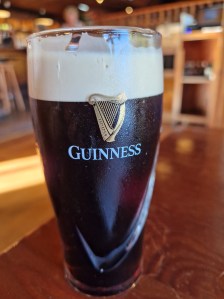 Nothing speaks Irish internationally more than Guinness beer. This is no coincidence. Arthur Guinness was a visionary and he wanted to brew such a beer that would be internationally recognized as an Irish product for many years to come. Hence, the choice of a harp as the symbol of the brewery. Yet, this is not just any harp, it is the “Brian Boru” harp, which you can see in the Long Room at the Trinity College Library in Dublin. It’s a medieval harp that stood the test of time and became the true symbol of Ireland. You can find it as the symbol of the Irish Government (adopted after the independence from England in 1922) and on Irish coins.
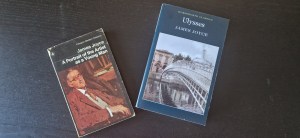 You do not just read James Joyce; you become an Irish person that participates in the narrative.
 WORDS IN IDEAS