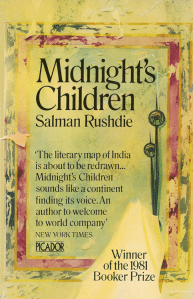
A book about India: “Midnight’s Children”, by Salman Rushdie

Having decided to become a writer after graduating from the university, Salman Rushdie was failing by all accounts. His first book had been a flop, but he was not willing to give up just yet. It was 1976 and Salman Rushdie was wondering what he would write about next. So, he thought about going back to his happy childhood. He booked a trip to India and made a tour through memory lane. Being born a few weeks before India became officially independent, he decided to base his new book on a boy born exactly at midnight on 15 August 1947. The result was the book “Midnight’s Children”, which was awarded the Booker Prize in 1981, the Booker of Bookers in 1994, and the Best of Bookers in 2008.

The story is told by a boy born at the exact time as his home country has acquired independence from its coloniser (the British Empire). Later in life, he decides to write the memories of his life, not taking anything out. Full disclosure: even the most shameful events would be recounted. Throughout the narrative, we learn how the boy’s life is closely connected to the first 34 years of India as a sovereign country. The tale starts in the paradisiac landscapes of Kashmir, when the boy’s grandfather meets the boy’s grandmother, at a time when the country is still under British administration. As the family grows, it moves around throughout India: Delhi, Bombay, and Pakistan.

In a unique style, the author, through the narrator’s voice, describes what is happening to the boy as he grows up, to his family, and to his country. It is a roller coaster of changes and emotions. After knowing the story of his grandparents and his parents, we get to know how the narrator’s childhood was in Bombay. At some point, we learn that a nurse dramatically influenced his fate at his birth, something that marked him later in life. In the meantime, he finds out that has a special power that he loses in exchange for physical improvement.

What looked like a bright future turned into a troubled present as the country descended into dark times. Conflicts and wars affect everyone one way or another, especially in what the schism between Pakistan and India is concerned. The narrator navigates his existence as he can, gaining allies and rivals along the way. He loses people, loses his home, loses everything; gets misplaced and misunderstood in a very Indian way. Indeed, his story could only happen in India to an Indian person. The ending is what is possible: happy or sad is up to the reader to decide.

In a nutshell, a wonderful journey through history and a magical story.

 
Suggestions:


QUIZ


1. How did Amina pay for the legal process?

    A. Didn’t pay – her lawyer worked for free this time.
    B. Sold her family jewels.
    C. Won the money on horse racing bets.

2. What was the narrator’s gift?

    A. Shiva had excellent fighting abilities.
    B. Saleem had the ability to read people’s hearts and minds.
    C. Parvati had the abilities of a true witch.

3. How the members of the Midnight Children’s Conference communicate between themselves?

    A. Via telepathy.
    B. Via post.
    C. Via telephone.

4. What happened in 1965?

    A. Saleem got married with a woman he didn’t love to look “more” Pakistani.
    B. Saleem lost his family, killed during the war between Pakistan and India.
    C. Saleem was expelled from his family and went to live in exile to another country.

5. With whom did the narrator married?

    A. Jamila, his greatest love.
    B. Padma, his greatest comfort.
    C. Parvati, his greatest supporter.

Check the solutions here.


Zarazoga, in Spain, has set a strategic plan to turn the whole city, including their many UNESCO World Heritage sites, accessible to everyone (this means, accessible to people with disabilities). It’s a huge effort, which they want to be a success in five years’ time. You can read the Plan (in Spanish) here.

Check the website daily to read the highlight of the day.


A book about consequences: “The Secret History”, by Donna Tartt

“The Secret Story” is a story about a murder. We learn that right in the first sentence of the book, so no surprises there. What we are going to discover throughout the book is what led to that murder and the consequences it had in the lives of those involved. Strongly based on Greek tragedies, the story is a tragedy of modern times.

It starts very innocently, when a young man is looking for a way out of what he considers his wretched life. By chance, as it was fate, he finds the brochure of a small and unknown university on the other side of the country. After earning a grant, he moves with the intention to never return again. Once there, he tries to enrol in a Greek class, to continue his previous studies. The problem is that the only Greek professor in the university takes very few students per year and registrations are already closed. Later though, almost as by change (or fate), he has an opportunity to be accepted, and he succeeds.

The class group is very restricted and soon they become very close and isolated from everyone else at the university. Yet, two elements of the group are going to be excluded from certain activities developed by the others. Such activities have dreadful consequences and those consequences lead to other consequences that lead to the decision of murdering one of them. The murder is planned for a long time and executed in a few seconds. After it is done, they live in peace with what they did for a while. When their Greek professor and some other students notice the murdered person is missing, the killers are asked if they know what happened to the missing person. Police are called and it becomes harder and harder for the murderers to deal with the secret they carry. In the end, each one follows their own path, quite different from the one they were supposed to follow. None of them really recovers from that murder.


QUIZ


1. Where did Richard spend his first Christmas holidays in the university?

    A. He accepted the invitation of one of his colleagues to spend it with their family.
    B. He went back home, spending it with his parents, because he didn’t have any other choice.
    C. He stayed in a room with no heating and with a hole in the roof, almost dying with a pneumonia.

2. What other options did they consider before deciding to kill Bunny?

    A. None.
    B. They thought of going to the police and confessing, but they didn’t have the courage.
    C. They thought of telling everything to Bunny’s parents to help them convince him to change university.

3. What happened to Henry?

    A. He moved to Argentina.
    B. He killed himself.
    C. He was arrested and accused of killing Bunny.

4. The activities developed by some elements of the group were encouraged by their Greek professor. How did he react when he learned the result of those experiences?

    A. He was happy because they yielded the results expected.
    B. He helped them to cover up what happened.
    C. He left the university and never contacted them again.

5. When did they realized the consequences of murdering Bunny?

    A. When the police started to investigate.
    B. When they were at his funeral.
    C. When the body was discovered.

Check the solutions here.


Tsunamis are rare, but they are highly destructive. It is cheaper to prepare for it than to deal with the devastation and loss of human lives. That’s why the theme of 2025’s World Tsunami Awareness Day is Be Tsunami Ready: Invest in Tsunami Preparedness.

Check the website daily to read the highlight of the day.


A book about translation: “Babel”, by R. F. Kuang

The mother of a Chinese child dies. A stranger takes the little boy to London to give him an education. The boy goes with the stranger because he is suffering and there is nothing left for him in his hometown. The boy changes his name and becomes an Englishman. His tutor enrolls him in a special university in order for him to get a degree in translation. And there is where things turn sour. A secret organization, the true nature of his work as a translator, the return to his hometown, the bond with his friends, all collides in a spectacular and unexpecting ending.
The author R.F. Kuang built a fantastic story, full of magic, taking place during the last period of the British Empire when Britain went into war with China. Having researched the Opium Wars for her first book “The Poppy War”, she based her main character on a Chinese-born boy living in Canton a few years before the First Opium War began. In the book, he will later have a crucial role in that, in a scene inspired by real events and real people. The trade of silver was an essential part of the trade relationship between China and the British Empire and R.F. Kuang uses it in a creative way to tell the story of “Babel”. Furthermore, the real violence and exploration of the colonies by the British is at the heart of the whole story and is fundamental for the final outcome.

A translator herself, R.F. Kuang centres the action in the Royal Institute of Translation, a university in Oxford, UK. This fictional university is located in a fictional tower named Babel and their graduates are destined to fulfil key positions within the empire. The Babel Tower is part of a biblical story. It tells the tale of how humanity tried to build a tower to reach Heaven. God got angry and punished them by giving a different language to different people so the construction would be stopped and people would depart to different parts of the world.

Read more about…


QUIZ


1. Why is silver so important in the story?

    A. Because translators need to buy expensive equipment.
    B. Because it improves everything with the right translation.
    C. Because translators are paid with silver.

2. What is the role his tutor wants Robin Swift to play at the university?

    A. As a native speaker, he can help the university understand Chinese grammar.
    B. The university is in need of a Chinese teacher.
    C. Considering that he was born in China and educated in England, he is the perfect spy.

3. What do students do on the top floor of the tower?

    A. Parties.
    B. Test translation pairs.
    C. Get access to the archive of the university.

4. In Canton, the Chinese city’s administrator makes his decision based on:

    A. The honest opinion of Robin Swift.
    B. A translation mistaken from Robin Swift.
    C. A false information given by Robin Swift.

5. What happens to Victoire?

    A. She dies.
    B. She becomes the Dean of the university.
    C. She escapes and goes start a revolution.

Check the solutions here.


W. Eugene Smith was the photographer who initiated what is now known as photo essay. His best photo stories include “The Pacific War: 1942-1945” and “Country Doctor”. After passing away on October 15, 1978, W. Eugene Smith Fund was founded to carry on his legacy.

Check the website daily to read the highlight of the day.


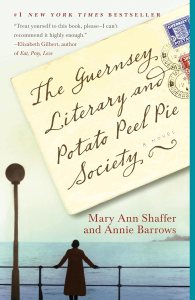
Keyword: MAIL | “The Guernsey Literary and Potato Peel Pie Society” by Mary Ann Shaffer and Annie Barrows

Ms Clara Smartest began the session summarizing the story of the book: “The author tells the story through the letters that are being exchanged between the main character, Juliet Ashton, and the other characters. Juliet is a writer and, naturally, she loves books. She is on a book tour when she receives a letter from a man living in one of the islands of the English Channel. He is contacting her about a book that used to belong to her. Conversation gets going and Juliet learns about an intriguing book club created unexpectedly during the Second World War. The letters are exchanged shortly after the war has ended and emotions are still running high.”
“It is easy for us nowadays to look back at that time and criticize what people did, during and after the war. I mean, common people. They were living in uncertain times and in fear. No one had any idea when the war was going to be over and they wanted to survive. Some tried to have fun and live to the fullest, without being concerned about the consequences. After all, they could be dead the next day. Others did what they had to do to feed themselves or their loved ones, especially feeding children”, said Ms Johanna Practicewell.

“Very true. But there were also very bizarre episodes as well. I think the book aims to focus on the funny ones, instead on the horror people were living in. In this case, the author focused on how creative people had to be just to be able to live their lives. Hence, the way the book club was created and, especially, its name”, said Miss Amelia Matterfis.

“And how they tried to encourage people by making fun of the war, kind of, like Juliet was doing with her books”, added Miss Martha Lovefeelings.

“The novel also shows how ‘fun’ was hand in hand with tragedy and loss. The story of the child is an example”, said Ms Johanna Practicewell. “That happened a lot. Sometimes the children were the result of love, but sometimes were the result of rape. In both cases, women were labelled as the enemy whores.”

“On the other hand, there were caring communities, whose members would protect the other members when something bad would happen to them. It is the case in this story”, said Ms Abigail Vooght. “Although, I think this is very rosy… Reality probably was crueller.”

“I had no idea that Guernsey had been occupied by the Nazis”, said Mr Matthew Barnepy. “Actually, I didn’t even know that island existed. And it is even more astonishing the fact that it is situated not far from the French coast, but it is in fact British. Occupying it should have made sense as it was a strategic location.”

“My surprise was the way the story was written: through letters. I didn’t even know that you could write a book like that, but then again, why not, right?”, said Mr Jeremy Toughready and laughed.

“It was a very popular genre in Jane Austen’s time. Actually, Jane Austen herself wrote a book using that technique, but she didn’t like it very much, so she dropped it”, informed Mr Mark Mindhearting.

“Wow. I had no idea”, said Mr Jeremy Toughready and many others agreed with him.

“Now, we can perhaps wonder if at that time the mail was that efficient. Naturally, it was more important than it is today. These days, we communicate digitally and the post offices deal more with packages than with letters. However, the war had destroyed most of what societies provided to the population. The mail never stopped being delivered (and a word of appreciation to all those who have succeeded in this great achievement), but may have not been so regular and not so fast”, added Mr Mark Mindhearting.

“I’ve watched the film”, said Sophia Vooght. “It was really good. In the film we can actually see a little clearer the brutality, but also how people would find ways to enjoy themselves, together, as a community. And to support one another, facing that horror. I can’t imagine what must have been like to see the Nazi army marching through the streets all of the sudden.”

“The love story is also interesting, isn’t it? I mean, they started writing to each other and then they fell in love… As a writer, Juliet was in her element, and Dawsey, the shy book worm, also found a way to express himself”, said Miss Martha Lovefeelings. “Plus, there’s the kid who found adoptive parents.”

“A nice story with a happy ending”, noted Leo Weave.

“But all traumatised, one way or the other”, added Ms Johanna Practicewell.

“War is always an awful thing. Even the positive, isn’t really, because it’s tainted by horror”, said Mr John Booklish, wrapping up.


** YOUR WORDS AND IDEAS **

By Isabella Muir | On 06 June 2025 at 07:59
Thanks so much for the excellent summary of the novel. I haven’t read the book, but I have seen the film several times. The story shines an important light on how dreadful it must have been for the people of Guernsey to suffer Nazi occupation for five long years. The story also highlights the threat of starvation that the people suffered, a threat that was only relieved when a Red Cross ship arrived with food supplies – but not until December 1944./p>

By Words in Ideas | On 06 June 2025 at 18:10
Thank you for pointing that out. Actually, that is related to the name of the book club. The film is really good and, although the book provides more details, it is very faithful to the book.


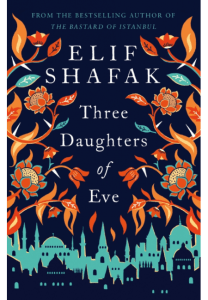
Keyword: RELIGION | “Three Daughters of Eve”, by Elif Shafak

Written by the British-Turkish author Elif Shafak, “Three Daughters of Eve” tells the story of Peri, a Turkish young woman who goes to the UK to study in Oxford. Daughter of an ultra-religious mother and an agnostic father, she witnesses her brothers taking different paths. Her older brother rebels against the system and is imprisoned and tortured, leaving him traumatized for life. Her younger brother follows a religious path, like his mother, with many pitfalls. Peri tries to stay neutral, with tragic consequences. In Oxford, she becomes friends with two young women from other Islamic countries, with different attitudes towards religion. She also meets Professor Azur, hoping he could help her with her questions about God, but instead that path leads to a scandal.

“I don’t know much about Turkish society, but, from what I gather from the book, it seems there is a great divide between those who fiercely defend the religious regime and those who fiercely fight it”, said Ms Clara Smartest.

“It seems there are a lot of problems in Turkey. The opening scene is told with many notes. I guess it is for the readers who are ignorant about Turkey to understand exactly the meaning of that scene within a bigger picture. There are other scenes taking place in present-day Istanbul that contribute to show us the bigger picture”, added Mr John Booklish.

“The family scenes are very insightful, too”, noted Miss Martha Lovefeelings. “A marriage was destroyed due to religion. The woman has become increasingly religious and the man stopped believing in it. At some point, they were no longer talking to each other”.

“That was reflected in their children”, said Ms Clara Smartest. “One was influenced by the mother, the other was influenced by the father, and the daughter was caught in the middle. She found a way to flee and went to the UK, only to find the same problems she was trying to escape”.

“I don’t think she was trying to escape. I think she was trying to find answers. She was very confused and enrolled in Professor Azur’s class to clarify those questions, in vain”, said Mr Jeremy Toughready.

“It’s interesting to see the different perspectives women have on religion in Islamic countries. Shirin is Iranian and she doesn’t believe in religion. You can say she turned into a true Western person. Mona is an Egyptian-American true Muslim and likes to use the scarf on her head. Mona talks about the prejudice people have about her choice. If women should dress the way they want, women that want to wear the scarf shouldn’t be criticized. Actually, at the beginning of the 20th century, it was unthinkable for Europeans to leave their houses without a hat on their heads, men and women. And in the middle of that century, women usually used a scarf on their heads, including Queen Elizabeth II, from the UK. I think this novel puts the question where the question is: how religion can negatively affect people’s lives. It’s not about the scarf, it’s about false beliefs which lead people to hurt themselves and others”, said Miss Amelia Matterfis.

“I agree”, said Ms Johanna Practicewell. “In this case, it was not Mona who hurt the others, it was Professor Azur, who probably is not even Muslim. His twisted vision of the world led to several conflicts and disastrous consequences”.

“Elif Shafak considers herself as Turkish, although she was born in France and lived in several European countries as well as in the USA. Apparently, the time she lived in Turkey was decisive for her identity. Yet, she has a different view from people who have only lived in Europe or from people who have only lived in Turkey. Therefore, she sees Turkish reality from the outside, with inside information. Sometimes, people with these capacities can see things that those fully immersed in the environment can’t see. I believe she intended to show this with her characters. Peri is the one who moves in both worlds and realizes how difficult it is for people to look at things from the other’s point of view, hence all the misunderstandings and the conflicts”, said Ms Clara Smartest.

“It also shows how people can come into conflict with themselves. Peri ended up having the life she was trying to avoid”, said Ms Abigail Vooght.

As usual, the Society’s members discussed the ending and imagined different ways for the novel to be finished. This time, they also imagined different ways to continue the story. Afterwards, they discussed their lives and how religion had or had not influenced them positively or negatively.

“Religion can have a strange effect on people. Those who truly believe in it can’t see a world beyond it and have difficulty in understanding other religions. Those who doubt about the existence of God may spend their entire lives with that conflict, if they come from a background where religion is important. People who don’t believe in religion can also clash with religious people and be pressured to ‘be part of the flock’. Some countries have a religious regime and others don’t, but even those that don’t have a dominant religion. Therefore, the questions presented in this book are relevant for many people”, concluded Mr John Booklish.

“I think this is a perfect ending to our meeting. Before you go, please note that the book for next month is ‘The Guernsey Literary and Potato Peel Pie Society’, by Mary Ann Shaffer and Annie Barrows”, said Ms Clara Smartest.


** YOUR WORDS AND IDEAS **

By Isabella Muir | On 9 May 2025 at 09:10
It certainly sounds like a thought-provoking book and one I should to be massive TBR pile!! :))

By Words in Ideas | On 10 May 2025 at 11:43
It makes us think, indeed! 🙂


Keyword: FAMILY | “Hamnet”, by Maggie O’Farrell

“Hamnet” is the story of how the death of a child impacted a typical 16th century family living in England. The boy was living in Stratford-upon-Avon with his mother and his siblings. His father had moved to London to find better ways to provide for his family. The boy was called Hamnet, a variation of Hamlet, and his father was William Shakespeare. The boy’s death, and his father’s subsequent grief, gave rise to the renowned theatre play “Hamlet”.
“Maggie O’Farrell did extensive research to write this book”, said Ms Clara Smartest. “There are very few records about Shakespeare’s family and the death of his son, thus, she had to guess a lot. She deduced most of it from other information of the time. Although this is fiction, she wanted to be as accurate as possible.”

Most of the members of the Society had been completely unaware of Shakespeare’s personal and family life, let alone that he had a son who died aged 11.

“Sometimes people ask me what makes a masterpiece in literature”, said the Literature Professor Mr Matthew Barnepy. “Most of them think it is about the story. So, they go and write a very intriguing plot with a lot of action and many events happening in the background. Of course, the story is important, but it’s the way you tell the story that makes the difference. Maggie O’Farrell could have written the same story in a much simpler way, as a sequence of events, for example. Instead, she chose to take time to describe the details of everyday life as a way of casting a spell on us and making us captive to the narrative.”

“It must have been really hard to be away from his family, especially when a son dies. Life at that time was really hard”, said Ms Abigail Vooght. “I think the author wanted us to feel that. It was like we were part of the family, like we were there and it was happening to us as well.”

“It shows us the true meaning of ‘enjoying the little things’. The writer shows us how important they are, how much we should pay attention to them, for good and bad”, said Miss Amelia Matterfis. “We take a lot for granted. Like, we assume that children will grow up and prosper. Sometimes, they fall ill and die.”

“That is what happens in areas in conflict. People just don’t know if they will be alive the next day. In 16th century England, there was little hygiene and therefore many diseases. Death was just around the corner, but people would go on nevertheless. Nowadays, in the richest and most developed countries, people believe that medicine will cure everything. Sometimes we ask the impossible from doctors, who are just human beings, thus, not perfect”, said Ms Johanna Practicewell.

“Grief is grief regardless of the conditions or the time. Many deaths could have been avoided in the 16th century, it is true. However, children still die unexpectedly today and parents suffer the same. That’s what impressed me the most. Although she was describing a family from centuries ago, the same could be applied to a modern family”, said Miss Martha Lovefeelings.

“I think that the story is about love. Shakespeare married Agnes despite her being considered unconventional. She warned him many times until he was sure of what he was doing. Then, we can “see” the love between family members, including the father who is away for work”, said Mr Matthew Barnepy. “The focus is on Agnes, the mother, her relationship with her family, with society, and with her husband. How she coped with her loss, which was different from the way her husband coped. People react differently and sometimes that is not fully understood.”

“It’s interesting that no direct mention is made to Shakespeare. I believe the aim is to show that it’s just one family among many and the fact that it’s the family of the most famous playwright of all times makes no difference. They are just human beings, struggling to survive in an unforgivable world and trying to make the most of what they have. It could be our own family. It could happen to anyone”, said Mr Jeremy Toughready.

“Exactly, it makes us think how fragile life is and how fragile human relations are. It can all change in a moment. One minute the boy is alive and kicking and a few hours or a few days later he’s dead. Everyone is affected: the mother, the father, but also his sister, who was his partner of fun and accomplice of mischief”, said Miss Martha Lovefeelings.

After exchanging their first impressions, they discussed further some details of the story and how accurate they were to what is known. In the end, they concluded that it didn’t matter if the records showed a different perspective, for example about Shakespeare’s wife. Little was known anyway. Most of what was recorded were interpretations that could be wrong. Maggie O’Farrell had focused on facts.

“It is a great book, indeed”, said Mr John Booklish, ending the meeting. “Next month the book is ‘Three Daughters of Eve’, by Elif Shafak. Have a lovely week!”


** YOUR WORDS AND IDEAS **

By Isabella Muir | On 5 April 2025 at 15:11
Thank you for a wonderful review of what sounds like a wonderful book, which will now go to the top of my TBR book pile! Having read several of Maggie O’Farrell’s other books, I would agree that she is certainly an incredible author!

By Words in Ideas | On 5 April 2025 at 20:49
She is an amazing writer, indeed! I’m glad you liked the review and that it sparked your curiosity to read it. You won’t regret it!


Keyword: TIME | “L’Anomalie” [“The Anomaly”], by Hervé Le Tellier

Ms Clara Smartest, who had “officially” been put in charge of introducing the book of the month, took the floor.
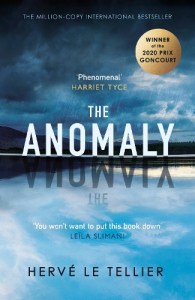
“I must say that I’m not a big fan of scientific fiction. I mean, it’s not that I don’t like it, it’s just that I usually choose other types of books. That said, I really enjoyed this sci-fi novel. So, the story is about Blake, Victor Miesel, Lucie, David, Sophia, Joanna, Slimboy, and André. One day, on a stormy night, all of them were on board a regular flight from Paris to New York. All of them had their lives and their own problems. And, after that flight, all of them came to have their duplicates. The question the book tries to answer is: and now what happens?”

“It’s interesting that the question of what had happened is secondary”, said Ms Johanna Practicewell. “It’s mentioned, but the mystery is left unexplained. There are not many efforts in that regard. The ‘authorities’, so to speak, are more concerned with practical matters like ‘what to do’ and ‘how to avoid this in the future'”.

“Hence, the experts that are called unexpectedly. They are not called to explain the phenomenon, but to create instructions to manage the situation”, added Mr Jeremy Toughready. “It shows the USA way of thinking: it doesn’t matter why; it matters people are told what to do.”

“The Chinese have a different approach to the same situation”, said Mr Matthew Barnepy.

“Which was the solution the Americans came up with in the end”, commented Miss Amelia Matterfis. “Then, the ethical question arises: is it right?”

“Well, introducing the passengers to their duplicates was not better”, said Ms Abigail Vooght.

“What I found more interesting is the confrontation of oneself to his/her 3-month-previous version: the choices that were made that changed the course of their lives, the regrets, the wins, the tragedies, the successes”, said Mr Mark Mindhearting. “It makes us think about our lives. What kind of person were we 3 months ago? And 3 years ago? And, for those who are older, 30 years ago? If we had a chance to start over, would we do things differently?”

“On the other hand, memories can trick us. We don’t remember how things were exactly. And they are always changing”, added Ms Johanna Practicewell.

“It’s also interesting to see the evolution of the perception of one’s feelings and the feelings of others. We are trapped in our own mind and don’t know what is going on in someone else’s mind”, said Miss Martha Lovefeelings.

The group then discussed details of the book. The solution found by Blake, the regular guy who was actually a hitman for hire in his spare time, was the most radical. André, the architect in love with a much younger woman who didn’t love him with the same intensity, was the most practical, accepting the new reality and adapting rapidly. The confrontation between the two little Sophias, uncovered a hidden secret about their families. The singer Slimboy and his duplicate found the most original solution and the success of the “oldest” was doubled. David’s fate was repeated. Joanna, who had married and became pregnant in those three months, realised that she shared the love of a man with another person. Lucie realised she had to share her son. Finally, Victor Miesel had a golden opportunity to start a new life.

Then, they talked about their own lives and how they would react if they would find themselves in that situation. They agreed that they wouldn’t know until the situation presented itself, but still they imagined how it would be like. Following what Mr Mark Mindhearting had said, they extended the exercise from 3 months to 3 years and 30 years, for those who were old enough. The youngsters were upset when they were told how young they were and how their perception of reality would change.

“Things will become clearer, and yet more uncertain. Clearer because we have more knowledge and more experience. More uncertain because we realise that our youthful certainties can be misleading. That’s why older people are more prudent, which is something that despairs young people”, said Mr Mark Mindhearting, who was the oldest in the room.

“That may be true, but I personally find it pointless to compare the present with the past, or to revive past events. The past is the past. We can’t go back or change anything; we can only go forward and make wiser decisions. I mean, it’s important to acknowledge our path, but we have to live in the present”, said Ms Johanna Practicewell.

“Well, I think this discussion has left us a lot to think about. I personally like these kinds of books that make us think and challenge the way we look at what surrounds us.” Mr John Booklish was wrapping up the meeting. “Before we go, just inform you that next month the book will be “Hamnet”, by Maggie O’Farrell. Have a lovely week!”


** YOUR WORDS AND IDEAS **

By Isabella Muir | On 5 March 2025 at 10:25
An excellent review of a thought-provoking subject, although I may challenge Ms Praticewell and say that we need to remember the past in order to learn from it? Also, I look forward to the review of ‘Hamnet’. I have just finished O’Farrell’s book, ‘The Vanishing Act of Esme Lennox’ – a completely awe-inspiring book, beautifully written by an extremely talented writer!

By Words in Ideas | On 6 March 2025 at 19:12
Thank you for your praise! Yes, Ms Practicewell “admits” you are right. She is a pragmatic person who is used to work with what she has at any given moment and not thinking “if we had this as before…” That said, knowing the past can help us prepare for the future, no doubt. Yes, Maggie O’Farrell is an amazing writer! Thank you for that recommendation! Not to give anything away, but the book of next month is really a lovely piece of literature.


Keyword: ENTERTAINMENT | “Tierra” [Earth], by Eloy Moreno

As the book for this month was not translated to English, the members of The Intrepid Book Society had to help each other. Those who knew Spanish helped those who didn’t and many emails were exchanged between them. Sometimes, they would meet in person. This exercise helped bring them closer and to get to know each other better. It also made them realize how important it was to know foreign languages. There was so much in the world that was inaccessible for those who only knew one language! Indeed, by choosing which were the books “worthy” to be translated, publishers were deciding what their readers should read (or what would earn them more money…). Knowing other languages would broaden the perspectives about the world and the power of deciding what to read.

“Let me just say that it was delightful to see how much we helped each other to ‘decode’ this book. I heard that some of you decided to learn a new foreign language, which I personally think it’s great. Knowing a foreign language opens a door to a whole new world”, said Ms Clara Smartest.
She paused while the members would agree with her.

“This is a story about a family and about a TV show, although it is much more than that. Some of you may disagree with me, which is wonderful, but I think the ultimate goal is to make readers change their perspective of the world, to make them see beyond the surface”, she continued.

“Indeed”, Mr Matthew Barnepy agreed. “As a writer myself I greatly admire how the story was written, how we are led to a certain interpretation until, all of a sudden, we realize everything is different from what we thought previously. It’s brilliant.”

“Yes, I think it’s in the ending where good books reveal themselves and this book has a very good ending. Unexpected as well”, said Miss Amelia Matterfis.

They discussed the ending for a while. Usually, they would come up with different versions or they would disagree about what the writer had decided. Not this time. They all agreed that the ending chosen was the best fit for the story. If the ending was different, the story would be different and the point that the writer was making would be lost.

“I think the story also shows the misunderstandings between family members that can be perpetuated over time, turning them into apparently unsolvable problems. If people would talk to each other before things get to that point…”, said Miss Martha Lovefeelings, leaving the conclusion of the sentence in suspense.

“Sometimes it’s just not possible. For that to work, it would be important to know how to listen, something that can be very difficult due to the emotions associated with the matter in question”, said Ms Johanna Practicewell.

“True. I think that is shown in the book. Parents are not always aware of how their actions may affect their children. In this case, two children were affected in two distinct ways”, said Ms Abigail Vooght.

“The TV show was also very interesting to follow. We found out how much it is linked to the family story. Besides, it’s incredible how the public would have such strong reactions to all that was happening and never suspected the truth”, said Mr Jeremy Toughready.

“Precisely. It’s the capacity the group has to follow false beliefs, believing they are true. We see it every day these days”, Ms Johanna Practicewell. “Here, it was harmless, but this kind of blindness can be very dangerous.”

“Lying to the audience can be dangerous too”, replied Mr Jeremy Toughready. “Who knows how aggressive the crowd can become. Actually, there’s an example of something that happened in the show and the consequences that it had. Not so harmless, actually.”

“There was a good reason for that!”, protested Miss Martha Lovefeelings.

“The matter was solved in two ways: the public way and the private way. Not exactly the same…”, commented Mr Jeremy Toughready.

“We live in a society of lies and deception”, said Mr Matthew Barnepy. “I think that is what the book is showing us.”

“Is it possible to end the cheating? The double lives some people have?”, asked Miss Amelia Matterfis.

“That is the question, right? In the book, the deceit plays an important role. The goal would not be possible to be achieved if there was not a deceit”, concluded Mr Matthew Barnepy.

“I enjoyed following the brother and sister’s adventure. They were apart from each other for a long time, but the game they had to play together brought them closer together. It was nice”, said Miss Martha Lovefeelings.

“And their emotional evolution was also interesting. As they were finding out the truth, they changed their perspective, and what they believed was put into question”, added Miss Amelia Matterfis.

They discussed the details of the story and Ms Abigail Vooght made an interesting contribution as a parent and as a person who had to pretend all the time. Mr Mark Mindhearting talked about how the narrative was intertwined and how the writer weaved the events in a way that both the reader and the siblings would find the answers step by step.

“Well, having a reality show set on Mars is genius! I would definitely follow that show!”, said Miss Amelia Matterfis.

“It was a good catch, indeed. I think the whole story is very well structured and it keeps us guessing until the end. Full of twists along the way. It’s really good”, said Ms Clara Smartest.

“Well, that concludes today’s meeting”, said Mr John Booklish. “The book for next month is ‘The Anomaly’, by Hervé Le Tellier.”


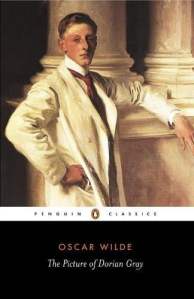
Keyword: BEAUTY | “The Picture of Dorian Gray”, by Oscar Wilde

“The book for this month was written by Oscar Wilde, an Irish writer who lived in the last half of the 19th century, during the last years of Queen Victoria’s extensive rule. His famous playwrights wittily characterized the society at the time and surpassed his numerous poems and short stories. His only novel, ‘The Picture of Dorian Gray’, tells the story of a beautiful young man throughout his increasingly decaying life. At the beginning of the story, a friend paints his portrait, forever preserving its untainted beauty. This painting will have a crucial role in his life”, said Ms Clara Smartest.
“Thank you, Clara. Now, who wants to be first?”, asked Mr John Booklish.

One by one, the members of The Intrepid Book Society gave their opinion about the book. In general, they thought the story was about vanity and how important appearances are in society, which is to say how someone who is very rich and very beautiful is beyond reproach, no matter what he does behind the scenes. The painting allowed him to maintain his youth beauty undamaged, giving him a free pass: he could do whatever he wanted that nothing would ever happen to him.

“The portrait would absorb all his ugliness, so Dorian Gray would remain immaculate before other people in society”, said Ms Abigail Vooght. “I know a lot of people who wish that could happen, even though they still can get away with a lot of ‘ugliness’. If only people knew what happens in the background…”

“I think Johanna made an important point: Dorian Gray was negatively influenced by Henry Wotton”, said Miss Amelia Matterfis.

“Yes, but he made his own decisions and, by realising he could get away with anything, he stopped restraining himself”, said Mr Jeremy Toughready. “It was his choice, no one forced him.”

“Maybe he was traumatised by the death of his fiancée; he felt guilty about it. So, all the wickedness was a result of that”, said Miss Martha Lovefeelings.

“That is just excusing him. He has no excuse. He became an evil man and that’s the end of it. Maybe he had always been evil. He certainly was very vain; only his beauty mattered to him”, said Mr Mark Mindhearting.

“Well, people around him were always praising him. That didn’t help…”, commented Miss Amelia Matterfis.

“I think it shows the hypocrisy of society. People would praise him because he was beautiful and rich. However, behind his back, the story was different. Many close friends had stopped speaking to him and they were spreading rumours about his bad conduct”, said Mr Mark Mindhearting.

“Except Basil, the painter, who actually wasn’t part of his social circle. He saw what was going on and he went there to warn him. Look what he got in return…”, said Mr Jeremy Toughready.

“Basil turned out to be his only true friend. All others, and especially Henry Wotton, weren’t really his friends. No one really cared about Dorian Gray. Only Basil, who had been cast out of his life”, said Ms Johanna Practicewell.

Then, they discussed the ending, how appropriate it was and how the story could have ended differently. Some thought the ending was perfect, others said that they would have preferred it if the story could have had a twist of some kind.

“We have to consider the time in which the novel was written. It shows the people’s mentality then”, said Mr Matthew Barnepy. “Besides, police work was different in those days, although police are mentioned in the book.”

“I don’t think people’s mentality is that much different today, to be honest”, said Ms Abigail Vooght.

“One thing is certain: nowadays no one would paint a portrait. They would just take several photos with the smartphone making funny faces”, laughed Miss Amelia Matterfis.

“When photography first appeared, it was believed it would capture people’s souls. If Oscar Wilde had written the novel at the beginning of the 20th century, instead of a painting maybe the story would be about a photo…”, said Ms Johanna Practicewell.

“I think he was inspired by the time he was living with a painter, at the beginning of his professional life. He had just graduated from Oxford and moved to London to pursue his literary career”, said Ms Clara Smartest.

“Well, nowadays, Dorian Gray wouldn’t be able to go so unnoticed. Someone would have taken pictures of him with the smartphone. Then, it would all be blown up on social media”, said Miss Amelia Matterfis.

The group went on discussing other scenes and other characters of the book and how they influenced the story. They also compared the differences and the similarities between the Victoria Era and the present day.

Wrapping up, Mr John Booklish announced that the book for next month would be “Tierra” [Earth], by Eloy Moreno.


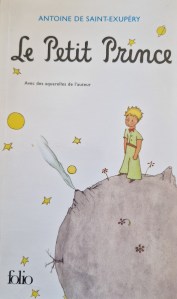
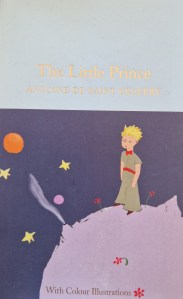
Keyword: HAPPINESS | “Le Petit Prince” [“The Little Prince”], by Antoine de Saint-Exupéry

“Thank you for coming, folks”, started Mr John Booklish. “Our book for this month is ‘The Little Prince’, by Antoine de Saint-Exupéry. This is the second most translated book in the world (the first is the Bible). Basically, the story is about an encounter between a pilot that crashes in the desert and an alien. This alien is a little boy that comes from a star far away and is travelling throughout the universe, meeting other aliens who live on different planets. Like him, those people live alone on their little planet and each one has a certain purpose.”

“A few remarks about the author before we give you the floor”, added Ms Clara Smartest. “Antoine de Saint-Exupéry was a pilot during the war and a courier, having crossed over the desert many times. He wrote several books, including one which stem from his nearly-dead experience after crashing in the desert. The description of his hallucinations is very interesting and lively. In a way, ‘The Little Prince’ also stems from such an experience, but reflects as well his concerns about the direction the world was heading. The thesis in the book is that grown-ups forget to be open to the world, as when they were kids, and understand nothing.”
“Martha, you may take the floor now. Tell us why you enjoyed the book so much”, said Mr John Booklish.

“Well, I think the Little Prince is really sweet. He is polite, but doesn’t let go of something he wishes to understand until he does. He is curious and is exploring the world with an open mind, ready to absorb what comes in his way. It’s a pity that only too late and when he was too far away he understood how much he loved his rose and how much his rose loved him.”

“Well, the rose was really annoying, wasn’t it?”, commented Mr Jeremy Toughready.

“She was acting like that because she wanted the Little Prince to pay attention to her”, replied Miss Martha Lovefeelings a little bit irritated.

“That didn’t work very well, did it? She made him go away.”

“He went away because he wanted to explore the universe.”

“That could be true, but if she wasn’t so annoying, he wouldn’t think of leaving, I’m sure.”

“Well,” interrupted Mr John Booklish, “let’s move on. Johanna, Mark, what do you think about the book?”

“I think the pilot was having a hallucination, which helped him to cope with the situation. He was alone, had just crashed in the middle of the desert, and needed to make a repair on the plane in record time. Imagining there was a boy there with whom he could talk to would be a good distraction”, said Ms Johanna Practicewell.

“It’s a beautiful fable about how adults lose sight of the most important things in life, like what love really is and how to make friends. Those people who the Little Prince met during his journey had become so focused on their purposes they had forgotten anything else. Therefore, the story aims to remind adults how it was to be a child, full of amazement and curiosity about the world”, said Mr Mark Mindhearting. “I especially like the fox. It’s like the voice of conscience we sometimes have in our mind, telling us to look closely, to become aware of what it is all about, really. It’s the fox that says the ‘essential is invisible to the eye’, as saying to look beyond what you can see with your eyes, that the important things, or better yet the most important things, are felt, not seen.”
“Yes! People usually don’t pay attention to feelings, it’s like they are blind”, said Miss Martha Lovefeelings with an indignant tone.

“Adults have responsibilities, children don’t. We need to focus on solving problems, not in guessing that some drawings represent elephants inside snakes”, commented Mr Jeremy Toughready. “The drawing does seem like a hat.”

“A hat with eyes…”, whispered Miss Martha Lovefeelings.

“Ok, people, it’s great that you have different opinions, but you don’t need to fight. This is just a book, nothing else”, interrupted Ms Clara Smartest. “Maybe this was the author’s goal when he wrote the story, to make people stop and think about their lives. Are we really paying attention to what is important to the people in our lives? Yes, people can be annoying, but, without them, life would be very empty.”

“I agree. All the people the Little Prince encountered during his journey lived alone. Yet, they didn’t notice it because they were so absorbed with the role they were performing. Do you really miss people if you don’t even notice they aren’t there?”, asked Ms Johanna Practicewell.

“Maybe, in time. If someone is too absorbed by his or her work, once they retire, they look around and there is no one there, no one to do things with, no one to share the wins and the fails…”, said Mr Mark Mindhearting.

They went on, discussing the ending. Some were sad because they hoped that the Little Prince would be rejoined with the rose. Others presumed that the Little Prince had found a way to get back home and lived happily with his rose.

“I’m afraid our time is almost up. There was much said to think about. And I guess the best endings are those which can have different interpretations”, said Mr John Booklish.

“True”, confirmed Ms Clara Smartest. “Before we wrap up, just to let you know that the next book will be ‘The Picture of Dorian Gray’, by Oscar Wilde. See you all (hopefully) in a month.” 

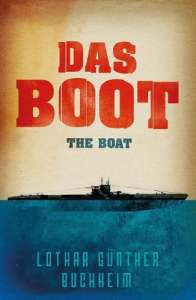
Keyword: WAR | “Das Boot”, by Lothar-Günther Buchheim

Lothar-Günther Buchheim was born in 1918. He was 15 years old when the Nazis took power and, while attending the Hitler Youth’s meetings, where he had military training, he seized the opportunity to take photos and write articles about the activities of the organization. When World War II broke out, he was studying art, but he left his studies to become a war reporter for the regime. The Ministry of Propaganda had created military structures (called Propagandakompanie, known as PK) to train and employ war reports in the service of propaganda. These reporters would transmit information for the general public about what was happening in the front line (according to the Minister’s guidelines, obviously) via photography, cinema, and written articles.
After finishing his PK training in Potsdam, he was sent to Baule-les-Pins, 15 kilometres away from the port of Saint-Nazaire, to report about U-Boots. In the meantime, the U-96, whose Commander was Captain Heinrich Lehmann-Willenbrock, arrived there around that time and the first photos Buchheim took in the port was precisely of its return from its 3rd mission in the Atlantic, in March 1941. Both men met later and, in October 1941, Buchheim was assigned to participate in the 7th mission of the U-96 submarine. A dedicated, thorough, and enthusiastic “PK man” (as he was known), Buchheim took 5000 photos, documenting everything and everyone. The result was unique and historical. His photos were published in several newspapers and magazines, influencing many young men to enlist in the Navy as submarine crew.

The mission began in October 1941 and ended in December 1941. During those months, Lothar-Günther Buchheim lived in the submarine alongside the crew and became a great friend of Captain Heinrich Lehmann-Willenbrock and First-Engineer Freidrich Grade. Years after the war had ended, when he wrote a book about this experience, the two military officials were paramount to review the details of “Das Boot”. Although it was a novel, he wanted the story to be as authentic as possible. Freidrich Grade corrected and explained all the technical details of a submarine and Heinrich Lehmann-Willenbrock gave him all the detailed information about the chain of command and how orders were given.

The book became an international bestseller precisely due to its detailed and authentic description of how life was inside a U-Boot. It starts with a scene at a hotel, as a way to describe the military setting. This was probably inspired by what Buchheim witnessed in the Hotel Majestic, where the U-Boot officials stayed when they were not on mission. The second chapter is dedicated to the submarine itself, how it was constructed, how it operated, how people would move around performing their routines, where they would sleep and eat, how they would relate to each other. The description of each post is detailed and we get an idea of the role that each man played inside the submarine. Then, the author tells what they did when there was nothing to do. Contrary to what one might expect, this is actually very interesting due to the mastery of the narrative.

The action itself (the attack on a convoy and the attempts to escape from the British Navy) are so vivid it seems the readers are there, alongside the military personnel, feeling the same emotions. The encounter with another U-Boot in the middle of a storm actually happened. In fact, the attacks and the escape also happened, as did the stopover in the Port of Vigo and the attempt to enter the Mediterranean Sea through the Strait of Gibraltar. Impressive is also the description of being inside of a submarine during a storm. It’s something similar to being inside a washing machine.

The book was published in 1973 and in 1981 a film was released, aiming to meticulously depict the book. A documentary entitled “U-96 – The true story of Das Boot” was released in 2022 with accounts from people who were involved in the production of the film. It also includes an interview with the First-Engineer Freidrich Grade himself, the last survivor of the U-96, who was still alive at the time.

The film was faithful to the book just as the book had been faithful to reality. After watching the film, submariners were surprised at how much the film captured what they actually lived. The aim of the book’s author was to show the military’s point of view, those who were fighting the war inside the German submarines and had just on mission: sinking British ships. Some say it was an antiwar story. Regardless of whether this is true or not, the book (and the film) is a remarkable historical document, even though it is fiction.

By reading the book and/or watching the film, we learn what those German military went through during the Battle of the Atlantic. About 70% of the U-Boots’ crew died.

 
The book for next month will be “Le Petit Prince”, by Antoine de Saint-Exupéry.


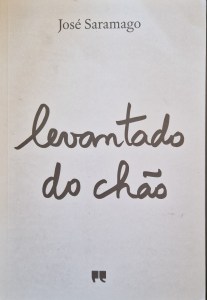
Keyword: WORK | “Levantado do Chão” [” Raised from the Ground”], by José Saramago

The first meeting of The Intrepid Book Society was held on a chilly Sunday afternoon. Summer was definitely over, but winter was still far away. Instead of lazing on the sofa in front of television, the members of the Society put on their warm coats and headed to the local library. Mr John Booklish, the President and co-founder of the Society, was the first to arrive. He needed to open the library and prepare the room, which had been kindly made available for that purpose. Ms Clara Smartest, the Vice-President and co-founder, arrived shortly after and helped him by placing the chairs around and putting some drinks and biscuits on a table. The other members arrived on time one by one and they all sat on the chairs.

Mr John Booklish officially opened the meeting briefly introducing the book under discussion: “Levantado do Chão”, by Jose Saramago. Before he would go on about the story of the book, he made a bibliographical note about the author.

“Jose Saramago was born in Portugal into a family of landless farmers. As such, his family struggled financially. Even after moving to the capital, Lisbon, where they found slightly better living conditions, they always had little money to spare. As he grew up, Jose Saramago was unable to buy books, but he often went to the local library. He started to develop some literary knowledge and he later wrote his first novels. However, now with a family of his own to support, he had to work to make money. Thus, literary affairs were put aside. In the meantime, he got involved in political matters, which got him fired from his job. Luckily, he found a new job in a publishing house, where he worked in the operations department and as a translator. Later, he became a journalist for many years until he got fired again for political reasons.

“This time, he decided to dedicate himself to writing literary books. He moved to a place called Lavre, in the Alentejo region, to research for his first ‘serious’ book: “Levantado do Chão”. Although he had been born in Ribatejo (a different Portuguese region north of Alentejo) he could relate with the landless farmers that were the majority of the population there. The result was a story written in a totally different style. This was the first book of a new style, which was so unique he was awarded the Nobel Prize in Literature for it, many years later.”

After a little pause, Mr John Booklish added: “However, ‘Levantado do Chão’ is distinctive from the subsequent novels Jose Saramago wrote. Although the style is similar, contrary to the other novels, ‘Levantado do Chão’ is based on true events. It is a fictional story, but could have been a true one. The national and local events mentioned in the book happened. His other novels are based on ‘parables sustained by imagination, compassion and irony [that] continually enables us once again to apprehend an elusory reality’ (in the Nobel Prize official website). Therefore, ‘Levantado do Chão’ is a literary work like no other, which bore the seeds of his extraordinary literary work”.

“So, in a nutshell”, Mr John Booklish concluded, “this is the story of the Mau Tempo family (‘Bad Weather’ family). It starts somewhere at the beginning of the 20th century and ends somewhere after the 1974 Revolution. While we read about what is happening with the family, we also get to know about what is happening in Portugal at the same time because the political events directly affect the family. They all work the land, but they don’t have a land of their own. They work for the landlords when there is work to be done. When there is no work, there is no money, and no other way to make money. The landlords know this and take advantage of it by paying as little as possible, and forcing them to work from sunrise to sunset. Then, an idea emerges among the workers: to fight for better pay and less working hours. And here is when problems arise.”

At this point, Ms Clara Smartest decided to intervene, saying that the book was a political statement, a reflection of the author’s political involvement. After all, it was not by chance that he decided to write his first “serious” novel about his topic. He wanted to show how difficult the life of landless farmers was, a life of misery, without any hope of improvement. Well, at least during three-quarters of the 20th century. It also aimed to show how brutal the dictatorship was and the struggle farmers endured while fighting for better working conditions, which were due and fair.

Although not disagreeing with this entirely, Mr Jeremy Toughready said that the story showed how resilient the farmers were, and how that helped create a strong will and a strong mind. They were prepared for everything that might come, not afraid of the consequences. They just went for what they wanted and for what they thought it was right, despite political affiliations. What he meant, he added, was that they did what they did not because of some political belief, but because it was just right.
Ms Clara Smartest agreed and said that was precisely the point. Political belief resulted from what people thought was right. Obviously, the landlords thought that the regime at the time was the right one because it defended their interests. That was why it only took the landlords to call the Guards for the farmers to be arrested.

Miss Martha Lovefeelings interrupted saying that was true, but the novel also talked about love. It was possible to find love even in the hardest possible conditions and to build families even with very little money. The family stayed together because of what they felt about each other and those feelings were what made them stronger. To this, Mr Mark Mindhearting strongly agreed and added that it showed how the toughest guys could also be capable of feeling the purest love.

Ms Johanna Practicewell, who was feeling bored with all that sentimentality, mentioned how interesting it was to see the evolution of the country from monarchy to republic and then ending in a dictatorship… until the revolution took place and everything changed. And yes, the story was about a landless farmer family, but at the beginning, the man who gave rise to the family was a drunken shoemaker, forced to move from town to town due to the troubles he would make wherever he went. Plus, he mistreated his wife and neglected his children. That was during the monarchy. Then, the men of the family changed tune during the republic and the dictatorship and women began to be treated with more respect.

Ms Clara Smartest said that was because of their political beliefs. The shoemaker didn’t have any political beliefs. Thus, he didn’t have any purpose in life.

Miss Martha Lovefeelings replied that taking care of his family should have been a strong enough purpose, but it wasn’t. He was just a bad man.

Mr Jeremy Toughready added that it was different times. Fighting tyranny had nothing to do with taking care of the family. It was a joint effort. Other people were relying on them. It would put everything in another perspective.

“Your family is relying on you”, exploded Miss Martha Lovefeelings.

“Yes”, said Mr Jeremy Toughready, “and that is why those men are more attentive to their families. Exactly. They realize that their fighting buddies are relying on them and they have responsibilities. They recognize they also have responsibilities towards their families because what they are fighting for will benefit them as well. It’s all connected”.

Mr Mark Mindhearting intervened saying that the shoemaker was a selfish man, he only thought about himself. He didn’t have the sense of community their children and grandchildren developed.

The debate went on for a while longer around these topics until Mr John Booklish closed the meeting. He thanked everyone for coming and he scheduled the next meeting for 3rd November, informing the book for the following month: “Das Boot”, by Lothar-Günther Buchheim.

All members confirmed it and left the library, still commenting on that month’s book on their way out. Ms Clara Smartest stayed behind to help Mr John Booklish to clean the room and close the door. Then, they said farewell until the next meeting.


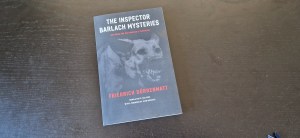
Keyword: INVESTIGATION | “The Judge and his Hangman”, by Friedrich Dürrenmatt

Lieutenant Ulrich Schmied, working with the Police of Bern, is found murdered inside a car on the roadside. The police officer responsible to solve the case is Walter Tschanz and he is helped by Commissar Bärlach, who cannot investigate the case as he is very ill. However, Bärlach tells Tschanz that he knows who the murdered is and hopes that Tschanz can discover who he is by himsellf and bring him to justice. As the investigation progresses, the case gets stranger and stranger. Bärlach’s actions are bizarre and obscure until we reach the end of the story and everything is explained. Although it is a crime investigation and the main characters are all police officers, the short story is not about the investigation itself. In reality, it is about criminals who get away with murder… or at least try. It is about the good and the evil and the battle between the two. And it is about Commissar Bärlach’s relationship with a great criminal…
Friedrich Dürrenmatt was born in Switzerland, in the Emmental region, moved to Bern when he was 14 years old, and ended his days in Neuchâtel. Travelling from east to west, he relocated gradually about 90 km. Despite always living in Switzerland, he travelled the world, like he had dreamed when he was a kid. In the meantime, he studied literature and philosophy while dedicating himself to painting. In the end, he decided to become a writer.

When Second World War broke up, he was studying at the university, in Switzerland naturally. He wasn’t directly affected by the war, but his writings were influenced by it. They are dark and obscure, bizarre and strange. At the time, neutral Switzerland was crammed with war refugees, spies, and Nazis who wanted to hide their war looting in Swiss banks. It was perfect to study the dark side of people. The Cold War had also an impact on him.

“The Judge and his Hangman” was published in 1952, at the beginning of his writing carrier. The story takes place where he lived, so he knew the landscape very well. The story reflects the WWII influences and the writing reflects his literature and philosophy studies. Likewise, “Suspicion” is under the same spells and has the same main character, the Commissar Bärlach. It takes place after “The Judge and his Hangman”, but this time in the Zurich area, where Dürrenmatt briefly studied and, thus, was also familiar to him. This short story revolves around a Nazi medical doctor that may or may not still be alive and may or may not have his own sanatorium. Dürrenmatt explores here the WWII traumas and the people’s attitudes before these issues.

Friedrich Dürrenmatt died in 1990 as one of the greatest Swiss writers.

For more information:

  • Friedrich Dürrenmatt – from Emmental to Broadway
  • Centre Dürrenmatt Neuchâtel
  •  

    Keyword: WRITER | Ernest Hemingway

    Instead of going to study in a university, Ernest Hemingway preferred to go and work in a newspaper as a journalist, where he learned how to write objectively and to-the-point. Then, before turning 20 years old, he tried to be recruited by the army to go and fight in World War I. As he was refused, he found another way to be involved in the war: as a driver for the Red Cross. He was injured in the war and, after spending a long time in a hospital and being rejected by the nurse with whom he had fallen in love, he returned to the USA. These events forged his whole life.

    As a journalist, he went back to Europe many times as a foreign correspondent. He was stationed in Paris, France, for some time, but Spain was his favourite country. He covered the Spanish Civil War and World War II, when he landed in Normandy with the American troops on D-Day. In the meantime, he went to Africa to do a hunting safari and bought a boat to go fishing. He lived life to the full, survived wars and plane accidents, and travelled extensively, soaking everything and turning it into masterpieces, before he died in 1961. He had been born five months before the 20th century started and witnessed all major (and terrified) events of the century.

    Deep inside, he saw himself as a writer. Reporting was a way to achieve this (and make some money) and all his adventures were food for his novels and short stories. He wrote them in a style that was innovative at the time and had been inspired by his reporting: objective, without sentiment, with short sentences and without adjectives and adverbs. His mastery was in the rhythm of the words. Besides inspiring many subsequent writers, he was awarded the Pulitzer Prize and the Nobel Prize, mostly due to his best work, named “The Old Man and the Sea”. This was the last work to be published while he was still alive and it is considered his best work. It tells the tale of a fisherman that goes fishing and his struggle to catch a fish. The story is very simple. It’s in the way it is written, what it tells and what it implies, where genius lies. However, other books written by Hemingway are as good (or, at least, almost).

    “A Farewell to Arms” is a vivid description of his experience in World War I and aims to show the reader how war is in reality. It is heavily based on his own experience. The main character drives ambulances like he did and he falls in love like Hemingway did. Although the descriptions of the war are authentic, the romantic connection is not (maybe he wrote what he wanted to have happened).

    Also about war, but this time in the guerrilla point of view, “For Whom the Bell Tolls” is about an American who joins the Spanish resistance during the Civil War. It’s an intense account on how it is like to face death on a daily basis. These fighting men and women live lifetimes during short periods of time, living each day as if it could be their last, which would prove to be correct in most cases.

    Inspired by his time as a foreign correspondent stationed in Paris, “The Sun Also Rises” (or “Fiesta”) is about how young people got lost after World War I ended. Starting in Paris, the narrative takes the reader (via characters) to Spain and the bullfighting, an event very dear to Hemingway’s heart. They also go to the south of France and Madrid, roaming from place to place without purpose and without feeling.

    Those who wish to know how Hemingway’s hunting safari was, can read “The Green Hills of Africa”, his journal of the journey. However, if you don’t want to know details of chasing and killing animals, skip it. In any case, it is a beautiful view of the Africa landscape, and an insight on how humans can preserve (or destroy) nature.

    Sources:

    Keyword: EVIL | “The Help”, by Kathryn Stockett

    Kathryn Stockett was born in Jackson, Mississippi, USA, in 1969, in a time when there was segregation of black people by white people. The irony was that white children were raised by black maids, and black maids would raise them with love. However, after those white children would grow up, they would discriminate against all black people, including the black maids who had raised them. In the book “The Help”, the author intended to show that exact reality, a reality she knew very well. She was one of those white children who were raised by a black maid.

    Mississippi was where the racial issue was most dramatic (in a way it still is) and Jackson, as the state capital, was the centre of it all. The story of this book revolves around two distinct groups of women who, although living close to each other, don’t mix: the white rich women and the black poor women. These black women are hired as housemaids and babysitters by the white women. Little things are shown that portray things as they were: even though they are the ones who clean white people’s toilets, black maids are not allowed to use those toilets, they have to use the toilet outside the house.

    As the story unfolds, we get to know the lives of both groups of women and especially how different their lives are. We follow a young white woman who returned home after graduating from university and wants to find out what happened to the black maid that had raised her and suddenly had disappeared. She comes closer to the black maids that serve in the houses of her white married friends. She then builds a friendship with one of those black women, someone who has a vocation to write and tell stories. The young white woman decides to write a book together with the black woman and both of them soon discover how dangerous and scary that simple job is. But they don’t give up, and they start to collect stories of black maids serving white people.

    “The Help” is about the writing of that book with the maid stories. It’s about injustice and discrimination, segregation and inequality. It’s also about true friendship and false friendship, people being evil while thinking they are being good, and the courage it takes to change things.


    Keyword: PLACES | “Prisoners of Geography” by Tim Marshall

    “Prisoners of Geography” is a book about geopolitics. It is written in a very easy-to-read manner, but with all the depth needed to fully understand what really is going on in the world. Most of the time, reporters fail to give us the news with the necessary depth for us to comprehend the events which are unfolding. Many grey areas are left unexplained and many layers remain to be unveiled.

    In this book, we can find answers to some of the most pressing geopolitical issues that shape the world today. Why is Russia always looking to expand its territory and influence the neighbouring countries? How is China challenging the USA as a world superpower? How did the USA become a world superpower? Other topics are also explored about Europe and the geography that shaped its nations, Africa and its difficulties for developing itself economically, the Middle East and its eternal conflicts, India and Pakistan and their constant mutual threats as well as their relationship with Afghanistan, the history of Korea’s division, Japan after the World War II, the geographical reasons why Latin America struggles in the global economy… and the Arctic. The readers’ view of the world will definitely change.

    Tim Marshall is a British journalist specialized in foreign affairs. He was in the field during the Balkan wars in the 1990s, Kosovo’s bombardments in 1999, and the “Arab Spring” in 2010. He also followed on site the wars in Iraq, Afghanistan, Libya, and Syria. Besides reporting throughout Europe, USA, and Asia, he was a Middle East Correspondent in Jerusalem and a Europe Correspondent in Brussels. After more than 30 years interviewing different people, from those in the field doing the fighting to world leaders making the decisions, he now dedicates himself to writing and analysing.

    Tim Marshall wrote a second book, “The Power of Geography: Ten Maps that Reveal the Future of Our World”, detailing issues regarding some of the regions analysed in the first book plus other regions that were not included, like Australia… and the Space. Then, he furthered the Space topic in a third book, “The Future of Geography: How Power and Politics in Space will Change our World”.


    Keyword: MONASTERY | “The Name of the Rose” by Umberto Eco

    In the Middle Ages, Friar William of Baskerville arrives at an Abbey to address a matter related to a dispute within the Catholic Church. Shortly after, dead bodies start to surface in a very sudden and mysterious way and soon it becomes clear that those friars were murdered. A serial killer is on the loose and William of Baskerville is put in charge of the investigation. He can only count on his analysis and deduction skills, and the help of Adso of Melk, a novice travelling with him.

    As the investigation unfolds, we learn that the dead men have strange ink stains on their bodies and that they were poisoned. What the ink means and which was the poison remains a mystery. A mystery is also the library of the Abbey. This library safeguards some of the rarest editions of valuable books and it is unique in the world. It had been constructed as a labyrinthine, and only authorized persons are allowed inside: knowledge is power and power must be contained.

    Time is running out. Bodies keep showing up and Inquisition is on William of Baskerville’s heels. In the meantime, all paths of the investigation lead to the library. The dead bodies seemed to be related to the library and, to solve the crimes, William and Adso must solve the library riddle.

    Umberto Eco was a Professor at the University of Bologna specialized in medieval literature and philosophy. This period of history and his great interest in sign processes and meanings influenced not only his academic work, but also his work as a writer. “The Name of the Rose” was his first and most famous novel, which combined all these elements. It was a success so great that a film was made only six years after the book was published. Sean Connery played the role of William of Baskerville and Christian Slater (a very young actor at the time) played the role of Adso of Melk.

    Six novels followed this first book and many literary awards. He also developed work as a translator and was a brilliant scholar. His private library was so unique that it was the subject of a documentary. The most peculiar characteristic is that the content of all books in his library was false. Umberto Eco thought false books were far more interesting than books narrating true facts because they were more imaginative. After his death, the books were donated by the family to the University of Bologna.


    Keyword: DECEIT | “Fatherland” by Robert Harris

    What if Hitler had won the war and succeeded in achieving his terrible plans?

    The story of “Fatherland” starts in 1964. Preparations are ongoing for a glorious celebration of Hitler’s birthday. We are presented to Nazi Berlin and its grand new monuments built in honour and to serve the new regime. In the meantime, a body is found and Xavier March is called to investigate it. He is a regular German policeman who is not very happy with his job. His lack of enthusiasm with Nazism leads his colleagues to avoid him and his family to desert him. That’s the reason why it is Xavier March investigating the murder; everyone else is too busy with important things: the celebration of Hitler’s birthday.

    The case is deemed unimportant, but soon he realizes that it is not an ordinary murder. During the course of the investigation, he meets a foreign journalist who tells him disturbing things about the regime, something about massive murder in concentration camps… At first, he does not believe her, but he keeps on thinking about what she said and tries to uncover the truth.

    Robert Harris tells the story from the point of view of a regular person, fully integrated in the system, but one that can pay attention to what lies beyond. As a “normal” person, he believes in the Nazi propaganda, partly because he has no reason not to. After all, there are no other sources of information. When he meets a foreign person, with information unavailable in his country, he starts questioning everything. What she is telling is too unbelievable. He doesn’t even comprehend it. However, he starts thinking, connecting the dots… and he goes on investigating although he is not allowed to do so. The investigation puts his life in danger, but he pushes forward. Until, one day, he discovers the horrifying truth.

    The book is based on the fact that the German population was completely unaware about the concentration camps and portraits how people were required to comply with the regime. Those who did not were sidelined, maybe even arrested by the Gestapo and tortured. Eventually, they were killed. Even those who would comply could be killed anyway. No one was safe and people would do anything to survive.

    As a former journalist, knowingly or not, Robert Harris shows how important free press is, to investigate in depth and denounce all wrong doing of the State, regardless of the regime. Authoritarian regimes want their populations to be kept in the dark, and be ignorant. So, they feed people with propaganda and they force them to be part of organizations where they can mould their brains. We can see this in Xavier March’s son. He thinks he is doing the best he can do for his father, believing his father needs to see reason. He doesn’t know better, but he should.

    The role of the American journalist is the opposite of Xavier March’s son. She represents the free press that investigates and denounces. She shows the truth and how it is important for people to be informed.
     

    Key place: USA’s EAST COAST | “The Baltimore Boys” by Joël Dicker

    Harry Quebert was Marcus Goldman’s mentor when Marcus Goldman was a student and an aspiring writer. Harry Quebert had become a great writer, not in the most honest way, as we learn in the book “The Truth about the Harry Quebert Affair”. The mentorship gave rise to a good friendship, but the friendship came to an end due to the “Affair”. At the beginning of the “Affair” book, Marcus Goldman has a writer’s block and goes to visit Harry Quebert in his house by the beach in search of help. He is under pressure from the publisher to write a second book and he has no ideas. Witnessing first hand all events that led to Harry Quebert’s downfall, he reluctantly writes the book about the crime investigation that took place.

    This second book is also a success. The first book had been inspired by his friendship with his cousin when they were kids and had been a huge success. When “The Baltimore Boys” starts, Marcus Goldman is trying to write his third book and… he has no ideas. In the meantime, he receives a call saying his uncle had died. He then goes to Florida to his uncle’s house and revisits his friendship with his cousin: how appearances can be deceiving, how never-told-words can become misunderstandings, and how basic human emotions can lead to thoughtless and disproportionate actions.

    The Goldman’s family had two branches: the “poor” branch, living in New Jersey, and the “rich” branch, living in Baltimore. Marcus was part of the New Jersey branch, but he would go to Baltimore whenever he could, to spend time with his cousin. They were joined by a friend of his cousin, who became a non-official Marcus’ cousin. There was also a girl, who caused troubles, and a tragedy, that changed everyone’s lives. It turns out that the girl is, in fact, Marcus’ lost love. By chance, Marcus finds out that she is living not far from his uncle’s house… but she is engaged to be married.

    Joël Dicker takes us on a journey between the past and the present, where the present is conditioned by the past and the present can change the course of the future. A Swiss national, he spent many childhood summer holidays in Maine, USA. This experience inspired some of his first novels such as the famous “The Truth about the Harry Quebert Affair”, which has turned into a successful TV series. Besides “The Baltimore Boys”, “The Alaska Sanders Affair” also includes characters of “The Truth about the Harry Quebert Affair”. In his first novel set in his home town, “The Enigma of Room 622”, Joël Dicker is the main character of the story and pays tribute to his editor who had just died. With the death of his mentor, he decided not to have any other editor, and, thus, established his own publishing house: Rosie & Wolfe.


    Key place: LONDON, UK | “The Cuckoo’s Calling”, by Robert Galbraith

    Cormoran Strike is a former military policeman who lost part of his leg in Afghanistan. He became a private detective without much success and now he has a huge debt to pay. On top of that, he has just ended his troubled relationship with his long-time love and, as he lived with her, he now has nowhere to live. Therefore, he spends his nights in his own detective office. To make things worse, he found out that the temp agency he used to work with has just sent him a new temporary secretary without asking him. He doesn’t have any money to pay her, but he feels bad for her, as it is not her fault the agency got mistaken. He decides to employ her for the week she was promised.

    Robin Ellacott has just moved to London to live with her boyfriend and she is looking for a permanent job. In the meantime, she is taking temporary jobs while she goes to interviews. Strike’s office is her most recent post and her first day there is also her first day as a bride to be; her boyfriend had proposed to her the night before. Although she arrives overwhelmed with happiness, the first impression of her temporary employer is not very pleasant and she can’t wait for the week to be over and leave.

    London is the stage of all the action. Strike’s office is located in the trendy Soho, at the heart of the city. On the same day, the brother of his childhood, and dead, best friend knocks on the door to ask him to investigate the murder of his sister, which was ruled a suicide. The case has nowhere to go, but the client promises him a lot of money, enough money to pay Strike’s debt and the one-week salary of his new employee. He reluctantly accepts the case and heads to Mayfair, the city’s poshest borough, where the wealthiest people in the country, and maybe in the world, live.

    Throughout the story, the reader follows Cormoran and Robin as they walk, and sometimes take the tube, around London to find out the truth about the affair. Not everything is what it seems and all details matter. During one week, the case gets solved and both our protagonists change their lives.

    “The Cuckoo’s Calling” is the first book of a series by Robert Galbraith, the pseudonym of J.K. Rowling for crime fiction. After the huge success of the Harry Potter series, she wanted to write something different. She wrote “The Casual Vacancy”, a fictional story about the events that follow the death of a parish councillor in a rural town. This was a success, but what she really wanted was to write detective stories. However, she wanted to test if she was good enough, if her detective stories were not sold just because J.K. Rowling wrote it. So, she sent the book anonymously under the name of Robert Galbraith and got published. However, the journalists found out the truth and the sales of the books escalated. The freedom of anonymity is gone, but the series is solid and growing.


    Key place: ITALY | “A Room with a View”, by E. M. Forster

    Lucy is an English middle-class young lady that visits Italy with her unmarried cousin Charlotte. When arriving in Florence, disappointment awaits them. They were expecting an authentic Italian hotel, but they find that the hotel is actually managed by an English woman and is full of English guests. In addition, they were given the wrong room: they specifically asked for a room with a view to the river, but they got a room at the back. This was the beginning of several misunderstandings based on English prejudices. However, Lucy discovers a whole new world inside of her that will change her perspective of the world. Something happens in Florence, between her tours around the city, which she will try to forget before returning home. Once there, she tries to go back to her former life, unsuccessfully.

    E. M. Forster travelled extensively, especially through Europe. He also had a keen eye for people’s behaviour and was a sharp critic of English society, for his hypocrisy and class stratification. His writings reflected that so accurately that he was nominated for the Nobel Prize several times, but never won it.

    “A Room with a View” is about the journey of Lucy, both to another country and of self-discovery. The book starts and ends in Florence, the symbol of such a change in her. All characters in the story have their own important role to play. There is a contrast between native Italians, with a free lifestyle, and English visitors, trapped in a meaningless life full of rules that they themselves struggle to follow. Also, there are English people from different classes and we are informed on the prejudices between them. Lucy wants to fit in, and she almost succeeds if it was not for a certain (impertinent?) young man.

    The book was published in 1908, when it was fashionable for the members of the English high society to travel around Europe (and other members of the middle class, with money). In 1985, the book was adapted to the cinema, starring Helena Bonham Carter as Lucy and with the participation of Maggie Smith, Judi Dench, and Daniel Day-Lewis. There is also a 2007 TV movie based on the book.

    Key place: PARIS, FRANCE | “Das Parfum”, by Patrick Süskind

    Paris, 18th century. 51 years before the French Revolution, Jean-Baptiste Grenouille is born in the most stinking place in the most stinking city of the most stinking Kingdom: a fish market in Paris. This is how the story of the most exquisite perfumer begins.

    Grenouille has no body smell and, because of that, he is feared. People are not afraid of him, they just feel he is different in a completely and unbeknownst way and just keep their distance. No one knows, except Grenouille himself, that he has an enormous gift: he can smell and precisely categorise all the smells (good and bad) in the world. He can also detect the tiniest fragrance that has travelled from far away. For Grenouille, who has no moral values, only this gift matters. So, killing to acquire the body smell of a particular person is just a collection method, nothing more.
    We navigate through this story of smells through fabulous descriptions and enumerations. First, we learn how he survived when all circumstances were against him, then we learn how, little by little, he discovered and developed his gift. In the end, his wish comes true and he becomes a perfumer’s apprentice. Well, not much of apprenticeship, as he already knows how to mix the smells to obtain the most marvellous perfumes. However, some of those techniques are going to be surprisingly helpful for him to advance in his exploration of his gift… and his final goal, which will have a dramatic ending.

    Patrick Süskind wrote the book and there are films and TV series based on it, like the 2006 film with Dustin Hoffman as the perfumer master, and the 2018 TV series produced in Germany.


    Key place: SIBERIA | “The Lost Pianos of Siberia”, by Sophy Roberts

    Russians conquered Siberia between 1580 and 1778. In the meantime, in 1762, Catherine the Great became empress of Russia. This means that, when Catherine took the throne, almost all (and later all) Siberia was part of the Russian Empire. Under her ruling, Siberia acquired its status of “prison” and “exile”, but it was also invaded by a “piano fever”.

    Sophy Roberts is a British journalist specialized in travel writing. When she heard there was lost pianos worth looking for in Siberia, she thought this was the perfect excuse to finally get to know this part of the world. What started as a piano quest, ended as a collection of stories about Siberia and the importance of music (and pianos) in the region. In truth, since Catherine the Great, music and pianos are entangled with Russian history and culture and it is impossible to talk about one without talking about the other.

    This non-fiction book is a journey through time from 1762 to present days. Throughout its narrative, stories of pure horror go hand in hand with sublime stories of human endeavour. Catherine the Great was a huge fan of European culture and, in a time when pianos were the latest music technology, she adopted them and was the driving force to spread them to the entire Empire, even to the most remote and (almost) inaccessible places. At the same time, she was complicit with the slavery of her people and the use of Siberia for getting rid of dissidents.

    Time passed by and dissidents kept rebelling and kept being sent to Siberia. However, these dissidents were educated people, with a love for music and the pianos. Therefore, when they went to exile, they made a point to take the pianos with them and educate people there. Then, during the soviet period, the state funded music schools to make the piano available to (literally) everyone. The “piano fever” gave rise to a whole piano industry for constructing pianos, fine-tuning them, learning how to play them, and enjoying them in every possible way.

    Finding these old pianos was a journey to the most remote and isolated locations. There were amazing discoveries, great disappointments and also the possibility to connect people that loved the same pianos. Hearing their stories, the stories of the people connected to them, or simply the historical context in which each piano “lived” (and sometimes “died”) was the foundation of this book. Sophy Roberts was joined at times by the photographer Michael Turek. They also have a website dedicated to this book, where you can see some photos and videos, and hear some music played on a piano.


    Key place: IRELAND | James Joyce

    You do not just read James Joyce; you become an Irish person that participates in the narrative.
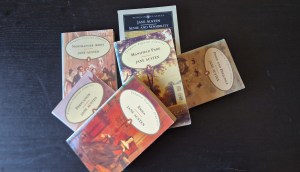

    James Joyce was a true Irish man, to the core. More specifically, a Dublin man. Although he spent his life running away from his homeland and his background, his work was all about them both. It was not by chance that he said “When I die, Dublin will be written on my heart”. Although he had lost his religious faith very early in his life, he was strongly influenced by his Catholic education, maybe even traumatised. Furthermore, his father led the family to poverty mainly due to his heavy drinking. Both these themes are greatly portrayed in his work.

    “Dubliners” was his first published work. It took him almost 10 years to get it published and he had to endure multiple rejections. The book is composed of short stories, although the last one, “Dead”, may be considered a novella. Nowadays, this possible novella is considered a masterpiece.

    Each story aims to portray people living in Dublin, going about their own lives. The topic is different in each one and there is no interaction between the characters of different stories. Although it seems that the narrator is just describing the events that are unfolding, in reality the author is making us go beyond that and pay attention to what is not explicitly said, to what the main character is actually hiding. The situation could happen in any other city, but the choices characters make (the actions they decide to take or the things they decide to conceal) are based on Irish culture and can only be justified under that light.

    His second published work, “A Portrait of the Artist as a Young Man”, is a fictional story that portraits his Catholic childhood and shows how much it influenced him and his life.

    His masterpiece is “Ulysses”. Based on the “Odyssey”, by Homer, it describes a day of Dublin life. Most of the action is seen through the minds of the characters and each chapter has its own literary style. The aim of James Joyce was to portray Dublin in such detail that the city could be rebuilt exactly as it was from his book.

    James Joyce died in Zürich in 1941, to where he moved from Paris after Nazis invaded it in 1940. “Finnegans Wake” was the last work that was published when he was still alive and it is considered an experimental book, where he plays with words to an extreme. He also left an extensive poetry work and many other fictional stories were published after he died.


    Keywords: ROMAN EMPIRE | “I, Claudius”, by Robert Graves

    Robert Graves was a poet and a writer. He also translated classic works and was a professor at the University of Oxford. His book “I, Claudius” was his most successful novel. It was written as it was Claudius himself writing it and it tells the story of the Roman Empire through his eyes, from his childhood to when he took office as Caesar. The events described were real, but the way they happened is fictional and myths and rumours were taken as real events. Assassinations, murders disguised as accidents, betrayals, conspiracies, and dubious and complicated family connections were hallmarks of the Roman Empire. You can find them all in this book, abundantly. When reading it, you feel like you are actually living in those times.

    Claudius was a Roman Emperor, who was not supposed to have been one. He had a limp (thus the verb “claudicar” in some Latin languages) and a fragile health. He also stammered. Members of his own family, the Caesar family, despised him and kept him away from public gatherings. He watched 3 rulers come and go before he was called for duty when he was about 50 years old. The previous Emperor, Caligula, had murdered all male descendants of the first emperor, Augustus, but he spared Claudius for an unknown reason. Although there was not a written rule that a descendant would take the “throne” after the death of the Emperor, that was usually the case and, when Caligula was murdered, Claudius was the obvious choice.

    The story begins with Augustus ruling. Born as Gaius Octavius, he was the successor of Julius Caesar and the first official Roman Emperor. He had a long reign, supported by his powerful wife Livia, who would literally do anything to keep her power. Claudius extensively talks about this couple because they kind of set the tone for subsequent rulers. In fact, all rulers up to Claudius, including him, were raised by them. As he tells his life story, how and why he became a historian and a writer, he also tells the story of Tiberius and Caligula, the two emperors before Claudius, from when they were kids to when they were murdered (and why and how they were murdered).

    “Claudius the God and His Wife Messalina” is the second book of this short series and it tells the story of Claudius’ life as emperor.


    Key place: BATH, UK | Jane Austen

    Jane Austen is a world-famous writer known for her romantic novels. The love stories are the reason why most people read her books and why there are so many films and TV series based on them. However, that is not the reason why her books are considered brilliant. The descriptions (and somewhat criticism) of 18th century society are as accurate as they are timeless.

    Creating stories since a young age, she only took it seriously when she was an adult. However, her sharp eye had been observing and her brain had been taking notes. By the time she wrote her six novels, her hands were ready to write what she had been processing. It is no coincidence that most of her books take place in the countryside or have main characters coming from the countryside: Jane Austen was born and raised in rural Hampshire. She also wrote stories set in Bath, a place where she hated to live. In fact, a few months before she died, she had started to write a new novel about a new SPA village, similar to Bath, as a critique to those people who went to resorts looking to cure imaginary diseases. Unfortunately, she only wrote the first chapter.

    Her six novels tell tales of people who are living their lives within their communities until they get to know people from other communities. A kind of clash happens and love is born. However, this love is not possible for different reasons, but it usually revolves around money, prejudices, and social classes. Jane Austen masterly describes their struggles, how other people perceive their love story, and how everyone lives according to their own beliefs (and misjudgement of others). In the meantime, we learn about the drama that property law at the time could cause to families, the consequences of bad marriages, and how people would treat spinsters. There are also dishonest men and women who only want to marry for money. Family pressures their youngest to meet expectations or damages their prospects due to a certain reputation.

    However, good people and good deeds are also present. Actually, it’s because of them that love triumphs in the end. Yes, love is strong, endures all difficulties, and overcomes all obstacles. Yet, it does need help and it does need people to defeat their preconceived notions. Maybe that is the message Jane Austen would wish to convey: focus on the essential, drop the absurdity. Nonetheless, she also stresses the importance of money. In fact, in her books, there are couples that married for love, but the lack of money turned that love into resentment.

    In a nutshell, love is complicated and society is powerful.

     
    The six novels of Jane Austen:

    • Sense and Sensibility (published in 1811)
    • Pride and Prejudice (published in 1813)
    • Mansfield Park (published in 1814)
    • Emma (published in 1815)
    • Northanger Abbey (published posthumously in 1817)
    • Persuasion (published posthumously in 1817)


    Keyword: DESERT | “Dune”, by Frank Herbert

    After being postponed due to the strike of writers and actors in the USA, “Dune: Part Two” will finally open in theatres around the world this month. Both Part One and Part Two were adapted from the first book of the series “Dune”, which is the name of the first book.

    Paul Atreides is the son of the Duke, who, by imperial decree, has to take a new stewardship: the planet Arrakis. The entire family has to leave their home planet, a water planet, never to return. Arrakis is a desert planet, also known as Dune, with nothing but sand, gigantic worms, and spice. Spice is what makes this planet so valuable and worms are the creatures that produced it by interacting with the sand. Needless to say that those worms are deadly and harvesting the spice is extremely dangerous. The previous steward of Arrakis, who was removed by the emperor, is extremely wealthy due to the spice harvesting. Why did the emperor transfer this stewardship, banishing the previous Duke from his home planet and drying his wealth source? And why has the arrival of Paul Atreides been so anticipated by the people of Arrakis? And what role will the Fremen, the native people of Arrakis, have in the story?

    “Dune”, by Frank Herbert, is considered a classic of science fiction and a cult book for many. In truth, this is just the first volume of a series of six. Many topics are intertwined and its brilliantly-achieved complexity is what makes this book, and the subsequent volumes, so epic. Things are never as they seem and the story takes several unexpected turns over and over again. For example, at the beginning of the book, the Fremen are presented as savages who do nothing but terrorist acts. When Paul Atreides is forced to flee from the ducal palace, he must take refuge with them. We then learn how Fremen have adapted to life in the desert, their relationship with the gigantic worms and also how water is central in their lives. Fremen also have the project of transforming the desert into a forest, which is actually achieved in a later book of the series, but with devastating consequences.

    Of course, the story is not just about survival techniques and mega projects. There is a rebellion in the making that will change the whole empire and a mysterious organization of women that will have a crucial role in the process. These women dedicate their lives to the organization and use all their craft (natural and learned) to achieve their goals.

    Unfortunately, Frank Herbert died before he could finish the series.

     
    The six volumes of “Dune”:

    • #1 Dune
    • #2 Dune Messiah
    • #3 Children of Dune
    • #4 God Emperor of Dune
    • #5 Heretics of Dune
    • #6 Chapterhouse: Dune