Key place: IRELAND | Guinness beer

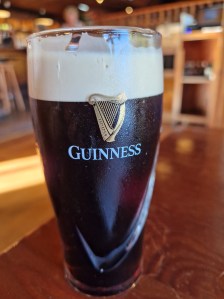
Nothing speaks Irish internationally more than Guinness beer. This is no coincidence. Arthur Guinness was a visionary and he wanted to brew such a beer that would be internationally recognized as an Irish product for many years to come. Hence, the choice of a harp as the symbol of the brewery. Yet, this is not just any harp, it is the “Brian Boru” harp, which you can see in the Long Room at the Trinity College Library in Dublin. It’s a medieval harp that stood the test of time and became the true symbol of Ireland. You can find it as the symbol of the Irish Government (adopted after the independence from England in 1922) and on Irish coins.
Founded in 1759 at St. James’s Gate in Dublin, where it is still being brewed today, Guinness is the most well-known stout beer in the world. Originally, when Arthur Guinness took hold of it, St. James’s Gate was an ale brewery, but he decided to change that and started producing a type of black beer. The final formula obtained in those early days was so unique that it gave rise to the “Irish Stout” style. To this day, “stout” is the only type of beer produced by Guinness. Their diversity is restricted to this condition, and they do not have that much diversity. When it is perfect, you do not need to change anything, right?

Back in 1945, Sir Hugh Beaver was hired as manager by the Guinness family and he underwent several changes that took the brewery to the next level. One day, while he was hanging out with friends at the pub, he engaged in a fierce argument about which was the fastest bird in the world. A conclusion was not reached, but an idea was born: to compile facts in a book to solve these kinds of questions. As the 1993 Nobel Prize in Literature, Toni Morrison, said, “if there is a book you want to read, and it is not yet written, then you must write it yourself”. That was exactly what Sir Hugh Beaver did. Well, he did not write it himself, but commissioned who did. That book was “The Guinness Book of Records”. The idea grew and grew and now is a yearly publication that confirms all kinds of records all over the world.


Folklore

The word “folklore” is a composition of two words: “folk”, which means “people” and “lore”, which means “knowledge”. Together they mean “the knowledge of the people”. In other words, folklore is the collection of all stories, music, rituals, traditions, and other cultural material that is informally passed from generation to generation in a certain region or within a certain people. A people’s identity is based on its folklore, which gives them a sense of belonging.

In Ireland, for example, folklore is deeply embedded in Irish identity. Although Celtics were spread all over Europe, Ireland is one of the regions where their culture remained, with roots that still feed the entire society. The Irish language, also known as Gaelic (the name of the Celtic branch that was settled in Ireland), is a Celtic language, the tradition of storytelling comes from the Celtic oral tradition, and the almost compulsory requirement for coming together to sing, dance, and play games was a Celtic custom.

Storytelling was crucial in a time when writing was not an option and there was a need to tell the great deeds of their ancestors. Nowadays, we can read what has passed in history books, which is written in a purely informative fashion. Back then, if the deeds were told in the same manner, those listening to it would not pay any attention. Besides, it would be very difficult to memorise everything. Therefore, stories were built, most of them based on mythology. This was also a good way to convey values, beliefs, and teachings. Today, this tradition is still prevalent and it results in amazing writers, poets, and playwrights.

After fighting wars and after the hard work in farms, Celtics would come together to have fun and relax. Music was extremely important to such a purpose, which would inevitably lead to a lot of singing and dancing. Celtics developed a very unique style, which everyone can identify today. Due to this tradition, it is still much alive, all Irish are in touch with these arts since their infancy and they start practicing them from a very early age, formally or informally. This leads to many professional actors, dancers, and musicians.

Sports were also very important as they were part of war training. It was a great way to keep fit and to train how best to beat the enemy… or defend the community. Celtics had their own games that are still played nowadays, with fierce competitions all over the country.

Rituals were also significant as they would determine the rules of living in community, hence the role of religion. Before Christianity arrived in Ireland, Irish people had their own religion, strongly related to nature and the seasons. For example, they would celebrate the arrival of spring, which established the beginning of sowing, and the harvest in autumn. These festivals, especially the harvest festivals, are still celebrated today.

Christianity was very well received in Ireland. Contrary to what happened in other regions in the world, the Roman Catholic Church did not erase the native culture to impose itself. Instead, the Catholic Church and the Celtic culture merged. Some rituals were replaced, but traditions such as storytelling, games, music, and dancing were kept. Nowadays, you find that Irish people are deeply Catholic and believe in Celtic mythology to the full.


Key place: IRELAND | James Joyce

You do not just read James Joyce; you become an Irish person that participates in the narrative.
James Joyce was a true Irish man, to the core. More specifically, a Dublin man. Although he spent his life running away from his homeland and his background, his work was all about them both. It was not by chance that he said “When I die, Dublin will be written on my heart”. Although he had lost his religious faith very early in his life, he was strongly influenced by his Catholic education, maybe even traumatised. Furthermore, his father led the family to poverty mainly due to his heavy drinking. Both these themes are greatly portrayed in his work.

“Dubliners” was his first published work. It took him almost 10 years to get it published and he had to endure multiple rejections. The book is composed of short stories, although the last one, “Dead”, may be considered a novella. Nowadays, this possible novella is considered a masterpiece.

Each story aims to portray people living in Dublin, going about their own lives. The topic is different in each one and there is no interaction between the characters of different stories. Although it seems that the narrator is just describing the events that are unfolding, in reality the author is making us go beyond that and pay attention to what is not explicitly said, to what the main character is actually hiding. The situation could happen in any other city, but the choices characters make (the actions they decide to take or the things they decide to conceal) are based on Irish culture and can only be justified under that light.

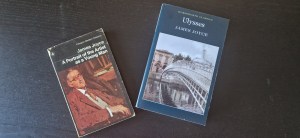
His second published work, “A Portrait of the Artist as a Young Man”, is a fictional story that portraits his Catholic childhood and shows how much it influenced him and his life.

His masterpiece is “Ulysses”. Based on the “Odyssey”, by Homer, it describes a day of Dublin life. Most of the action is seen through the minds of the characters and each chapter has its own literary style. The aim of James Joyce was to portray Dublin in such detail that the city could be rebuilt exactly as it was from his book.

James Joyce died in Zürich in 1941, to where he moved from Paris after Nazis invaded it in 1940. “Finnegans Wake” was the last work that was published when he was still alive and it is considered an experimental book, where he plays with words to an extreme. He also left an extensive poetry work and many other fictional stories were published after he died.


Keywords: ROMAN EMPIRE | Pasta

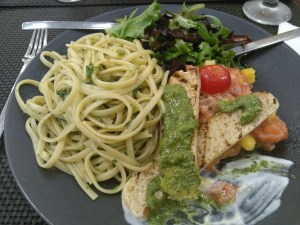
A mother or grandmother cooking pasta on the stove is a childhood image of all Italians. All mothers and grandmothers have their speciality and their unique way of cooking it. A family secret that should never be known to anyone, only passed onto the next generation.
Pasta is unleavened dough. Once ready, you can do the shape you want, by hand or using a machine. You can also stuff it with meat, vegetables, or any ingredients that you prefer. You can use it fresh or dry. If you don’t want to prepare it at home, there are plenty to choose from in a supermarket. And the receipts? Besides the traditional ones, like spaghetti Bolognesi and lasagne, you can imagine and re-invent all you want. You can boil it or cook it in the oven. In the Roman Empire, people used to fry it.

There is nothing more Italian and the quantity of pasta consumed per capita is not as high as in Italy. However, apparently, pasta came from Asia and “travelled” with nomads to Europe. Well, a primitive version of it, at least. Once in Italy, it evolved to reach the diversity and importance it has today.

Yet, as or even more important, is the sauce. Ah, the sauce… Here is really where secrets lie. Even the most basic one, the tomato sauce, can vary enormously depending on the other ingredients you add. And, of course, the source of the ingredients is paramount. The flavour is completely different whether they are fresh or not.

One day, someone thought that pasta was so good it should be a dessert… Back in the Renaissance, pasta was a food only for rich people and sugar was a luxury item. Therefore, putting the two together was a question of time. Nowadays, with cooking promoted to art, imagination is the limit. You can have ravioli with chocolate, cannoli with cream (remember the “Godfather” film), fried pasta that looks like cookies…

So, when you go to Italy, be prepared to be amazed … and fatter, probably (remember the main character of “Eat, Pray, Love”…). You can also try it at home and eat it while watching a Western Spaghetti film. For those who are unfamiliar with the concept, Western Spaghetti films were cowboy stories produced by Italians and filmed in Italy. They were very popular in the 1960s and 1970s and featured many famous Hollywood stars, like Clint Eastwood.


Empire

According to the Merriam Webster Dictionary, an empire is “a major political unit having a territory of great extent or a number of territories or peoples under a single sovereign authority”. It comes from the Latin word imperium, meaning «“authority over family members and slaves exercised by the head of a household, supreme administrative authority, dominion, power exercised by a Roman emperor”, from imperāre “to give orders, exercise authority, hold political power” + -ium, deverbal suffix of function or state».

The Roman Empire was the second empire to exist in the world (the first was the Akkadian Empire), but it was one of the most effective. Starting as a Republic (from the Latin res publica, literally meaning “the thing of the people”), Rome was an independent city-state founded on top of a hill.

Battles with the neighbours were frequent. Julius Caesar, with his immeasurable ambition, became a member of the senate and an army commander, conquering many lands for the Republic. One day, he returned to Rome, but decided to take a legion with him, which was forbidden. The Rubicon River bounded the Italian domains within the Empire. Those who crossed it commanding an army were considered traitors and were sentenced to death. Julius Caesar knew this and he knew he could not go back on his decision after crossing the river. And so, the expression “crossing the Rubicon” (meaning “passing the point of no return”) was born. Julius Caesar crossed the river and civil war began. He took power and became a dictator. He was a dictator only for a few days… until he was murdered.

After some turbulent times, Gaius Octavius, the adoptive son of Julius Caesar, took the power and became the sole ruler of the Roman Empire. He named himself as Augustus, the Latin word for “majestic” or “great”. He also adopted his father’s name, Caesar. From then on, although it was not written as law, it became tradition for sons to succeed their fathers and be named as Caesar, like the “founder”. This denomination stuck and evolved to “czar” in Russia.

However, this was not the only legacy they left us. Buildings, roads, bridges are still there to be admired or used throughout Europe, Middle East, and North Africa. Many languages evolved from Latin, like French, Spanish, Italian, and Portuguese, and there are still Latin expressions in use (like status quo, alter ego, de jure, per capita, and vice versa, among many others). And speaking about Latin expressions, the law is full of them, partly because the current juridical system was based on the Roman one. Of course, we must not forget that the official names of plants and animals are also in Latin.

The Roman Empire, as such, ended in the 4th century. Since then, many other empires were born and died. Together with tales of grandeur, there are tales of atrocities and attempts to annihilate other cultures. For better or worse, empires change the territories they govern, but their end is certain.
 

Keywords: ROMAN EMPIRE | “I, Claudius”, by Robert Graves

Robert Graves was a poet and a writer. He also translated classic works and was a professor at the University of Oxford. His book “I, Claudius” was his most successful novel. It was written as it was Claudius himself writing it and it tells the story of the Roman Empire through his eyes, from his childhood to when he took office as Caesar. The events described were real, but the way they happened is fictional and myths and rumours were taken as real events. Assassinations, murders disguised as accidents, betrayals, conspiracies, and dubious and complicated family connections were hallmarks of the Roman Empire. You can find them all in this book, abundantly. When reading it, you feel like you are actually living in those times.

Claudius was a Roman Emperor, who was not supposed to have been one. He had a limp (thus the verb “claudicar” in some Latin languages) and a fragile health. He also stammered. Members of his own family, the Caesar family, despised him and kept him away from public gatherings. He watched 3 rulers come and go before he was called for duty when he was about 50 years old. The previous Emperor, Caligula, had murdered all male descendants of the first emperor, Augustus, but he spared Claudius for an unknown reason. Although there was not a written rule that a descendant would take the “throne” after the death of the Emperor, that was usually the case and, when Caligula was murdered, Claudius was the obvious choice.

The story begins with Augustus ruling. Born as Gaius Octavius, he was the successor of Julius Caesar and the first official Roman Emperor. He had a long reign, supported by his powerful wife Livia, who would literally do anything to keep her power. Claudius extensively talks about this couple because they kind of set the tone for subsequent rulers. In fact, all rulers up to Claudius, including him, were raised by them. As he tells his life story, how and why he became a historian and a writer, he also tells the story of Tiberius and Caligula, the two emperors before Claudius, from when they were kids to when they were murdered (and why and how they were murdered).

“Claudius the God and His Wife Messalina” is the second book of this short series and it tells the story of Claudius’ life as emperor.


Key place: BATH, UK | Sally Lynn’s buns

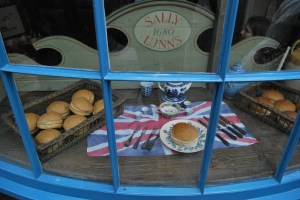
If the thermal baths, for which Bath is famous, began with the Romans, “buns”, which nowadays are a famous English delicacy, were invented by a French woman. Or so it says the shop where these buns were supposedly invented. In fact, the origins of Sally Lynn’s buns are not proven, but the “official” story makes sense. It says that Solange Luyon was a Huguenot, who fled from France to England in 1680 to escape prosecution. Arriving in Bath, she was employed by a baker and there she invented the bun, which was inspired by the French brioche. And, as English people have enormous difficulty pronouncing foreign names, she became Sally Lynn.
A bun is something between bread and cake. It is usually eaten with butter or jam, but it can also come with savoury toppings. Whether the story is true or not, the fact is that Sally Lynn’s buns are unique. Many have tried to copy it, with no success. Therefore, you need to go to Bath, UK, to try it. You can find them in one of the oldest houses in Bath, officially dated from 1482, conveniently located 200 meters from the Roman Baths. Actually, excavations have shown that food has been prepared in Sally Lynn’s place since the Romans. A small museum in the basement tells you the story.

So, when Bath turned into a famous resort in the 18th century, Sally Lynn’s buns were already well established and widely known, fitting very nicely in the new city concept. Everyone would eat there and probably ordered them to be delivered at home, for breakfast, for example. Jane Austen was one of those people and there is evidence that she really enjoyed them.


A glimpse of Bath

Visiting Bath is immersing yourself in the 18th century. As you walk through the streets, you can almost imagine carriages pulled by horses, people dressed in the latest fashion of that time… and gossip, gossip everywhere. Gossip about who had married who, and why; who had recently died, and who inherited the estate and the fortune; who had eloped with whom, and whose family’s name had been sent to the mud…

London was still London, of course, and “the season” was not complete without going there. However, Bath was the place to go. At least for those who wanted to be someone, but hadn’t got there yet. The competition with London was fierce, even though it was not even. A lot of investment was made to turn Bath into a great recreational resort. Three centuries later, the buildings are still there, with little changes in the scenery created at the time.

Why invest so much in Bath from all places? Due to its thermal waters. The Romans, those barbarians who tried to invade England and failed, were right after all. Before they were duly expelled from the country, they had time to build a grand thermal public building in Bath, which is still standing and fully operational nowadays. Hence the name Bath (where Romans would take their bath, publicly). Those barbarians knew what they were doing… The waters were indeed miraculous and everyone wanted to bathe in them and become cured from all diseases, real or fictional.

However, did people in the 18th century actually bathe in those waters and really became cured? After all, there was so little time for that, with all that gossip to be had, the shops, the afternoon teas, and the balls (oh, my goodness, the balls!) … It would not be surprising if people would forget about the thermal waters…


SPA

It is generally believed (in what it was, in fact, a promotional strategy) that SPA would come from the Latin expression Sanitas Per Aqua [health through water]. This is actually wrong. Spa is the name of a city in Belgium, known for its mineral water springs. However, those who love names that come from Latin will be happy to know that the name of this town was probably given by the Romans: sparsa fontana [scattered fountain].

According to the Merriam-Webster dictionary, SPA is «a mineral spring; a resort with mineral springs; a fashionable resort or hotel; (…) a commercial establishment providing facilities devoted especially to health, fitness, weight loss, beauty, and relaxation; a hot tub with a whirlpool device». This dictionary also mentions that the first time SPA was used with this meaning was in 1610.

So, a SPA was originally a mineral water springs resort, a place where sick people would go to heal. Healing was made by drinking or bathing in the waters of that place, which possessed special and unique characteristics, beneficial to health.

Romans were known for their love for public baths, where they would socialize and take care of their health. When spreading their empire throughout Europe, they were the first to find the best thermal spots. Since then, people have not stopped seeking such healing places. Probably the one in Spa, Belgium, was the most famous at the time and “mineral water springs resort” became “SPA”, after the town.

Nowadays, the concept of SPA does not differ much from the Roman concept. It is not just for sick people, but for all those who want to stay healthy and fit. Indeed, some Roman facilities would include gyms, like today’s SPAs. Although SPAs may not include water, the majority has at least a swimming pool. And, of course, just like in Romans’ time, people can socialize and relax together, with all kinds of social and entertainment activities included.

In 2021, to honour and emphasise the importance of SPAs in Europe, UNESCO decided to turn into World Heritage 11 towns specially known for their mineral water springs: the Great Spa Towns of Europe. After extensive research, the list is now composed of cities from Austria (1), Belgium (1, which is Spa), Czech Republic (3), France (1), Germany (3), Italy (1), and the United Kingdom (1).
 

Key place: BATH, UK | Jane Austen

Jane Austen is a world-famous writer known for her romantic novels. The love stories are the reason why most people read her books and why there are so many films and TV series based on them. However, that is not the reason why her books are considered brilliant. The descriptions (and somewhat criticism) of 18th century society are as accurate as they are timeless.

Creating stories since a young age, she only took it seriously when she was an adult. However, her sharp eye had been observing and her brain had been taking notes. By the time she wrote her six novels, her hands were ready to write what she had been processing. It is no coincidence that most of her books take place in the countryside or have main characters coming from the countryside: Jane Austen was born and raised in rural Hampshire. She also wrote stories set in Bath, a place where she hated to live. In fact, a few months before she died, she had started to write a new novel about a new SPA village, similar to Bath, as a critique to those people who went to resorts looking to cure imaginary diseases. Unfortunately, she only wrote the first chapter.

Her six novels tell tales of people who are living their lives within their communities until they get to know people from other communities. A kind of clash happens and love is born. However, this love is not possible for different reasons, but it usually revolves around money, prejudices, and social classes. Jane Austen masterly describes their struggles, how other people perceive their love story, and how everyone lives according to their own beliefs (and misjudgement of others). In the meantime, we learn about the drama that property law at the time could cause to families, the consequences of bad marriages, and how people would treat spinsters. There are also dishonest men and women who only want to marry for money. Family pressures their youngest to meet expectations or damages their prospects due to a certain reputation.

However, good people and good deeds are also present. Actually, it’s because of them that love triumphs in the end. Yes, love is strong, endures all difficulties, and overcomes all obstacles. Yet, it does need help and it does need people to defeat their preconceived notions. Maybe that is the message Jane Austen would wish to convey: focus on the essential, drop the absurdity. Nonetheless, she also stresses the importance of money. In fact, in her books, there are couples that married for love, but the lack of money turned that love into resentment.

In a nutshell, love is complicated and society is powerful.

 
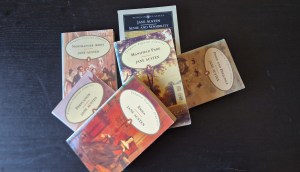
The six novels of Jane Austen:

  • Sense and Sensibility (published in 1811)
  • Pride and Prejudice (published in 1813)
  • Mansfield Park (published in 1814)
  • Emma (published in 1815)
  • Northanger Abbey (published posthumously in 1817)
  • Persuasion (published posthumously in 1817)


Keyword: DESERT | Mint Tea

Tea is drunk everywhere in the world and there are many cultural ceremonies related to it in different countries, like the Traditional Japanese Tea Ceremony in Japan, the Afternoon Tea in England, and the Maghrebi Mint Tea, in North Africa. All of these ceremonies aim to welcome guests and be a moment of relaxation and socialization with friends and family.
The Maghrebi Mint Tea is drunk in cities and also in the desert (everywhere, basically). Like all teas, it is made by pouring boiled water on tea leaves. More precisely, they are green gunpowder loose tea leaves (a type of green tea). Mint leaves are also added, especially spearmint, and a lot of sugar too. When serving, the tea is poured as high as possible and the remaining stays brewing in the pot. Each new cup is stronger than the previous one and each person should drink three cups, according to tradition.

It’s not clear how this tradition came to be, but clearly it originated from international trading as the tea leaves come from China. North Africans adopted this Chinese drink and made it their own, with some changes. Now, the Maghrebi mint tea is so deeply rooted in their culture that it seems it has always been part of it. Interestingly, this mint tea is prepared by men and men alone (at least, according to tradition). It is usual to see men at cafe tables drinking tea with their friends or even making business. In the desert, they make the tea inside the tents at the end of the day to relax and socialize.

As all teas, it takes a lot of practice to get it perfect. Furthermore, each tea can be unique as other ingredients can be added. However, everyone can do it at home provided that they have the green gunpowder leaves and the mint leaves.
 

Nomad

According to the Merriam-Webster Dictionary, a nomad is «a member of a people who have no fixed residence but move from place to place usually seasonally and within a well-defined territory». This concept applies, for example, to Bedouins, people that live in the desert, and Mongolians. The main reason why they move from place to place is because they herd animals (especially camels, in the case of Bedouins, and horses, in the case of Mongolians).

Nomads should not be confused with the merchants that used to cross the desert with goods to be sold on the other side. These caravans were very popular in the old days of the silk route and also in the Sahara Desert (think about the typical image of camels in line, full of goods attached to their back). While caravan merchants would go from one city to another, nomads would stay in the same place for a certain period of time, living in tents in the meantime.

Digital nomads modernised this concept. They too move from place to place and stay there for a certain period of time. However, instead of herding animals, they use technology to work remotely. And they do not usually live in tents, but in rented houses, although there are no rules in this respect. In fact, there are those who buy a camper van (brand new or an old one that they rebuild as they please) and literally move their house around.

The concept somehow expanded to also mean someone who roams without a purpose or a destination. However, this is different from a vagabond. A vagabond is someone who has no money, no professional occupation, and no place to live (they usually live on the street). Nomads have money and a profession, thus, they can pay for accommodation and supplies.

Being a nomad is not for everyone… but, then again, being in the same place doing the same things with the same people is not for everyone either. Before technology, people did not have much choice. If you were born into a nomad family, you would become a nomad, and if you were born, let’s say, in a farm, you would become a farmer. Of course, throughout the centuries, there were always rebels, people who did not accept their fate and would find a way to do what they really wanted (artists, mostly). However, nowadays, with new technology and the Internet, it gets easier to choose what you want to become. This does not mean that it is easy or without difficulties, for sure.
 

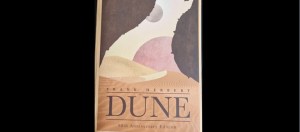
Keyword: DESERT | “Dune”, by Frank Herbert

After being postponed due to the strike of writers and actors in the USA, “Dune: Part Two” will finally open in theatres around the world this month. Both Part One and Part Two were adapted from the first book of the series “Dune”, which is the name of the first book.

Paul Atreides is the son of the Duke, who, by imperial decree, has to take a new stewardship: the planet Arrakis. The entire family has to leave their home planet, a water planet, never to return. Arrakis is a desert planet, also known as Dune, with nothing but sand, gigantic worms, and spice. Spice is what makes this planet so valuable and worms are the creatures that produced it by interacting with the sand. Needless to say that those worms are deadly and harvesting the spice is extremely dangerous. The previous steward of Arrakis, who was removed by the emperor, is extremely wealthy due to the spice harvesting. Why did the emperor transfer this stewardship, banishing the previous Duke from his home planet and drying his wealth source? And why has the arrival of Paul Atreides been so anticipated by the people of Arrakis? And what role will the Fremen, the native people of Arrakis, have in the story?

“Dune”, by Frank Herbert, is considered a classic of science fiction and a cult book for many. In truth, this is just the first volume of a series of six. Many topics are intertwined and its brilliantly-achieved complexity is what makes this book, and the subsequent volumes, so epic. Things are never as they seem and the story takes several unexpected turns over and over again. For example, at the beginning of the book, the Fremen are presented as savages who do nothing but terrorist acts. When Paul Atreides is forced to flee from the ducal palace, he must take refuge with them. We then learn how Fremen have adapted to life in the desert, their relationship with the gigantic worms and also how water is central in their lives. Fremen also have the project of transforming the desert into a forest, which is actually achieved in a later book of the series, but with devastating consequences.

Of course, the story is not just about survival techniques and mega projects. There is a rebellion in the making that will change the whole empire and a mysterious organization of women that will have a crucial role in the process. These women dedicate their lives to the organization and use all their craft (natural and learned) to achieve their goals.

Unfortunately, Frank Herbert died before he could finish the series.

 
The six volumes of “Dune”:

  • #1 Dune
  • #2 Dune Messiah
  • #3 Children of Dune
  • #4 God Emperor of Dune
  • #5 Heretics of Dune
  • #6 Chapterhouse: Dune