
English version
Isabella Muir is fascinated by history, especially how Britain (and other countries) has changed since the end of World War II. She is using the information she is gathering to write fictional stories, like the Janie Juke Mysteries. At the beginning of this series, we get to know Janie Juke, who is newlywed and has just found a job at the mobile library. She is living in the 1960s, at a time when women were fighting for their emancipation at all levels. We can learn how difficult that fight was (and still is). Janie navigates prejudices of different sorts and overcomes them one by one, while solving different mysteries. Fortunately for Portuguese readers, some of these books are already translated.
Versão Portuguesa
Isabella Muir é fascinada por história, especialmente o quanto a Grã-Bretanha (e outros países) tem mudado desde o fim da Segunda Guerra Mundial. Aproveita a informação que vai reunindo para escrever histórias ficcionais, como os Mistérios de Janie Juke Mysteries. No início da série, ficamos a conhecer Janie Juke, que se acabou de casar e de conseguir um emprego na biblioteca itinerária. Vive na década de 1960, num tempo em que as mulheres lutavam pela sua emancipação a todos os níveis. Podemos constatar o quão difícil essa luta foi (e ainda é). Janie navega por entre diferentes tipos de preconceitos e ultrapassa-os um por um, enquanto vai resolvendo mistérios diversos. Felizmente para leitores portugueses, alguns destes livros já estão traduzidos.
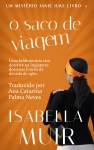 BOOK 1: “The Tapestry Bag”
Janie Juke is settling in her married life and as a professional librarian. One day, she crosses paths with Zara, a good friend she hasn’t seen for many years. Their friendship is resumed and reinforced until Zara disappears without a trace. Janie applies all her detective skills to find out what happened.
Janie Juke está a adaptar-se à sua vida de casada e como bibliotecária profissional. Um dia, encontra Zara, uma boa amiga que ela não via há anos. A amizade delas é retomada e reforçada até Zara desaparecer sem deixar rasto. Janie aplica todas as suas competências detectivescas para descobrir o que aconteceu.
TRADUÇÃO para português: “O Saco de Viagem”. Disponível em:
BARNES & NOBLE: ebook | paperback
BOOKSHOP: paperback
BLACKWELL’S: paperback
WATERSTONES: paperback
KOBO: ebook
Quem mora na Austrália e no Reino Unido também pode procurar na app BorrowBox
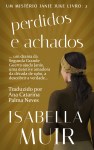 BOOK 2: “Lost Property”
Janie Juke is pregnant and everyone is saying she should stop working and prepare herself for motherhood, but she doesn’t listen: she continues managing the mobile library as before. In the meantime, her reputation of solving mysteries spreads out and a stranger is willing to pay her for solving a puzzle that is connected to an old secret.
Janie Juke está grávida e toda a gente lhe diz que ela deve parar de trabalhar e preparar-se para ser mãe, mas ela não quer saber: continua a gerir a biblioteca itinerária como sempre. Entretanto, a sua reputação como solucionadora de mistérios espalha-se e um estranho está disposto a pagar-lhe para resolver um puzzle ligado a um velho segredo.
TRADUÇÃO para português: “Perdidos e Achados”. Disponível em:
BARNES AND NOBLE: ebook | paperback
BOOKSHOP: paperback
BLACKWELL’S: paperback
WATERSTONES: paperback
KOBO: ebook
Quem mora na Austrália e no Reino Unido também pode procurar na app BorrowBox
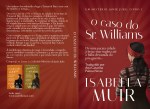 BOOK 3: “The Invisible Case”
Janie just became a mother and her Aunt Jessica is returning home after travelling through Europe for nine years. Luigi comes with Jessica from Italy and brings trouble with him: a person dies and he seems the culprit. Janie tries to find out the truth, but this time she has a little help from an unlikely ally.
Janie acabou de ser mãe e a sua tia Jessica está de regresso após ter viajado pela Europa por nove anos. Luigi acompanha-a desde Itália e traz sarilhos com ele: uma pessoa morre e ele parece ser o culpado. Janie tenta descobrir a verdade, mas desta vez ela tem a ajuda de um aliado improvável.
TRADUÇÃO para português: “O Caso do Sr. Williams”. Disponível em:
BARNES AND NOBLE: ebook | paperback
BOOKSHOP: paperback
BLACKWELL’S: paperback
WATERSTONES: paperback
KOBO: ebook
Quem mora na Austrália e no Reino Unido também pode procurar na app BorrowBox
BOOK 4: “A Notable Omission”
TRANSLATION into Portuguese by ACPN: ongoing | expected in 2026
TRADUÇÃO para português: em progresso | previsto em 2026

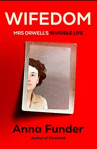 Anna Funder was aiming to write a book about her favourite author: George Orwell. Yet, when doing the research, she literally found Eileen Blair, Orwell’s first wife. She was hidden between the lines of Orwell’s writings and in the passive voice of his six biographies, all of them written by men. From here, Anna Funder started to paint a picture of how men erase “wives” and how women are led to believe that their role in life is to support men in their pursuits, without any recognition. The shocking reality is so amazingly and clearly described that it makes you think about what is happening around you. It is so obvious, yet not many people seem to notice.
 The film “The Wife” is based on this reality. Although a total fictional story, we can see it could be a true one (maybe it is and we are still to discover it). Glenn Close plays the role of the wife of a man who has just been awarded the Nobel Prize of Literature. It turns out, as we learn at the end of the film, all his books were written by her. And yet, it was he who got published, who got famous, and who got recognition for high-quality books. Why did she accept that situation? She wanted to be published and read, but realized it was not going to happen because she was a woman.
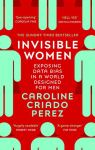 Caroline Criado Perez showed how women are systematically ignored and erased through hard data. In daily life, in workplaces, in health care issues, in public life, everywhere there are numbers proving that women are discriminated against systematically, like they do not exist, like they are a kind of weird man. Adequately, the book is called “Invisible Women”.
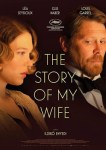 In some film/tv series/book titles, the translation is quite straightforward. For example, “The Story of My Wife” can be translated as: “Die Geschichte meiner Frau” (in German); “L’histoire de ma femme” (in French); “Storia di mia moglie” (in Italian); “La historia de mi mujer” (in Spanish); “A História da Minha Mulher” (in Portuguese).
 But things can get complicated very fast… For example, how to translate “The Good Wife”? If you translate “wife” to its usual translation as “woman”, “The Good Woman” can be either married or single. However, in this case, the fact that she is married is essential for the story. Therefore, the title has to reflect her social status. One option is to maintain the title in English and not translate it at all, which was what countries like Ecuador, France, Germany, Italy, Mexico, and Sapin did. Another option is to change the title in some way:
 Changing the title entirely is another option, which was what they chose to do, for example, in the title “The Time Traveler’s Wife”. In many countries, this film was translated as “I will always love you”, focusing on time and not on the wife. This is interesting. There are many English titles like this: “The Zookeeper’s Wife”, “The Preacher’s Wife”, “The Bishop’s Wife”, “The Serial Killer’s Wife”, “The Astronaut’s Wife”, among others. Yet, in non-English speaking countries, the tendency is to choose a different title, more tuned with the story itself and not focused on the wife and whom she is married to.
 WORDS IN IDEAS