
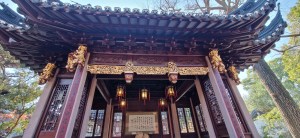
 As any (good) translator will tell you, translating is not about translating words, it is about translating an entire culture. Language is closely related to culture and it reflects the environment and the landscape in which such language was developed. The classic example is Greenland. Inuit languages are the ones which have more words for different types of snow and ice. It is literally a matter of life or death to know exactly what kind they are encountering.
European languages are based on an alphabet that is used to build words and those words are organised in sentences. The Chinese language is based on characters, which basically are images. If in European languages you can learn how to “make” words and build sentences, in Chinese language you need to memorise all the characters. Yet, there are some clues that can help you with that.
Chinese culture is rooted in nature, especially animals and the five elements: Earth (土), Water (水), Fire (火), Wood (木), Metal (金). For example, in China, the years are counted according to the moon cycles, but they are not numbered; they are named. Each year represents an animal and an element. 2026 is the year of the Fire Horse (火马年) – 火 means fire; 马 means horse; 年 means year. Last year was the year of the Wood Sake (木蛇年) – 木 means wood; 蛇 means snake; 年 means year. There are twelve animals and five elements, which results in sixty year cycles.
Characters can be composed by repeated characters. For example, Fire (火) represents a bonfire. If you put two bonfires, one on top of the other, you get “burning hot” (炎). If there are three bonfires, you get “flames” (焱). The same for Wood (木), which represents a tree: two trees are a forest (林) and three trees are a dense forest (森). Now, putting a character next to another character can change their meaning. For example, Fire (火) and Mountain (山) results in Volcano (火山), which basically is a “fire mountain”. If instead of “fire” you have “ice” (冰), you have an “iceberg” (冰山). Although there is logic, you still need to know it by heart.
Some characters can work together to compose new characters. For example, “fire” is in the character 灯, meaning “lamp”, because in the old days lamps only existed with fire. Likewise, “wood” is in the character “bed” (床), because in the old days beds were made of wood.
The characters for Feng Shui (風水) literally mean “wind” and “water”. It is a theory to organise one’s house according to the five elements and the cardinal directions. Each house is divided into nine dimensions of life and each division is located geographically in certain directions. For example, the life dimension of “career” is located in the north (北) direction. Interestingly, this is where the emperor’s accommodation is located, as well as the accommodation of the “head of the house” in family homes, meaning the provider. On the other hand, the office where the emperor would receive their visitors and ambassadors was located in the south (南) direction, which corresponds to the “fame” dimension. It was also where the families would probably receive their visitors, or would have their shops. The “career” dimension is also related to the element “water” (for the career to run like the water and overcome all obstacles with relative ease) and the “fame” dimension is related to the element “fire” (for their reputation will light up like a bright fire).
As the cardinal points are important, it is not surprising that many cities and regions have a reference to such points in their names. The classic example is Beijing (北京), which literally means north (北) capital (京). Before Beijing, the capital of China was Nanjing (南京), the south (南) capital (京). Hainan (海南) is an island in the south, not very far from Vietnam. Its name literally means sea (海) in the south (南). The references to natural landscapes are also very common. There is a region called Shandong (山东), the mountain (山) in the east (东), and a region called Shanxi (山西), the mountain (山) in the west (西).
This article is part of the BRINGING ACROSS series
“Translation” in different languages comes or is based on the meaning of two similar Latin words which convey the idea of transferring something from A to B… “bringing across”. Every month, a translation challenge is presented according to a keyword.

 WORDS IN IDEAS