Best of “The Intrepid Book Society”

Dear Readers,

After renewing its website, “Words in Ideas” is preparing its 3rd year of fresh new articles, starting in October. While you wait, you can read (or re-read) the best articles under the category “The Intrepid Book Society”. This “Society” is a fictional book club, analysing a book per month according to a keyword or a key place.


During the first year, articles were written as reviews. Here are the 5 best:


In the 2nd year, fictional members discussed the plots between themselves. Here are the 5 best:


This 3rd year, “Words in Ideas” will test your knowledge (or, hopefully, making you curious in reading) the book of the month.

 
If you wish to comment or send suggestions, please fill in the form at the end of each website page.

Thank you!
Words in Ideas
https://wordsinideas.com/
 

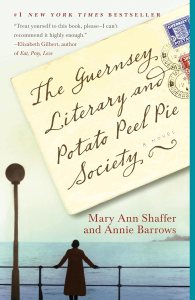
Keyword: MAIL | “The Guernsey Literary and Potato Peel Pie Society” by Mary Ann Shaffer and Annie Barrows

Ms Clara Smartest began the session summarizing the story of the book: “The author tells the story through the letters that are being exchanged between the main character, Juliet Ashton, and the other characters. Juliet is a writer and, naturally, she loves books. She is on a book tour when she receives a letter from a man living in one of the islands of the English Channel. He is contacting her about a book that used to belong to her. Conversation gets going and Juliet learns about an intriguing book club created unexpectedly during the Second World War. The letters are exchanged shortly after the war has ended and emotions are still running high.”

“It is easy for us nowadays to look back at that time and criticize what people did, during and after the war. I mean, common people. They were living in uncertain times and in fear. No one had any idea when the war was going to be over and they wanted to survive. Some tried to have fun and live to the fullest, without being concerned about the consequences. After all, they could be dead the next day. Others did what they had to do to feed themselves or their loved ones, especially feeding children”, said Ms Johanna Practicewell.

“Very true. But there were also very bizarre episodes as well. I think the book aims to focus on the funny ones, instead on the horror people were living in. In this case, the author focused on how creative people had to be just to be able to live their lives. Hence, the way the book club was created and, especially, its name”, said Miss Amelia Matterfis.

“And how they tried to encourage people by making fun of the war, kind of, like Juliet was doing with her books”, added Miss Martha Lovefeelings.

“The novel also shows how ‘fun’ was hand in hand with tragedy and loss. The story of the child is an example”, said Ms Johanna Practicewell. “That happened a lot. Sometimes the children were the result of love, but sometimes were the result of rape. In both cases, women were labelled as the enemy whores.”

“On the other hand, there were caring communities, whose members would protect the other members when something bad would happen to them. It is the case in this story”, said Ms Abigail Vooght. “Although, I think this is very rosy… Reality probably was crueller.”

“I had no idea that Guernsey had been occupied by the Nazis”, said Mr Matthew Barnepy. “Actually, I didn’t even know that island existed. And it is even more astonishing the fact that it is situated not far from the French coast, but it is in fact British. Occupying it should have made sense as it was a strategic location.”

“My surprise was the way the story was written: through letters. I didn’t even know that you could write a book like that, but then again, why not, right?”, said Mr Jeremy Toughready and laughed.

“It was a very popular genre in Jane Austen’s time. Actually, Jane Austen herself wrote a book using that technique, but she didn’t like it very much, so she dropped it”, informed Mr Mark Mindhearting.

“Wow. I had no idea”, said Mr Jeremy Toughready and many others agreed with him.

“Now, we can perhaps wonder if at that time the mail was that efficient. Naturally, it was more important than it is today. These days, we communicate digitally and the post offices deal more with packages than with letters. However, the war had destroyed most of what societies provided to the population. The mail never stopped being delivered (and a word of appreciation to all those who have succeeded in this great achievement), but may have not been so regular and not so fast”, added Mr Mark Mindhearting.

“I’ve watched the film”, said Sophia Vooght. “It was really good. In the film we can actually see a little clearer the brutality, but also how people would find ways to enjoy themselves, together, as a community. And to support one another, facing that horror. I can’t imagine what must have been like to see the Nazi army marching through the streets all of the sudden.”

“The love story is also interesting, isn’t it? I mean, they started writing to each other and then they fell in love… As a writer, Juliet was in her element, and Dawsey, the shy book worm, also found a way to express himself”, said Miss Martha Lovefeelings. “Plus, there’s the kid who found adoptive parents.”

“A nice story with a happy ending”, noted Leo Weave.

“But all traumatised, one way or the other”, added Ms Johanna Practicewell.

“War is always an awful thing. Even the positive, isn’t really, because it’s tainted by horror”, said Mr John Booklish, wrapping up.


** YOUR WORDS AND IDEAS **

By Isabella Muir | On 06 June 2025 at 07:59
Thanks so much for the excellent summary of the novel. I haven’t read the book, but I have seen the film several times. The story shines an important light on how dreadful it must have been for the people of Guernsey to suffer Nazi occupation for five long years. The story also highlights the threat of starvation that the people suffered, a threat that was only relieved when a Red Cross ship arrived with food supplies – but not until December 1944./p>

By Words in Ideas | On 06 June 2025 at 18:10
Thank you for pointing that out. Actually, that is related to the name of the book club. The film is really good and, although the book provides more details, it is very faithful to the book.


Keyword: ENTERTAINMENT | The weight of entertainment

Everyone wants to have fun, even those who take life too seriously and seldom smile. James Suzman’s study about work informs us that “leisure” was born after our ancestors learned how to master fire. This provided free time, which was spent by painting, building tools, and creating accessories (like necklaces). Just as working time evolved, so did leisure time. Nowadays, we have plenty to choose from: television, radio, cinema, amusing parks, museums, theatre, music, circus, comedy, ballet, workshops of different sorts, a wide range of parties, sports, literature, social media, video games, travelling… The list is very long.

What started as a way to pass the time (hence, the word “pastime”), turned into various industries. Entertainment means work for millions of people around the world. Moreover, the variety is so great that many people dedicate themselves to telling others what they should do to have fun: the dreaded critics. Of course, there are also journalists and bloggers who just recommend what they think is best. They are probably paid to do that. So, besides spending our working time being told what to do by our bosses, we end up being told what we should be doing in our free time: what books we should read, what films and TV series we should watch, what destination we should travel to, the amount of time we should play games, what sports we should practice, which parties we should go to… In a nutshell, we are constantly being advised on the right way to have fun.

The line between advice and censorship can be very thin. Throughout the centuries, there has been censorship for a numerous of reasons. Morality (often linked to religion) is number one. For example, the “Index Librorum Prohibitorum” was a list of banned books by the Roman Catholic Church, which existed between 1559 and 1966. Political regimes, especially dictatorships, are also very keen on banning books. The most terrifying event of this kind was the Book Burning on 10th May 1933 that took place in 34 cities in Germany almost simultaneously. Chosen by university students, thousands of books were looted from libraries, book stores, and publishing houses. Afterwards, the students piled up those books in public squares where thousands of people watched the students set the books on fire in a huge bonfire. And this was just the beginning.

Entertainment can also be used for propaganda purposes and for spreading a certain type of culture. That was the aim of the Ministry for Popular Enlightenment and Propaganda of the Nazi regime. They did not just censor information and culture, they spread their ideology via cinema, theatre, education, the media. All information was controlled by the State. After World War II ended, the USA used the film industry (especially, but not exclusively) to portray the Soviet Union as the “bad guys”. The Cold War was particularly fertile in spy movies, where the CIA would always be better than the KGB.

Discrimination and preconceived ideas can also be spread through entertainment. For example, Western’s image of Eastern countries is based on what is depicted on television, cinema, and fictional books, which are based on crystallized notions that are passed down from generation to generation without being questioned. Most of these notions were built during colonialism. The acclaimed writer Chimamanda Ngozi Adichie shared her experience in her TED talk “The danger of a single story”. Not only her American university colleagues were mistaken about her Nigerian reality, Chimamanda Ngozi Adichie also had a wrong image about other countries. Moreover, she tells us about how she became “African” in addition to being “Nigerian” and how she struggled with rejections about her writing not showing her “authentic” background enough. Culture can open our minds, but it can also limit them.

The weight of entertainment can be heavier than we realize. Having fun can become a political statement. Consuming entertainment products can shape your mind, limit your view of the world and twist your idea about “the others”. However, entertainment can also be an opportunity to get to know different realities, to open our minds to other cultures, to learn about ourselves and to realize that “the others” are basically like us, but with different backgrounds. Or, it can simply be a way to relax and stop thinking about serious things.


Keyword: MONASTERY | “The Name of the Rose” by Umberto Eco

In the Middle Ages, Friar William of Baskerville arrives at an Abbey to address a matter related to a dispute within the Catholic Church. Shortly after, dead bodies start to surface in a very sudden and mysterious way and soon it becomes clear that those friars were murdered. A serial killer is on the loose and William of Baskerville is put in charge of the investigation. He can only count on his analysis and deduction skills, and the help of Adso of Melk, a novice travelling with him.

As the investigation unfolds, we learn that the dead men have strange ink stains on their bodies and that they were poisoned. What the ink means and which was the poison remains a mystery. A mystery is also the library of the Abbey. This library safeguards some of the rarest editions of valuable books and it is unique in the world. It had been constructed as a labyrinthine, and only authorized persons are allowed inside: knowledge is power and power must be contained.

Time is running out. Bodies keep showing up and Inquisition is on William of Baskerville’s heels. In the meantime, all paths of the investigation lead to the library. The dead bodies seemed to be related to the library and, to solve the crimes, William and Adso must solve the library riddle.

Umberto Eco was a Professor at the University of Bologna specialized in medieval literature and philosophy. This period of history and his great interest in sign processes and meanings influenced not only his academic work, but also his work as a writer. “The Name of the Rose” was his first and most famous novel, which combined all these elements. It was a success so great that a film was made only six years after the book was published. Sean Connery played the role of William of Baskerville and Christian Slater (a very young actor at the time) played the role of Adso of Melk.

Six novels followed this first book and many literary awards. He also developed work as a translator and was a brilliant scholar. His private library was so unique that it was the subject of a documentary. The most peculiar characteristic is that the content of all books in his library was false. Umberto Eco thought false books were far more interesting than books narrating true facts because they were more imaginative. After his death, the books were donated by the family to the University of Bologna.


Key place: USA’s EAST COAST | “The Baltimore Boys” by Joël Dicker

Harry Quebert was Marcus Goldman’s mentor when Marcus Goldman was a student and an aspiring writer. Harry Quebert had become a great writer, not in the most honest way, as we learn in the book “The Truth about the Harry Quebert Affair”. The mentorship gave rise to a good friendship, but the friendship came to an end due to the “Affair”. At the beginning of the “Affair” book, Marcus Goldman has a writer’s block and goes to visit Harry Quebert in his house by the beach in search of help. He is under pressure from the publisher to write a second book and he has no ideas. Witnessing first hand all events that led to Harry Quebert’s downfall, he reluctantly writes the book about the crime investigation that took place.

This second book is also a success. The first book had been inspired by his friendship with his cousin when they were kids and had been a huge success. When “The Baltimore Boys” starts, Marcus Goldman is trying to write his third book and… he has no ideas. In the meantime, he receives a call saying his uncle had died. He then goes to Florida to his uncle’s house and revisits his friendship with his cousin: how appearances can be deceiving, how never-told-words can become misunderstandings, and how basic human emotions can lead to thoughtless and disproportionate actions.

The Goldman’s family had two branches: the “poor” branch, living in New Jersey, and the “rich” branch, living in Baltimore. Marcus was part of the New Jersey branch, but he would go to Baltimore whenever he could, to spend time with his cousin. They were joined by a friend of his cousin, who became a non-official Marcus’ cousin. There was also a girl, who caused troubles, and a tragedy, that changed everyone’s lives. It turns out that the girl is, in fact, Marcus’ lost love. By chance, Marcus finds out that she is living not far from his uncle’s house… but she is engaged to be married.

Joël Dicker takes us on a journey between the past and the present, where the present is conditioned by the past and the present can change the course of the future. A Swiss national, he spent many childhood summer holidays in Maine, USA. This experience inspired some of his first novels such as the famous “The Truth about the Harry Quebert Affair”, which has turned into a successful TV series. Besides “The Baltimore Boys”, “The Alaska Sanders Affair” also includes characters of “The Truth about the Harry Quebert Affair”. In his first novel set in his home town, “The Enigma of Room 622”, Joël Dicker is the main character of the story and pays tribute to his editor who had just died. With the death of his mentor, he decided not to have any other editor, and, thus, established his own publishing house: Rosie & Wolfe.


Key place: LONDON, UK | “The Cuckoo’s Calling”, by Robert Galbraith

Cormoran Strike is a former military policeman who lost part of his leg in Afghanistan. He became a private detective without much success and now he has a huge debt to pay. On top of that, he has just ended his troubled relationship with his long-time love and, as he lived with her, he now has nowhere to live. Therefore, he spends his nights in his own detective office. To make things worse, he found out that the temp agency he used to work with has just sent him a new temporary secretary without asking him. He doesn’t have any money to pay her, but he feels bad for her, as it is not her fault the agency got mistaken. He decides to employ her for the week she was promised.

Robin Ellacott has just moved to London to live with her boyfriend and she is looking for a permanent job. In the meantime, she is taking temporary jobs while she goes to interviews. Strike’s office is her most recent post and her first day there is also her first day as a bride to be; her boyfriend had proposed to her the night before. Although she arrives overwhelmed with happiness, the first impression of her temporary employer is not very pleasant and she can’t wait for the week to be over and leave.

London is the stage of all the action. Strike’s office is located in the trendy Soho, at the heart of the city. On the same day, the brother of his childhood, and dead, best friend knocks on the door to ask him to investigate the murder of his sister, which was ruled a suicide. The case has nowhere to go, but the client promises him a lot of money, enough money to pay Strike’s debt and the one-week salary of his new employee. He reluctantly accepts the case and heads to Mayfair, the city’s poshest borough, where the wealthiest people in the country, and maybe in the world, live.

Throughout the story, the reader follows Cormoran and Robin as they walk, and sometimes take the tube, around London to find out the truth about the affair. Not everything is what it seems and all details matter. During one week, the case gets solved and both our protagonists change their lives.

“The Cuckoo’s Calling” is the first book of a series by Robert Galbraith, the pseudonym of J.K. Rowling for crime fiction. After the huge success of the Harry Potter series, she wanted to write something different. She wrote “The Casual Vacancy”, a fictional story about the events that follow the death of a parish councillor in a rural town. This was a success, but what she really wanted was to write detective stories. However, she wanted to test if she was good enough, if her detective stories were not sold just because J.K. Rowling wrote it. So, she sent the book anonymously under the name of Robert Galbraith and got published. However, the journalists found out the truth and the sales of the books escalated. The freedom of anonymity is gone, but the series is solid and growing.


Key place: ITALY | “A Room with a View”, by E. M. Forster

Lucy is an English middle-class young lady that visits Italy with her unmarried cousin Charlotte. When arriving in Florence, disappointment awaits them. They were expecting an authentic Italian hotel, but they find that the hotel is actually managed by an English woman and is full of English guests. In addition, they were given the wrong room: they specifically asked for a room with a view to the river, but they got a room at the back. This was the beginning of several misunderstandings based on English prejudices. However, Lucy discovers a whole new world inside of her that will change her perspective of the world. Something happens in Florence, between her tours around the city, which she will try to forget before returning home. Once there, she tries to go back to her former life, unsuccessfully.

E. M. Forster travelled extensively, especially through Europe. He also had a keen eye for people’s behaviour and was a sharp critic of English society, for his hypocrisy and class stratification. His writings reflected that so accurately that he was nominated for the Nobel Prize several times, but never won it.

“A Room with a View” is about the journey of Lucy, both to another country and of self-discovery. The book starts and ends in Florence, the symbol of such a change in her. All characters in the story have their own important role to play. There is a contrast between native Italians, with a free lifestyle, and English visitors, trapped in a meaningless life full of rules that they themselves struggle to follow. Also, there are English people from different classes and we are informed on the prejudices between them. Lucy wants to fit in, and she almost succeeds if it was not for a certain (impertinent?) young man.

The book was published in 1908, when it was fashionable for the members of the English high society to travel around Europe (and other members of the middle class, with money). In 1985, the book was adapted to the cinema, starring Helena Bonham Carter as Lucy and with the participation of Maggie Smith, Judi Dench, and Daniel Day-Lewis. There is also a 2007 TV movie based on the book.

Key place: PARIS, FRANCE | “Das Parfum”, by Patrick Süskind

Paris, 18th century. 51 years before the French Revolution, Jean-Baptiste Grenouille is born in the most stinking place in the most stinking city of the most stinking Kingdom: a fish market in Paris. This is how the story of the most exquisite perfumer begins.

Grenouille has no body smell and, because of that, he is feared. People are not afraid of him, they just feel he is different in a completely and unbeknownst way and just keep their distance. No one knows, except Grenouille himself, that he has an enormous gift: he can smell and precisely categorise all the smells (good and bad) in the world. He can also detect the tiniest fragrance that has travelled from far away. For Grenouille, who has no moral values, only this gift matters. So, killing to acquire the body smell of a particular person is just a collection method, nothing more.
We navigate through this story of smells through fabulous descriptions and enumerations. First, we learn how he survived when all circumstances were against him, then we learn how, little by little, he discovered and developed his gift. In the end, his wish comes true and he becomes a perfumer’s apprentice. Well, not much of apprenticeship, as he already knows how to mix the smells to obtain the most marvellous perfumes. However, some of those techniques are going to be surprisingly helpful for him to advance in his exploration of his gift… and his final goal, which will have a dramatic ending.

Patrick Süskind wrote the book and there are films and TV series based on it, like the 2006 film with Dustin Hoffman as the perfumer master, and the 2018 TV series produced in Germany.


Key place: IRELAND | James Joyce

You do not just read James Joyce; you become an Irish person that participates in the narrative.

James Joyce was a true Irish man, to the core. More specifically, a Dublin man. Although he spent his life running away from his homeland and his background, his work was all about them both. It was not by chance that he said “When I die, Dublin will be written on my heart”. Although he had lost his religious faith very early in his life, he was strongly influenced by his Catholic education, maybe even traumatised. Furthermore, his father led the family to poverty mainly due to his heavy drinking. Both these themes are greatly portrayed in his work.

“Dubliners” was his first published work. It took him almost 10 years to get it published and he had to endure multiple rejections. The book is composed of short stories, although the last one, “Dead”, may be considered a novella. Nowadays, this possible novella is considered a masterpiece.

Each story aims to portray people living in Dublin, going about their own lives. The topic is different in each one and there is no interaction between the characters of different stories. Although it seems that the narrator is just describing the events that are unfolding, in reality the author is making us go beyond that and pay attention to what is not explicitly said, to what the main character is actually hiding. The situation could happen in any other city, but the choices characters make (the actions they decide to take or the things they decide to conceal) are based on Irish culture and can only be justified under that light.

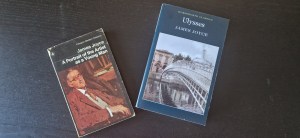
His second published work, “A Portrait of the Artist as a Young Man”, is a fictional story that portraits his Catholic childhood and shows how much it influenced him and his life.

His masterpiece is “Ulysses”. Based on the “Odyssey”, by Homer, it describes a day of Dublin life. Most of the action is seen through the minds of the characters and each chapter has its own literary style. The aim of James Joyce was to portray Dublin in such detail that the city could be rebuilt exactly as it was from his book.

James Joyce died in Zürich in 1941, to where he moved from Paris after Nazis invaded it in 1940. “Finnegans Wake” was the last work that was published when he was still alive and it is considered an experimental book, where he plays with words to an extreme. He also left an extensive poetry work and many other fictional stories were published after he died.


Keywords: ROMAN EMPIRE | “I, Claudius”, by Robert Graves

Robert Graves was a poet and a writer. He also translated classic works and was a professor at the University of Oxford. His book “I, Claudius” was his most successful novel. It was written as it was Claudius himself writing it and it tells the story of the Roman Empire through his eyes, from his childhood to when he took office as Caesar. The events described were real, but the way they happened is fictional and myths and rumours were taken as real events. Assassinations, murders disguised as accidents, betrayals, conspiracies, and dubious and complicated family connections were hallmarks of the Roman Empire. You can find them all in this book, abundantly. When reading it, you feel like you are actually living in those times.

Claudius was a Roman Emperor, who was not supposed to have been one. He had a limp (thus the verb “claudicar” in some Latin languages) and a fragile health. He also stammered. Members of his own family, the Caesar family, despised him and kept him away from public gatherings. He watched 3 rulers come and go before he was called for duty when he was about 50 years old. The previous Emperor, Caligula, had murdered all male descendants of the first emperor, Augustus, but he spared Claudius for an unknown reason. Although there was not a written rule that a descendant would take the “throne” after the death of the Emperor, that was usually the case and, when Caligula was murdered, Claudius was the obvious choice.

The story begins with Augustus ruling. Born as Gaius Octavius, he was the successor of Julius Caesar and the first official Roman Emperor. He had a long reign, supported by his powerful wife Livia, who would literally do anything to keep her power. Claudius extensively talks about this couple because they kind of set the tone for subsequent rulers. In fact, all rulers up to Claudius, including him, were raised by them. As he tells his life story, how and why he became a historian and a writer, he also tells the story of Tiberius and Caligula, the two emperors before Claudius, from when they were kids to when they were murdered (and why and how they were murdered).

“Claudius the God and His Wife Messalina” is the second book of this short series and it tells the story of Claudius’ life as emperor.


Key place: BATH, UK | Jane Austen

Jane Austen is a world-famous writer known for her romantic novels. The love stories are the reason why most people read her books and why there are so many films and TV series based on them. However, that is not the reason why her books are considered brilliant. The descriptions (and somewhat criticism) of 18th century society are as accurate as they are timeless.

Creating stories since a young age, she only took it seriously when she was an adult. However, her sharp eye had been observing and her brain had been taking notes. By the time she wrote her six novels, her hands were ready to write what she had been processing. It is no coincidence that most of her books take place in the countryside or have main characters coming from the countryside: Jane Austen was born and raised in rural Hampshire. She also wrote stories set in Bath, a place where she hated to live. In fact, a few months before she died, she had started to write a new novel about a new SPA village, similar to Bath, as a critique to those people who went to resorts looking to cure imaginary diseases. Unfortunately, she only wrote the first chapter.

Her six novels tell tales of people who are living their lives within their communities until they get to know people from other communities. A kind of clash happens and love is born. However, this love is not possible for different reasons, but it usually revolves around money, prejudices, and social classes. Jane Austen masterly describes their struggles, how other people perceive their love story, and how everyone lives according to their own beliefs (and misjudgement of others). In the meantime, we learn about the drama that property law at the time could cause to families, the consequences of bad marriages, and how people would treat spinsters. There are also dishonest men and women who only want to marry for money. Family pressures their youngest to meet expectations or damages their prospects due to a certain reputation.

However, good people and good deeds are also present. Actually, it’s because of them that love triumphs in the end. Yes, love is strong, endures all difficulties, and overcomes all obstacles. Yet, it does need help and it does need people to defeat their preconceived notions. Maybe that is the message Jane Austen would wish to convey: focus on the essential, drop the absurdity. Nonetheless, she also stresses the importance of money. In fact, in her books, there are couples that married for love, but the lack of money turned that love into resentment.

In a nutshell, love is complicated and society is powerful.

 
The six novels of Jane Austen:

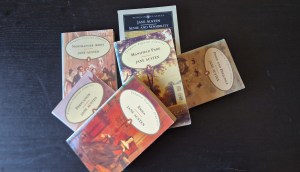
  • Sense and Sensibility (published in 1811)
  • Pride and Prejudice (published in 1813)
  • Mansfield Park (published in 1814)
  • Emma (published in 1815)
  • Northanger Abbey (published posthumously in 1817)
  • Persuasion (published posthumously in 1817)


Keyword: DESERT | “Dune”, by Frank Herbert

After being postponed due to the strike of writers and actors in the USA, “Dune: Part Two” will finally open in theatres around the world this month. Both Part One and Part Two were adapted from the first book of the series “Dune”, which is the name of the first book.

Paul Atreides is the son of the Duke, who, by imperial decree, has to take a new stewardship: the planet Arrakis. The entire family has to leave their home planet, a water planet, never to return. Arrakis is a desert planet, also known as Dune, with nothing but sand, gigantic worms, and spice. Spice is what makes this planet so valuable and worms are the creatures that produced it by interacting with the sand. Needless to say that those worms are deadly and harvesting the spice is extremely dangerous. The previous steward of Arrakis, who was removed by the emperor, is extremely wealthy due to the spice harvesting. Why did the emperor transfer this stewardship, banishing the previous Duke from his home planet and drying his wealth source? And why has the arrival of Paul Atreides been so anticipated by the people of Arrakis? And what role will the Fremen, the native people of Arrakis, have in the story?

“Dune”, by Frank Herbert, is considered a classic of science fiction and a cult book for many. In truth, this is just the first volume of a series of six. Many topics are intertwined and its brilliantly-achieved complexity is what makes this book, and the subsequent volumes, so epic. Things are never as they seem and the story takes several unexpected turns over and over again. For example, at the beginning of the book, the Fremen are presented as savages who do nothing but terrorist acts. When Paul Atreides is forced to flee from the ducal palace, he must take refuge with them. We then learn how Fremen have adapted to life in the desert, their relationship with the gigantic worms and also how water is central in their lives. Fremen also have the project of transforming the desert into a forest, which is actually achieved in a later book of the series, but with devastating consequences.

Of course, the story is not just about survival techniques and mega projects. There is a rebellion in the making that will change the whole empire and a mysterious organization of women that will have a crucial role in the process. These women dedicate their lives to the organization and use all their craft (natural and learned) to achieve their goals.

Unfortunately, Frank Herbert died before he could finish the series.

 
The six volumes of “Dune”:

  • #1 Dune
  • #2 Dune Messiah
  • #3 Children of Dune
  • #4 God Emperor of Dune
  • #5 Heretics of Dune
  • #6 Chapterhouse: Dune