
English version
Never has so much been heard about Greenland as these days. First “visited” by the Vikings in the 10th century, it has been colonized by the Kingdom of Denmark since the 18th century. The relationship between the Inuit (the native people of Greenland) and the Danish government has not been a peaceful one. As it happened in other colonies, the Greenland true natives were brutalised and discriminated against (they still are). They have longed for a very long time to be completely independent, but the situation just got increasingly complicated with the declared intentions of the President of the USA.
Christoffer Petersen is a British fiction author who lived in Greenland for seven years. Teaching English to people living in remote areas and in the country’s capital, he had extensively contact with the Inuit. He has learned about their problems with Denmark and the consequences of its disastrous ruling. Having moved to Denmark, he now spends his time writing fictional stories about that frozen world. Some of those books are translated into Portuguese.
Portuguese version
Nunca se falou tanto sobre a Gronelândia como nestes dias. Visitada pela primeira vez pelos Vikings no século X, foi colonizada pelo Reino da Dinamarca a partir do século XVIII. O relacionamento entre os Inuit (o povo nativo da Gronelândia) e o governo dinamarquês não tem sido pacífico. Tal como aconteceu noutras colónias, os verdadeiros nativos gronelandeses foram brutalizados e discriminados (ainda o são). Há muito que anseiam pela independência toral, mas a situação está cada vez mais complicada com as intenções declaradas do Presidente dos EUA.
Christoffer Petersen é um autor de livros de ficção que viveu na Gronelândia durante sete anos. Ao ensinar inglês para as pessoas que viviam em áreas remotas e na capital do país, teve bastante contacto com os Inuit. Tomou conhecimento sobre os problemas com a Dinamarca e as consequências do seu governo desastroso. Tendo-se mudado para a Dinamarca, agora passa o tempo a escrever histórias ficcionadas sobre esse mundo gelado. Alguns destes livros estão traduzidos em Português.
The Greenland Trilogy | A Trilogia da Gronelândia
When Fenna Brongaard started her job with the SIRIUS patrol, she thought her biggest challenge was the ice storms along the patrol route through the Greenland desert. She was wrong. From her secret mission in Book 1, her short career as a secret agent in Book 2, to her personal self-imposed assignment in Book 3, she lives many dangerous adventures. A fast-paced thriller that surprises at every step of the way. In the meantime, she also meets David Maratse, a Greenland Police Constable and the main character of the Greenland Crime series.
Quando Fenna Brongaard começou a trabalhar na patrulha SIRIUS, pensou que o maior desafio seriam as tempestades de gelo ao longo da rota através do deserto da Gronelândia. Estava errada. Desde a missão secreta no Livro 1, passando pela curta carreira como agente secreta no Livro 2, até ao autoimposto dever no Livro 3, ela vive muitas aventuras perigosas. Uma história de ação alucinante que surpreende a cada passo. Entretanto, ela conhece David Maratse, um polícia gronelandês e a personagem principal da série Crimes na Gronelândia.
 BOOK 1: “The Ice Star”
TRADUÇÃO para português: “A Estrela do Gelo”
 BOOK 2: “In the Shadow of the Mountain”
TRADUÇÃO para português: “À Sombra da Montanha”
 BOOK 3: “The Shaman’s House”
TRADUÇÃO para português: “A Casa do Xamã”
FENNA SHORT STORIES
After the events that unfolded in the previous books, Fenna is recruited by a secret services agency and is assigned several missions. Some of these missions are told is the following books.
Depois dos acontecimentos dos livros anteriores, Fenna é recrutada por uma agência de serviços secretos e é destacada para várias missões. Algumas dessas missões são contadas nos livros seguintes.
 BOOK 1: “In Strange Hands and The Frenchman”
TRADUÇÃO para português: “Em Mãos Alheias e O Francês”
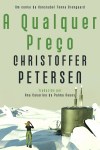 BOOK 2: “At All Costs”
TRADUÇÃO para português: “A Qualquer Preço”
Greenland Crime | Crimes na Gronelândia
Due to the events that took place in The Greenland Trilogy, David Maratse, a Greenland Police Constable, is forced into an early retirement. He decides to move to Inussuk, situated on the coast, on the other side of the country, to hunt and to fish. Well, that was the plan. The plan changes in Book 1 when Maratse finds a dead body, murdered. Against his will, he gets involved in the police investigation. In Book 2, he finds an abandoned boat, full of blood… In the meantime, he falls in love with Petra Jensen, a Greenland Police Sargent and the main character of the Greenland Missing Persons series. Yet, Petra disappears in Book 3 and, because of what he does for her, Maratse goes to jail in Book 4.
Devido aos acontecimentos que tiveram lugar n’A Trilogia da Gronelândia, David Maratse, um polícia gronelandês, é obrigado a reformar-se mais cedo. Decide mudar-se para Inussuk, situado na costa, no outro lado do país, para se dedicar à caça e à pesca. Bem, esse era o plano. O plano muda no Livro 1 quando Maratse encontra uma pessoa morta, assassinada. Contra a sua vontade, participa na investigação policial. No Livro 2, encontra um barco abandonado, cheio de sangue… Entretanto, apaixona-se por Petra Jensen, uma sargento da polícia gronelandesa e a personagem principal na série Pessoas Desaparecidas da Gronelândia. Porém, Petra desaparece no Livro 3 e, por causa do que ele faz por ela, Maratse vai parar à prisão no Livro 4.
 BOOK 3: “We Shall Be Monsters”
TRADUÇÃO para português: “Seremos Monstros”
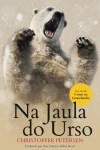 BOOK 4: “Inside the Bear’s Cage”
TRADUÇÃO para português: “Na Jaula do Urso”
Greenland Mission Persons | Pessoas Desaparecidas da Gronelândia
When Petra Jensen graduated from Police Academy, there was no Missing Persons desk. Then, Petra answered a phone call. After solving her first case, she was rewarded with her own section. However, she is still a rookie constable, therefore, she still has to do basic work. These are Petra’s stories before she met David Maratse and “be part” of the Greenland Crime series.
Quando Petra Jensen terminou o curso na Academia da Polícia não havia um gabinete de Pessoas Desaparecidas. Um dia, Petra atendeu um telefonema. Depois de resolver o primeiro caso, foi recompensada com a sua própria secção. No entanto, ela é uma novata, portanto, ainda precisa de fazer trabalho de base. Estas são as histórias de Petra antes de conhecer David Maratse e “fazer parte” da série Crimes na Gronelândia.
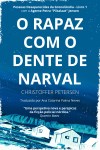 BOOK 1: “The Boy with the Narwhal Tooth”
TRADUÇÃO para português: “O Rapaz com o Dente de Narval”
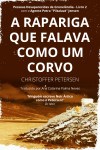 BOOK 2: “The Girl with the Raven Tongue”
TRADUÇÃO para português: “A Rapariga que Falava como um Corvo”
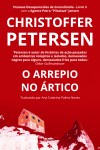 BOOK 3: “The Shiver in the Arctic”
TRADUÇÃO para português: “O Arrepio no Ártico”

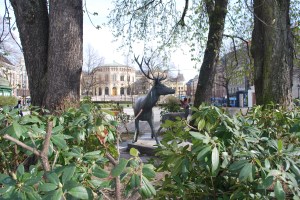 The capital of Norway is a pragmatic city, made for people to live there. Yet, it has a few surprises in store for less well-informed tourists. Looking like a simple village, Oslo is peaceful and quiet. Yet, it is also full of life and activities. It preserves its history, yet it is modernizing.
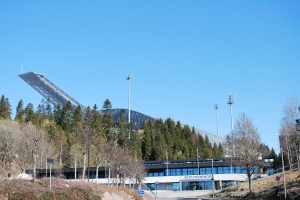 While Jo Nesbø’s characters usually drive their own cars to get there, the Society’s members had the chance to climb the mountain by metro, which runs along a narrow line very close to the edge of the steep slope. Although a bit scary for the fearful ones, the journey provides a spectacular view. The train carriages are prepared for the show as they are equipped with many windows. They are also prepared to accommodate the skis of those who go up the hill to practice alpine skiing, cross country, or ski jumping during winter. The Holmenkollen stop was constructed very close to the Holmenkollen National Ski Arena, where the Society’s members admired the huge Holmenkollbakken (the ski jumping hill of Holmenkollen). Being at the very top was vertiginous, especially because they knew that there was nothing but air underneath.
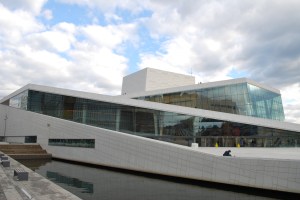 Back with their feet on the ground, the Society’s members made their return journey to Sentrum, the central area of Oslo, and got out at Jernbanetorget square. If they walked for about 20 minutes to the east, they would reach the district of Gamle Oslo (“Old Oslo”), where the Grønland Police Station is situated, the work place of Harry Hole. Instead, the Society’s members walked towards the waterfront, to Bjørvika. Here, they admired the Opera House, an iconic symbol of Oslo. Built by the water, it seems it is emerging from the fjord’s depths. Its roof extends to the ground, inviting visitors to climb to the top. Once there, the view is magnificent. On one side, the Society’s members could see the fjord in front and, on the left-hand side, the new Munch Museum and some new development buildings. On the other side, at the back, they could see the Barcode Project, which consisted of several tall and modern multipurpose buildings.
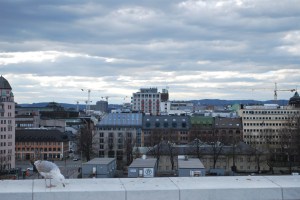 Everyone was happy to receive such great news. Not that they were not having fun, but that promised something special. Mr John Booklish remained mysterious and told them to follow him. They caught the tram to Aker Brygge, a modern area that mixed residence buildings for high-class people, marinas, shopping areas, and entertainment. There were many restaurants to choose from, but, before dinner, the Society’s members went to the Astrup Fearnley Museum of contemporary art, at the end of the street. It had an original design that perfectly blended into the environment.
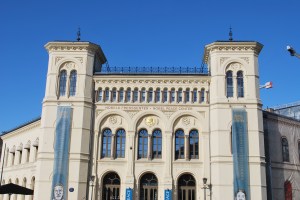 If someone was facing the fjord in front of the port, Aker Brygge would be on her/his right-hand side, the Akershus Fortress would be on her/his left-hand side, and Oslo City Hall would be on her/his back. It is in Oslo City Hall where it is announced the only Nobel Prize not awarded in Stockholm, Sweden: the Nobel Peace Prize. In front of Aker Brygge, in what was once a train station, the
 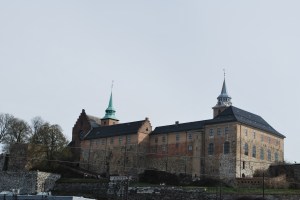 The Society’s members were talking about what they had learned at the Nobel Peace Center, about what peace meant in the world, and about how it related to the latest news while crossing the square in front of the port, passing the Fish Market and the City Hall, and heading to the Akershus Fortress. Once there, they were impressed by how well preserved it was. There were gardens everywhere around the buildings and a lovely park with a wonderful view to Oslo and the fjord.
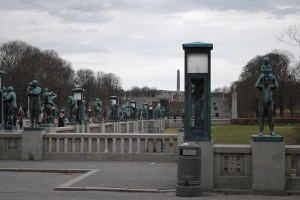 The Jo Nesbø’s character Harry Hole lives at a 15-minute walk north of Karl Johans gate. Karl Johans gate is the best-known street of Oslo and it is where the heart of the city beats. Located about 700 metres parallel to the port, it connects the Royal Palace and the National Parliament, and it’s full of shops, cafés and luxurious hotels, with a garden on the side. This is also where the National Theatre was built. All these landmarks were built in the 19th century. Built in the 18th century, the Frogner Manor, today the Oslo City Museum, gave its name to the entire district. Back in the day, the Manor included a garden that later became a park. Nowadays, this park is full of eccentric sculptures made by Gustav Vigeland, one of the greatest Norwegian artists. Vigeland was also the creator of the Nobel Peace Prize medal.
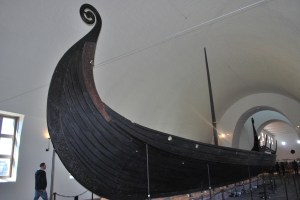 Like Berlin, Oslo also has a Museum Island. Except, in Oslo it is not an island, but a peninsula, and it is not exactly situated in the middle of the city centre, but not very far from the port. Besides, it is much bigger and you can hike, cycle, swim and do all kinds of outdoor activities there, including yoga. As for the museums, they are: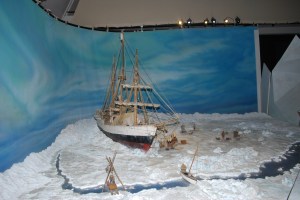
 WORDS IN IDEAS