
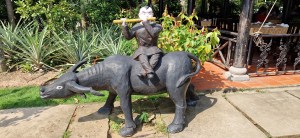
 Switzerland is all about the Alps, sanatoriums, chocolate, and cheese. In France, there is nothing else to do but to see the romantic Paris and eat haute cuisine. Italy was frozen in Roman times and only has pizza and pasta to taste. Portugal only has amazing beaches, good food, and friendly people. Nordic countries are cold in every way. And then there is Asia, which seems to be just one country full of Buddhist temples… and poverty. Africa is so poor, people still live in huts in the middle of the savannah, where there are lions, hyenas, hippos and giraffes. The Middle East is just desert. Latin America is Amazonia and the Caribbean is composed of exotic beaches.
These are just a few stereotypical perceptions Westerns, especially Europeans, have of foreign countries. Nowadays, local guides do their best to show all the beauty of their home countries, but even they sometimes fall into the marketing trap of giving people what they want… that is, what people have in their minds… that is, all the stereotypes they have been collecting in their minds. Is Paris really romantic? Is Inca civilization really lost? And what does it really mean “New York, the Big Apple”?
Before there was marketing (from the 19th / 20th century onwards), there were travellers who would roam the world and write their impressions about the foreign lands they were visiting. Usually, they were merchants looking for merchandise to buy, transport, and resell. They would follow routes like the Silk Roads. Even though they came into contact with people from different backgrounds, they were full of prejudices and their writings reflected them. Marco Polo, a Venetian merchant, travelled along the different routes of the Silk Roads for about 20 years, and conveyed his knowledge about Asia in a book that is still read 700 years later. His somewhat biased views have shaped how Europeans have perceived Asia.
Later, missionaries and colonialists have also provided a certain image of faraway lands. This time, the perspective was different. Europeans were imposing their culture throughout the world assuming that their culture was superior to all others. Therefore, since then, everything has been compared to European standards. Descriptions of uneducated people, weird traditions and behaviours, and odd constructions are still widespread in documentaries, films, stories… and marketing. All these distorted perceptions were so crystallised over the centuries that, when people go to those foreign countries, they expect to see what matches their perceptions. If there is not a match, people can get very disappointed, even demanding to see “the real country”.
Tourism began in Roman times, but it was in the 19th century that the idea of regularly traveling for pleasure was widespread (among rich people, of course, those who had money for that). After World War II, societies developed many inventions, infrastructures (like transportation networks), and better living conditions for their people. Workers have become entitled to paid holidays and packages to travel around the world grew and grew, especially recently with low-cost companies. Thus, the number of tourists around the world is now so great it is becoming problematic. Yet, although they can see other countries with their own eyes and make their own mind, many choose to keep seeing foreign lands with the outdated eyes of biased ancient travellers. Is it because it is easier? Is it because it is more comfortable? Is it simply because people travel to see what they have built in their mind as being true, and do not accept that their perception is wrong?
The world has changed dramatically. The Silk Roads closed in 1453, even though China is trying to rebuild it. Colonies have become independent countries, developing in their own pace and manner. Catholicism is no longer conquering the world, quite the opposite. The diversity of cultures and languages is being cherished. Europe is not the centre of the world anymore and their cultural superiority is being questioned. However, tourism wording still reflects the old times. Destinations are sold using descriptions of exotic and paradise places, and comparing them to European known places, or as luxury resorts built exclusively for tourists, in the middle of local extreme misery. The idea of traveling to other countries to see with their own eyes what they have pictured in their minds (fuelled by the images and the texts they have seen and read about the place), staying in hotels similar to the hotels they are used to in Europe, and eat similar food, is so strong that they get frustrated when they realise reality is very different.
It is difficult to let go of preconceived ideas on how the world is. Those beliefs help us make some sense of the world and give us a kind of safety feeling. However, it can also prevent us from discovering new wonderful things and realise that the other side may be as amazing (or even more amazing) that this one.
Learn more:
** YOUR WORDS AND IDEAS **
By Isabella Muir | On 26 February 2026 at 13:24
Your observations are so true. Our own cultural experiences are so ingrained that it can pervade all our opinions about ‘difference’. Keeping a truly open mind is challenging, but ultimately, so very rewarding!
By Words in Ideas | On 26 February 2026 at 14:22
Thank you, Isabella! Yes, we don’t realise how much our cultural experiences are a hindrance for our open minding…
This article is part of the FOREIGN LANDS series
Foreign Lands aims to discuss the difference between languages and cultural backgrounds.



 The pyramids! Miss Honeypraise was looking forward to seeing them. However, when searching about the country, she realized there was much more to see and visit. She was going on a tour with a travel agency for logistics and safety reasons. Considering that there was a “Tourism Police” in the country to make sure tourists were safe at all times, Miss Honeypraise thought it would be better not to risk going by themselves. Mr Theodore Williams, who was going with her, was her best-friend-turned-boyfriend and this was going to be their first trip together.
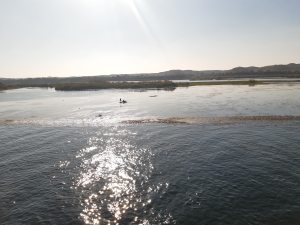 Navigating up the Nile, it was easy to imagine one had gone back in time, to the time of the Pharaohs. There were still many agricultural areas along the shore, where there were people walking around with their donkeys. The boats going up and down were also similar with the ones used in Ancient Egypt and some would carry fishermen working in the old ways. Kids would jump from the boats into the water and they would laugh happily and carelessly. When the Pharaohs ruled this land, the traffic was much more intense, the boats were brighter and more colourful, the farm lands would be full of activity, loading the boats with crops.
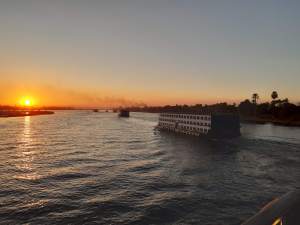 “You seem very contemplative”, said Theodore, sitting on the chair next to Clarissa.
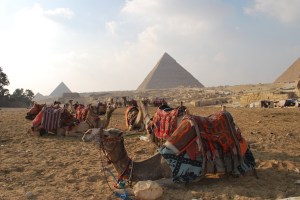 Cairo was founded as the capital of Egypt when the Arabs invaded the country. It was located not far from the old capital Memphis, the city that became the capital when the two kingdoms, the Upper Egypt (in the south) and the Lower Egypt (in the north), came together as one realm. During this time, the Giza Pyramids were built, along with other pyramids and monuments in the region. It was later that it was decided to bury the Pharaohs in the Valley of the Kings to avoid thefts. Not far from the Valley of the Kings, a new capital emerged: Thebes. After its decline, the capital became Luxor, which thrived from Thebes’ ruins. Luxor is where the full splendour of Ancient Egypt can be glimpsed. Many buildings have been destroyed over the centuries, but the ruins unveil what they may have been at the time. They are still magnificent and one can only imagine the full scale of its majesty.
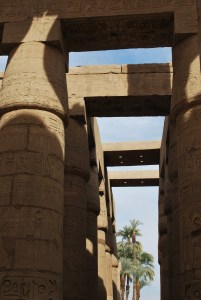 Starting in Luxor, the Nile cruise takes visitors to different key spots along the river. The adventure starts at the temples of Karnak and Luxor, which are connected by a road with lined Sphinxes at both sides (partially destroyed now) and are characterized by tall columns and huge statues. These make anyone feel small, which was probably the goal. Pharaohs wanted to show how magnificent they were and how important it was to respect religion. After all, the Pharaohs were also the religious leaders. Therefore, many temples were built, usually by the water. This was important due to the frequent religious parades, which took place on boats.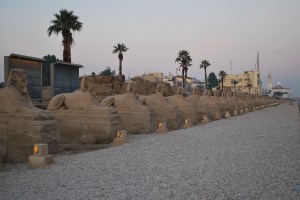
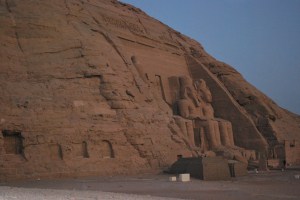 The Temples of Abu Simbel and Philae were two of the historical monuments that had to be relocated when the Aswan High Dam was constructed, resulting in the rising of the waters of Lake Nasser. The monuments could have been submerged if it wasn’t for the specialized work carried out by the UN, responsible for financing the project. This was not an easy task. Once a year, the sun enters the main Temple of Abu Simbel and illuminates the statues located deep inside. UN specialists had to recreate this unique feature when relocating the Temple, which they did (with a very slight variation).
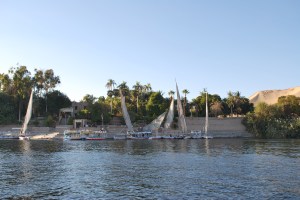 The Temple of Abu Simbel is the closest to the border with Sudan and it is located in the Aswan region, a region different from other Egyptian regions, full of cataracts and islands along the river. One of these islands is the Elephantine Island, located right in front of the region’s capital, Aswan (named the same as the region itself), where boat traffic is especially intense. No wonder. This was once an important trade point with Sudan and the administrative centre of the former independent region named Nubia, which has been under Egypt control for many centuries. Yet, they maintain their culture intact, namely in some typical villages located in the island, full of their colourful houses.
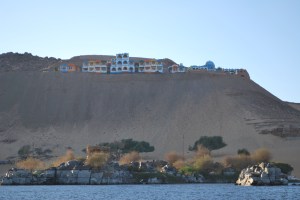 “That concludes our trip to Egypt”, said Theodore. “From Alexandria, in the north, to Abu Simbel, closer to the border with Sudan, it’s about 1300 km along the Nile River. 1300 km with 3000 years of ancient history.”
 At some point, Swiss men were on the verge of being humiliated internationally as almost all European countries had already allowed women to vote. In the meantime, Swiss women kept pushing and presenting initiatives while peacefully protesting on the streets. After much internal and external pressure, men finally approved the right for women to vote in 1971, even though in some Cantons this would only become official 20 years later…
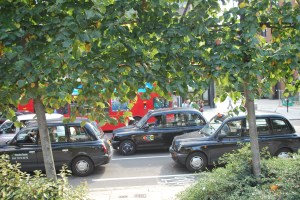 So, tourism has been around for a long time. It has evolved and now the possibilities are endless. People go touring for all kinds of purposes all over the world. There are pre-defined tours, but you can also plan your own voyage. Different budgets will provide you different trips to different destinations. For the same destination, you can choose different means of transportation, hotels, services. And, if you can afford it (in terms of money and time), you can replay a Grand Tour of your own making.
 WORDS IN IDEAS