
“Did anyone research beauty?”, asked Jack as soon as everyone sat down. “I’ll start. The English word ‘beauty’ comes from the French word ‘beau’. Therefore, I give you the floor, Elizabeth”.
“Thank you, Jack. I thought you were going to start… Well, the French word ‘beauté’ also comes from the word ‘beau’, which in turn comes from the Latin word bellus. The meaning is the same, there was no great change over the centuries”, said Elizabeth.
“In Spanish it is ‘belleza’, in Italian it is ‘bellezza’, and in Portuguese it is ‘beleza’. All these words also come from Latin. No surprises there”, said Leo.
“The German word is ‘Schönheit‘, which comes from ‘Schön’, an old German word”, said Michael.
“The Nordic languages follow the same logic and are not that different from the German word. However, the sound seems much different than the writing: ‘skönhet’, in Swedish, ‘skønhed’, in Danish, and ‘skjønnhet‘, in Norwegian. Nothing very exciting”, said Sophia.
“Yeah, very boring. I don’t know if you looked up the opposite word. In English it is ‘ugliness’, which comes from ‘ugly’. Now, ‘beauty’ comes from Latin, but ‘ugly’ comes from Old Norse, which, back in the day, meant ‘dreadful, fearful’”, said Jack. “So, I guess someone ugly was someone who was feared. In today’s Nordic languages, the word should be similar to this one, no?”
“Well, actually I did that exercise too. Interestingly, the words are different in Norwegian (‘stygg’), Danish (‘grim’), and Swedish (‘ful’). None of them is closer to ‘ugly’. Maybe it is closer to the German word?…”, asked Sophia, looking at Michael.
“No”, replied Michael, looking at his computer. “I didn’t look for ‘ugly’ before, but I did it now. In German it is ‘hässlich’. What about Latin languages?”, said Michael.
“The Spanish word (‘feo’) and the Portuguese word (‘feio’) are similar, but in Italian it is ‘brutto’. This is curious because, in Roman times, ‘Brutus’ was a name. Remember Cesar’s son who stabbed him? It also meant ‘stupid’ in Latin. In Portuguese and in Spanish there is also ‘bruto’, which means someone who is not very bright, but very aggressive”, clarified Leo.
“In French it is also different from everything you said: ‘laid’. It can also be ‘moche’, in a more informal way”, said Elizabeth.
“I guess ‘beauty’ is pretty much the same in every language whereas ‘ugly’ depends on the culture”, comment Jack.
“Ok, this is great”, said Elizabeth, “but I have a presentation to give you all. Ah, yes, I got carried away when doing this research. At first, I thought of a presentation about art and beauty, but that could become a bit technical and you could all get bored. Then, I thought that beauty is usually related to well-being. Therefore, I gathered information about famous beauty rituals around the world”.
Everyone was delighted and sat comfortably in front of her in expectation. Elizabeth stood up, prepared her notes, and started her presentation.
“So, Leo mentioned the Roman Empire. At that time, there was no plumbing providing water to private houses. As Romans liked to imitate the Greeks, and the Greeks liked to bathe, they developed the habit to bathe in public spaces, which were built for that purpose. The Greek public baths were small and Romans, as was their nature, wanted to make them big. They built these luxurious public baths where people would socialize and participate in numerous activities. They called it ‘thermae’ and, besides having a bath, Romans could do physical exercise, enjoy hot rooms, use the swimming pool, and stroll through the gardens for relaxation. A true health centre of Ancient Times.”
“I guess that’s where the concept of gyms with saunas and SPAs came from. By the way, SPA is the abbreviation of Sanus Per Aquam in Latin (healthy through water). That’s how the thermal springs were known in the Roman Empire, right?”, commented Leo, very proud of himself.
“Wrong”, said Elizabeth. “Spa is the name of a town in Belgium where a very famous thermal spring was built. Throughout their Empire, the Romans had discovered the places where the water had special mineral characteristics, hence the term ‘thermae’. In the 18th and 19th centuries, the Roman concept of luxurious healthy centres was revived. New buildings were constructed, with new social activities, like balls. They also built houses and hotels to lodge (rich) people from all over Europe. True towns emerged around those thermal springs. Spa was one of the most famous, but there were many others, like Bath, in England, where the Roman Baths are still a tourist attraction and are still operating. UNESCO now has a heritage category called ‘Great Spa Towns of Europe’ to help preserve these historical landmarks.”
“Spa has also a famous car racing circuit”, said Michael suddenly.
Elizabeth nodded and continued.
“The Roman thermae were built everywhere in the Empire, including in North Africa and in what is now Turkey. There, ‘hot baths’ evolved into what are known nowadays as ‘hammam’, or ‘Turkish baths’. Some people may confuse these with Sauna. Basically, while in Turkish baths we are in a room full of very hot steam, in the Sauna we are in a heated room where you sweat. Both aimed to expel the toxins from our skin. Like I said, Turkish bath is an evolution from the Roman thermae. Sauna is a Scandinavian tradition. While you are sweating from the heat, you can also hit yourself (gently) with birch twigs to help the process. Afterwards, you get out of the wood panelled room and jump to the very cold waters of the nearest lake or sea. The extreme difference in temperature does wonders for the skin, if you can handle it.”
Elizabeth stopped talking while everyone was shivering.
“Public baths were not an exclusive idea of Europeans. Japanese people made good use of the natural hot water that emerged to the surface everywhere throughout the country. They built Onsen (meaning ‘hot spring’) of different types. In other parts of the world, beauty rituals were not about going to public baths, but using special ingredients from Nature. In Africa, it’s tradition to use Shea butter to take care of skin and hair, in Polynesia it’s coconut oil. Traditions are linked to what nature provides in each land. In other countries, it’s not about the ingredients, but the process. For example, in Korea, a 10-step skincare routine was developed to maintain the skin healthy, which is now considered a world reference. And that’s all I had for you today.”
“Brilliant! Thank you so much, Elizabeth. Anyone has anything to add, have any questions?…”
Jack waited for someone to say something, but as everyone kept silent, he ended the meeting.
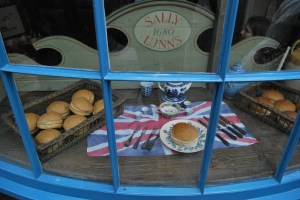 If the thermal baths, for which Bath is famous, began with the Romans, “buns”, which nowadays are a famous English delicacy, were invented by a French woman. Or so it says the shop where these buns were supposedly invented. In fact, the origins of Sally Lynn’s buns are not proven, but the
  WORDS IN IDEAS