
01.02.2026
For those who love snow and for those who marvel with beautiful photos from the air above.
31.01.2026
Deanna Stellato-Dudek is a skater that will fight for gold at the Milano Cortina Olympic Games 2026. The amazing achievement: she is 42 years-old and unstoppable.
30.01.2026
Indigenous knowledge has been despised for centuries, wrongly. Science is now proving how wise and advanced it has always been. Going back to that it’s the path to follow.
29.01.2026
Forget AI for a moment. Think about quantum mechanics. It is part of our current reality in lasers and transistors. In the future, it would be present in breakthrough technologies in medicine, logistics, and much more.
28.01.2026
The global ocean is finally protected by international law, proving once again that multilateralism and collaboration can achieve wonders. Read about the High Seas Treaty coming into force.
27.01.2026
Technology at the service of art: to preserve a Roman house from 2000 years ago, an innovative way was conceived to show it to visitors. Learn what it is.
26.01.2026
Today is International Day of Clean Energy. Clean Energy is good for the planet, generates less pollution, is more affordable, reaches people in the most remote places. It is better in every way.

There are so many places to travel to, where to start? Let’s follow the tips of journalists around the word. Here are the tips for this month:
- AI on Australian travel company website sends tourists to nonexistent hot springs, by Georgiana Ralphs (CNN Travel)
- Lisbon Like a Local, by Catarina Demony (Reuters)




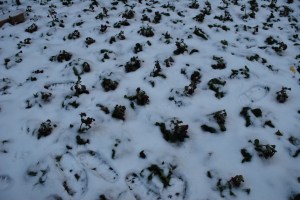 Snow is “rain” when temperatures are below the freezing point (0ºC). If there is no moisture, there is no snow, even when temperatures are really low. For example, in Antarctica, there are vast spaces called Death Valleys where there is no moisture, therefore, no matter how low the temperature is, there is no snow, ever. The level of moisture determines the type of snow and, ultimately, how dangerous it is. The temperature also influences as the ice crystals form differently under different temperatures. This is also true for ice, which, in a way, is a form of snow. Or better yet, snow is a form of ice. The difference is that snow is formed in air (hence, “frozen rain”) and ice is formed on the ground.
  WORDS IN IDEAS