
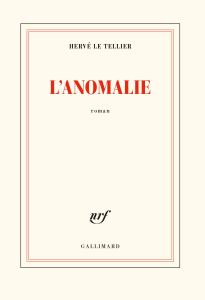
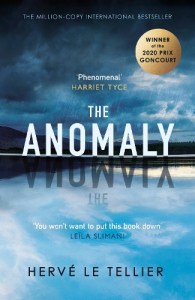
 Ms Clara Smartest, who had “officially” been put in charge of introducing the book of the month, took the floor.
“I must say that I’m not a big fan of scientific fiction. I mean, it’s not that I don’t like it, it’s just that I usually choose other types of books. That said, I really enjoyed this sci-fi novel. So, the story is about Blake, Victor Miesel, Lucie, David, Sophia, Joanna, Slimboy, and André. One day, on a stormy night, all of them were on board a regular flight from Paris to New York. All of them had their lives and their own problems. And, after that flight, all of them came to have their duplicates. The question the book tries to answer is: and now what happens?”
“It’s interesting that the question of what had happened is secondary”, said Ms Johanna Practicewell. “It’s mentioned, but the mystery is left unexplained. There are not many efforts in that regard. The ‘authorities’, so to speak, are more concerned with practical matters like ‘what to do’ and ‘how to avoid this in the future'”.
“Hence, the experts that are called unexpectedly. They are not called to explain the phenomenon, but to create instructions to manage the situation”, added Mr Jeremy Toughready. “It shows the USA way of thinking: it doesn’t matter why; it matters people are told what to do.”
“The Chinese have a different approach to the same situation”, said Mr Matthew Barnepy.
“Which was the solution the Americans came up with in the end”, commented Miss Amelia Matterfis. “Then, the ethical question arises: is it right?”
“Well, introducing the passengers to their duplicates was not better”, said Ms Abigail Vooght.
“What I found more interesting is the confrontation of oneself to his/her 3-month-previous version: the choices that were made that changed the course of their lives, the regrets, the wins, the tragedies, the successes”, said Mr Mark Mindhearting. “It makes us think about our lives. What kind of person were we 3 months ago? And 3 years ago? And, for those who are older, 30 years ago? If we had a chance to start over, would we do things differently?”
“On the other hand, memories can trick us. We don’t remember how things were exactly. And they are always changing”, added Ms Johanna Practicewell.
“It’s also interesting to see the evolution of the perception of one’s feelings and the feelings of others. We are trapped in our own mind and don’t know what is going on in someone else’s mind”, said Miss Martha Lovefeelings.
 The group then discussed details of the book. The solution found by Blake, the regular guy who was actually a hitman for hire in his spare time, was the most radical. André, the architect in love with a much younger woman who didn’t love him with the same intensity, was the most practical, accepting the new reality and adapting rapidly. The confrontation between the two little Sophias, uncovered a hidden secret about their families. The singer Slimboy and his duplicate found the most original solution and the success of the “oldest” was doubled. David’s fate was repeated. Joanna, who had married and became pregnant in those three months, realised that she shared the love of a man with another person. Lucie realised she had to share her son. Finally, Victor Miesel had a golden opportunity to start a new life.
Then, they talked about their own lives and how they would react if they would find themselves in that situation. They agreed that they wouldn’t know until the situation presented itself, but still they imagined how it would be like. Following what Mr Mark Mindhearting had said, they extended the exercise from 3 months to 3 years and 30 years, for those who were old enough. The youngsters were upset when they were told how young they were and how their perception of reality would change.
“Things will become clearer, and yet more uncertain. Clearer because we have more knowledge and more experience. More uncertain because we realise that our youthful certainties can be misleading. That’s why older people are more prudent, which is something that despairs young people”, said Mr Mark Mindhearting, who was the oldest in the room.
“That may be true, but I personally find it pointless to compare the present with the past, or to revive past events. The past is the past. We can’t go back or change anything; we can only go forward and make wiser decisions. I mean, it’s important to acknowledge our path, but we have to live in the present”, said Ms Johanna Practicewell.
“Well, I think this discussion has left us a lot to think about. I personally like these kinds of books that make us think and challenge the way we look at what surrounds us.” Mr John Booklish was wrapping up the meeting. “Before we go, just inform you that next month the book will be “Hamnet”, by Maggie O’Farrell. Have a lovely week!”
** YOUR WORDS AND IDEAS **
By Isabella Muir | On 5 March 2025 at 10:25
An excellent review of a thought-provoking subject, although I may challenge Ms Praticewell and say that we need to remember the past in order to learn from it? Also, I look forward to the review of ‘Hamnet’. I have just finished O’Farrell’s book, ‘The Vanishing Act of Esme Lennox’ – a completely awe-inspiring book, beautifully written by an extremely talented writer!
By Words in Ideas | On 6 March 2025 at 19:12
Thank you for your praise! Yes, Ms Practicewell “admits” you are right. She is a pragmatic person who is used to work with what she has at any given moment and not thinking “if we had this as before…” That said, knowing the past can help us prepare for the future, no doubt. Yes, Maggie O’Farrell is an amazing writer! Thank you for that recommendation! Not to give anything away, but the book of next month is really a lovely piece of literature.
 WORDS IN IDEAS