
Fake news is not a new phenomenon. Propaganda, falsehood, and pure lies have been around since human beings are human beings. The difference to our days is quantity. There is so much information going in every direction that it is hard to keep track of what is true and what is false. There is plenty of information about how to verify the authenticity of information circulating in the public domain. For example, media channels have teams to do just that.
Common people may feel lost with contradictory information. Besides distinguishing what is true and what is false, or deciding what to believe in, people also have to discover what is the best course of action for any given event. These are increasingly difficult tasks and basic concepts may help. Clarifying those concepts is the aim of the following.
Besides being a university professor, specialized in medieval history, Umberto Eco was a gifted writer. He had a personal library so big that he had to move to a new house due to the peril of the floor collapsing with the weight of the books and the shelves ended in the apartment below. Yet, this was no ordinary library. Every single book in each shelf contained false information. He thought imagination for false things was much more interesting than the pure hard truth. Indeed, fantastic stories are more attractive and impressive than a mere description of true facts. However, admiring the imagination of creating stories is not the same as to believe them to be true.
The first step to distinguish what is true and what is false is to remember scientific proven facts. The classic example is: the water boils at 100°C. Of course, according to some, even scientific facts can be contested. Think about climate change. Then, take a deep breath. Scientific facts are based on data. Data is the first layer of “truth”. Actually, data is a bunch of lines or columns in a document with “facts” collected from “reality”. It is so both for natural and social sciences. The difference is that in natural sciences the lines/columns are usually full of numbers and in social sciences are usually full of words.
The second step is interpreting that data. In the example above, someone somewhere in time registered their observations when heating water and came to the conclusion that water reacted to heat. Then, he or she realized that something changed at 100°C, and found the boiling state. A huge amount of data has been collected on climate change in different fields of study. Experts have studied them and compared them with their peers. The result is information. In other words, “information” is the interpretation given to a set of data. Conclusions are information, but everything that is thought of during the process is also information. Now, scientists can make wrong interpretations for several reasons. One of those reasons is ignoring crucial data, another is analysing data according to preconceived ideas. In other words: making data “respond” to our expectations instead of “listening to” what data has to say.
The third step is to confront the information available and turn it into knowledge. If you only take wrong information under consideration, or if you only pay attention to a certain type of information, your knowledge can be distorted. An example of this is eugenics, a supposedly “scientific” theory determining that there were superior and inferior races of human beings. Racism is based on this theory. On the other hand, the scientific community of the entire world has been challenging information that has been produced for centuries and concluding which is true and which is false. The accumulation of true information (knowledge) has provided the foundation to advance science in all domains. Specifically in the case of climate change, many scientists have been studying it, producing and confronting information from different sources. Now, there is an authenticated body of knowledge about the subject, on which further studies can be based on.
The fourth and last step is achieving wisdom. Wisdom is a set of universal and timeless truths that have emerged by cross checking all bodies of knowledge. The Universal Declaration of Human Rights is an example. Article 1 says that “[a]ll human beings are born free and equal in dignity and rights”. The following articles are about our rights as human beings, our freedoms as citizens, and our duties as members of a community. All of this is true and valid in every country in the world. The document was approved on 10th December 1948 after two years of intense work and taking under consideration both visions from the West and the East.
Some stories we are told since childhood are about the fight between Good and Evil. Good is represented as honest, pure, and sometimes even naive. Evil is sly, lying to make people do terrible things, and using all sorts of tricks to ensure a victory. Reality is not that simple, obviously. Or maybe it is. It depends if you can spot a deceiver. In the path to achieve wisdom, we can find many deceivers. Some are better disguised than others.
Let’s start with an easy one: advertising. It is common knowledge that most advertising is full of lies or, at least, exaggeration. The aim is to make you buy the product. For advertisers, it doesn’t matter if the product is good or not. What matters is making you believe it is. For example, tobacco companies wanted to increase sales, but they found out that tobacco was harmful to health. Instead of correctly informing the public, they gave the impression that smoking was “cool” and safe. Later, they wanted to expand the market and noticed that few women were smoking. Thus, they targeted women, creating commercials with famous women smoking. After successfully achieving that goal, they thought of targeting children to expand the market even more. This time, the commercials aimed to convince children they would look like adults with a cigarette in their mouth. It worked perfectly. Then, the bomb was dropped on the media: tobacco companies have always known that smoking was harmful to health and hide it in order to make a lot of money.
Then, there’s propaganda. It is similar to advertising, but with a different purpose: to convince you that a certain political ideology, a certain religion, or a certain course of action is the best for you (or your country). As examples you have election campaigns, religious discourses, and war. Each party, each religion, each war antagonistic wants you to believe they are the only ones who are right. In these contexts, you can find much counter information, which is a reaction of what their adversary is saying. For example, in espionage some information is released to expose the lies of the other side (and hide the truth of our side). They say that the first casualty when a war breaks out is the truth. This is due to propaganda. Each country at war must convince their population to enlist or to help with the war effort. If they say the truth (how ugly, gory, and traumatizing war actually is) no one would want to join. So, they say that the enemy is a devil and it is “our” duty to fight and defeat it. Naturally, this is said on both sides.
Every falsehood has its purpose. Some fake news is propaganda in disguise. Others are intended to create chaos in society. This is a technique widely used by the far right to increase their votes (and it works!). In social media, where what each individual says can reach an ever-increasing audience, some people spread fake news just to get attention. Unfortunately, the worst pieces of information are the best candidates to achieve this. When it is out there, it can be an unstoppable snowball. For example, a woman in a city in the USA wrote on social media that immigrants were kidnapping pets to eat them (because her neighbour’s dog or cat went missing). As immigrants are being targeted by the far right to create chaos, this story ended up serving as an example of the (false) narrative on how immigrants were evil. In the end, the cat or dog that was missing returned home a few hours after that post was published, but the damage was already done.
What the lady from the USA wrote on social media was misinformation: “incorrect or misleading information”. She had heard that the dog or cat was missing and made wrong assumptions due to the narrative about immigrants she kept listening to in the media. What the far right does is disinformation: “false information deliberately and often covertly spread (as by the planting of rumours) in order to influence public opinion or obscure the truth”.
It is impossible to avoid false information and it is impossible to verify the authenticity of every piece of information available. We have to trust. And here lies the question you should ask yourself: in who do you trust? Most people want to live their lives as carefree as possible and do not think much about what they hear. They trust in their friends and family, in the media, and in the Government. On the contrary, there are others who look further and realize that the truth is elsewhere. Those may be ostracized by society, regarded as annoying, because they often speak against the established power. Trusting in what they say may represent a risk, a risk of being ostracized as well or, in case of dictatorships, a risk of being arrested and tortured. The reality is that some of our friends or family may be wrong, that not all politicians are well-intentioned and that some media channels mainly convey propaganda. So, rephasing it: in who should you trust?
Created in 1945, the United Nations works based on the wisdom of all countries in the world. The UN is a beacon of hope for a better future and a source of reliable information. It currently includes 15 specialised agencies, 6 funds and programmes, and 9 entities and bodies. In addition, 8 independent organizations are also part of the UN system. Although there are offices in big cities like New York, Geneva, and Paris, the UN works on the field, where the world problems are more acute, together with the people who are facing them more closely. For these reasons, we may say that the UN is the reference for fact checking. You should choose other sources of information, obviously, but this is where you can go when you face contradictory information.
In the long term, education is the best solution to face disinformation of any kind. High-quality education, based on verified knowledge and wisdom. Unfortunately, education can be used to brainwash the population, as in the case of dictatorships, feeding young minds with lies. This was the case of Nazi Germany. Nowadays, it is important not only to educate with truthful information, but also to teach how to distinguish between what is false and what is correct. The UN has been working on this issue:
- REPORT: “Countering disinformation for the promotion and protection of human rights and fundamental freedoms”, 12th August 2022
- RECOMMENDATIONS: “United Nations Global Principles for Information Integrity”, 24th June 2024
- PODCAST episode: “Countering disinformation and promoting integrity in public information: Breaking away from echo chambers – Dr. Julian Jaursch, SNV Berlin”
UNESCO is the specialized agency of the UN for education, science, and culture. It was created in 1945 with the goal of working worldwide to promote quality education for peace. As it depends on the countries’ funding, this major ambition had to be reduced for lack of money. Nevertheless, they are making a difference in the world. Besides helping preserve world heritage, it promotes the sharing of good knowledge and valid ideas.
Yes, there is a lot of disinformation circulating in the world. But there is also a lot of good information, information that can lead to progress and a better world. Which one do you pay attention to is up to you.
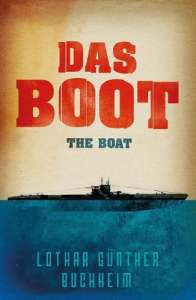 Lothar-Günther Buchheim was born in 1918. He was 15 years old when the Nazis took power and, while attending the Hitler Youth’s meetings, where he had military training, he seized the opportunity to take photos and write articles about the activities of the organization. When World War II broke out, he was studying art, but he left his studies to become a war reporter for the regime. The Ministry of Propaganda had created military structures (called
  WORDS IN IDEAS