
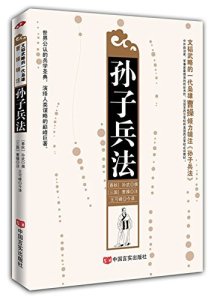
 For thousands of years, rulers and governments have used war to reach their political goals. Warfare has evolved, and still does even today, with new tactics and new equipment, although it has developed differently in each country or region. “The Art of War” was written in China, in the 5th century, in a time of chaos. These strategies were game-changing and all kings who used them added territory to their realms. Later, the book left China and travelled the world. Nowadays, it is part of the military curricula of many countries and it is even used in other areas, such as business.
The 5th century was a turning point in warfare. In Europe, the mighty and invincible Roman army was becoming weak and vulnerable. The great Roman Empire, which ruled Europe for about 500 years, had been founded on the fear of his army. They were disciplined and would train intensively, having some manoeuvres planned to defend and attack. In the meantime, in China, battles were unfolding according to some chivalrous-kind-of-rules, where war was more like a game than a way to get a victory.
Sun Tzu changed all that. He viewed war from a strategic perspective and not only as a clash of powerful and bloodthirsty men. Besides discipline, which Sun Tzu thought was essential, he believed that soldiers had to be competently guided, according to a bigger picture. “Little” details like the terrain, the weather, supply lines, the strengths and weaknesses of the enemy, needed to be analysed carefully and decisions on the field should be based on such information. Instead of finding a way to kill as many soldiers as possible, the idea was to apply techniques that would undermine the opponent even before the battle would start. War was, thus, the last resource and should be fought in accordance with other initiatives that would lead to the final and total victory.
Unfortunately, we are currently going back to war time. Therefore, there are many military commentators on different TV channels explaining what is going on in different battle fields. If we pay attention, we will notice that many of the strategies they talk about are exactly what Sun Tzu discussed 1500 years ago. For example, tanks cannot circulate through a forest and the battlefield gets muddy in the rainy season [Chapter 10, about the terrain conditions]. This shapes decisions on how to attack the enemy. When Napoleon marched his army into Russian, he did not consider the weather (it was freezing and the soldiers did not have warm enough clothes) nor the terrain (they got stuck in mud). Besides, the army distanced themselves from their supply chains. Therefore, many men were lost on the way to Moscow. This is the opposite of what is stated in Chapter 7 about getting the army as a whole to the final destination.
Sometimes we hear about cities that are won (or lost) by one side of the conflict. The strategic importance can be related, for example, to the terrain (if it is situated on high ground, for instance) or their intersection to supply chains. Attacks on troops’ supply lines and on energy facilities aim to demoralize soldiers and the civilian population. However, in Chapter 3, Sun Tzu states that attacking cities is not advisable at all. Therefore, the best option can be to choose other alternatives. The Battle of Stalingrad, in World War II, is a good example of what could happen if a city is attacked. In that Chapter, Sun Tzu also talks about the ratio of the number of men in each army and what to do in every situation. For example, if the number of enemy soldiers is much greater, the army should retreat without fighting. Otherwise, all men would be dead. What happened in Dunkirk during World War II illustrates this.
Preparation is key and information gathering is paramount to get to know the enemy very well, especially their strengths and weaknesses. Chapter 1 discusses how to get duly ready for war and how to deceive our opponent, making the population ready to support the government and the army. Modern campaigns are also based on years of preparation. Every time we hear about an attack, we also hear commentators saying how many years that attack took to be planned in detail. Propaganda is widely used, especially through media, to get the population on the government’s side (this is valid, of course, for both sides of the conflict).
Chapter 13 refers to spies and how to distinguish them. The information collected by them can be useful for preparation and also to follow what the enemy is doing during the war. There was no more fertile time for spies than the Cold War. They were literally everywhere. All the types of spies mentioned by Sun Tzu were employed by every country (and they still exist, more than we realise).
In a nutshell, “The Art of War” was so complete that current situations were already included in this 1500-year-old publication. Hence its ongoing success.
Sources:
- ”The Art of War”, by Sun Tzu and translated by Samuel B. Griffith
- Article: “Sun-Tzu”, by Joshua J. Mark (World History Encyclopedia)
This article is part of the THE INTREPID BOOK SOCIETY series
The Intrepid Book Society is a fictional book club. Every month, a book (or more) is recommended and/or discussed according to a keyword.

 WORDS IN IDEAS