
“So, ‘religion’ comes from the Latin (what a surprise!), meaning ‘scrupulous, conscience, honour and loyalty’. This means that it was a kind of moral conduct that people would follow by worshipping God”, said Jack. “During prehistoric times, there were many deities, God and Goddesses, each one representing a natural phenomenon, a quality, or an activity. For example, there was a God for thunder, a Goddess for beauty, a God for war, and a Goddess for hunting. Later, it emerged other religions that focused on only one God. Religions tend to personify the gods, representing them as if they were human beings, so people can identify with them and better understand the message being conveyed”.
“Whatever the religion you choose, you need to have faith, which basically is a belief in something for which there is no proof”, said Sophia. “Latin-related languages distinguish between ‘faith’ and ‘belief’, but German and Nordic languages don’t.”
“That’s interesting. Why is that?”, asked Elizabeth.
“I don’t know, but this reminds me of the war between the Roman Catholic Church and the Protestants. Protestant countries were the ones where there is no distinction. Maybe they are not very keen on believing in things without some kind of rationale”, said Sophie, shrugging her shoulders.
“Did you know that ‘Carnival’ was a big feast that Catholics would hold before the 40 days of penitence and fasting until Easter? They took the opportunity of that day to eat and drink as much as they could (especially meat) to endure the sacrifice that was coming”, said Jack.
“Fasting was only mandatory for those who couldn’t pay the fee to skip those duties…”, noted Elizabeth.
“Speaking of Christianity, when Jesus was alive, ‘bible’ designated a set of books that were bound together. I guess the other ‘bibles’ were lost or the term was glued to the importance of the book we now call the Bible”, said Michael. “It is interesting that the term has evolved to another meaning in slang language. When we want to say that one specific book is the foundation of a specific field of study, we call it the ‘bible’ of that field. For example, some say that the bible of economics is the famous book ‘The Wealth of Nations”, by Adam Smith”.
“Speaking of evolution of terms”, said Leo, smiling to Michael, “temple, as we all know, is the physical place where religious people worship God. Muslims worship Allah (that’s how they call God) in Mosques. Well, ‘mosque’ comes from the Arabic word masjid, which means ‘temple’. Minaret is the tall tower, which is part of the Mosque. The purpose of the tower is to call the congregation to pray. Catholic Churches have bells. The Muslim call for prayer is made by the Muezzin, who is the person who ‘sings’ at the top of the Minaret. They now have loudspeakers, so the Muezzin doesn’t need to go up there anymore. However, the Muezzin is not just anyone, he is chosen especially for that task due to its ‘singing’ qualities. Yet, he undergoes specific training after being chosen”.
“All Mosques are oriented towards Mecca because that’s where the Kaaba is located. Every Muslim is obliged to make a pilgrimage at least once in their lifetime to walk around the Kaaba. This pilgrimage is called Hajj. The Kaaba is a huge black cube with nothing inside. It is a symbol”, added Elizabeth.
“When Muslims and Catholics were engaged in war centuries ago, Muslims called ‘infidel’ to Catholics, and to all who didn’t share their faith. Catholics called ‘heretics’ to everyone who didn’t believe in their God“, added Jack.
“According to Statista, in 2022, Christians represented 31.6% of the world population and Muslims 25.8%. The third biggest religion is Hinduism, representing 15.1%. Hinduism is the oldest religion still in existence and it is practised mainly in India. At the beginning, there were no formal rituals or organization, just a set of written documents, now dated thousands of years”, said Sophia.
“A kind of ‘bible’, then”, commented Elizabeth.
“The religious teachings were called ‘doctrine’, especially those from the Catholic Church”, said Jack. “Nowadays, ‘doctrine’ can be used in other domains such as politics, the law, or military”.
“Anything to do with ‘doctor’?”, asked Elizabeth, laughing.
“Well, actually, yes. ‘Doctrines’ were taught by ‘doctors’”, replied Michael, looking at his computer. “This word comes from Latin and it then meant ‘teacher’. At the time, a ‘doctor’ was an eminent scholar specialized in a field of study. Nowadays, a doctor is someone who has a PhD, which, in a way, meets its original meaning.”
“Ok, this is interesting”, said Leo, looking at his computer. “The word ‘sin’ comes from Old English, which is similar to another word that comes from Old German. Probably, it is a similar word in German and in Nordic languages. However, the English language has a word that comes from Latin and it is similar to the word for ‘sin’ in Spanish, Italian, French, and Portuguese. You may have never heard of it, but you have surely heard the word ‘impeccable’, which means ‘flawless’. If ‘sin’ is something that goes against the laws of God, ‘impeccable’ is following the laws of God to the letter”.
“We could be here for a week talking about words related to religion and everyday words that come from a religious background. Unfortunately, it is time to go”, said Jack and everyone prepared to leave.
** YOUR WORDS AND IDEAS **
By Isabella Muir | On 26 May 2025 at 14:45
It’s fascinating to see the way so many of the topics you choose for your articles seem to mirror the topics of my studies. Just last week we were exploring the way that ‘religion’ is dealt with in historical research, and the difficulties with bias and subjectivity. Your article highlights the complexity of meaning – which is in itself full of subjectivity, as well as historical implications! What fun!
By Words in Ideas | On 27 May 2025 at 16:44
Yes, I think they are two fascinating and complementary perspectives: history and language! Combining the two gives new leads on what the future may be?
 In 1917, during the First World War, the writer Edith Wharton was invited to visit Morocco by the French Governor of the then French protectorate. She travelled around the country for a month, witnessing traditional events, admiring historical landmarks and meeting women who were part of the Vizier’s harem. Back home, she wrote a book, which was intended to be the first tour guide book of the country. It is a Westerner’s view of what was then considered the “Near East” (meaning North Africa). Edith Wharton fiercely and openly defended French governance and implicitly criticized some Arab practices. For example, she described the women of the Vizier’s harem as prisoners and unhappy and the ceremonies she witnessed were deemed primitive.
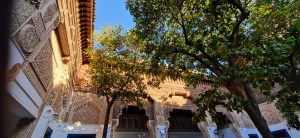 When in Marrakesh, Edith Wharton stayed at the
 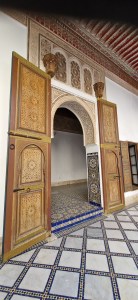 Ms Clara Smartest walked freely through the labyrinth of majestic rooms and courtyards. Although there was little furniture, Ms Clara Smartest could easily imagine how it was to live in such a place. For the Vizir, it was like living in the “One Thousand and One Nights” fairy tale. However, for the women who were part of the Vizier’s harem, and as Edith Wharton mentioned in her book, the Palace was a prison. A beautiful prison, with charming fountains, decorated with lovely tiles, and with interior courtyards and gardens, but a prison such the same. A world apart from the outside world.
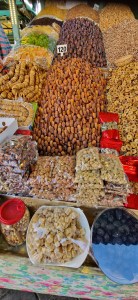 Outside, the city vibrated to the rhythm of its beating heart: the
 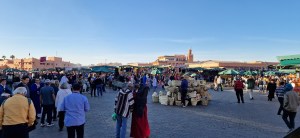 Ms Clara Smartest immersed herself in this improvised maze of street vendors and let her senses be overwhelmed. Later, she learned that this market has existed since the 11th century and remained pretty much the same. Travelling merchants from several regions of Africa, Europe, and the Middle East used to converge there to do business and exchange information, turning the square into a melting pot of different cultures. Due to these long-lasting traditions, Jemaa el-Fnaa became a
 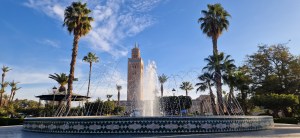 The square is located inside the Medina (the old Arabic town), a
 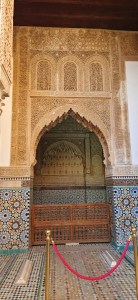 Edith Wharton had also visited the
  Travelling caravans, composed of camels loaded with goods to be sold or exchanged, have always been a typical image of the Desert. As Morocco is situated in a privileged geographical location, connecting North Africa and the Sahara Desert with the Atlantic Ocean and Gibraltar (the closest point between Europe and Africa), it is not surprising that European powers were eager to take hold of this land. The Roman Empire was the most successful, but then the Arabs invaded the region and kept Europeans out for centuries. Nevertheless, Europeans greatly influenced the Morocco Atlantic coast by building ports and doing business.
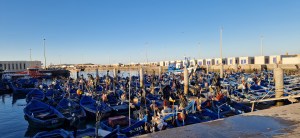
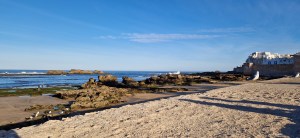 On reaching the coast, Ms Clara Smartest noticed how different the cities were compared with Marrakesh, located inland. While Marrakesh was connected to the desert and to oases, cities like
 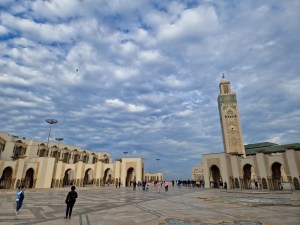 Casablanca was the most cosmopolitan city that Ms Clara Smartest visited in Morocco. The presence of international companies, especially American, was striking and contrasted with the old traditional buildings. Touristically, there was little to see there. The only exception was the
 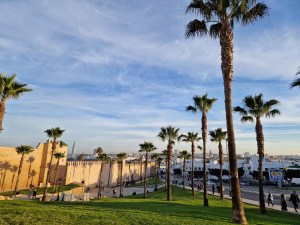 Ms Clara Smartest trip ended in Rabat, Morocco’s capital. At approximately 92 km north of Casablanca, the French governance made Rabat its administrative capital. The Governor underwent many constructions that transformed this imperial traditional city into a modern westernized capital, although Moroccan legacy was scrupulously respected. The result was an achievement worthy of inscribing Rabat as a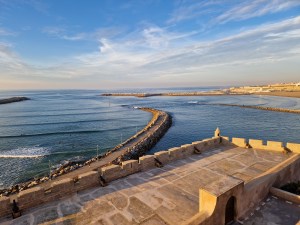
 WORDS IN IDEAS