
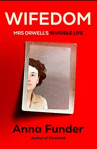
 Anna Funder was aiming to write a book about her favourite author: George Orwell. Yet, when doing the research, she literally found Eileen Blair, Orwell’s first wife. She was hidden between the lines of Orwell’s writings and in the passive voice of his six biographies, all of them written by men. From here, Anna Funder started to paint a picture of how men erase “wives” and how women are led to believe that their role in life is to support men in their pursuits, without any recognition. The shocking reality is so amazingly and clearly described that it makes you think about what is happening around you. It is so obvious, yet not many people seem to notice.
Eileen graduated in English studies, took a post-graduation in Psychology, which was going to be turned into a Master’s degree, and had several jobs throughout her life. After getting married, she alone was responsible for the couple’s farm, with chickens and sheep, and the store at the front of the house. The farm and the store were not very profitable and the couple would permanently struggle with money. On top of this, Eileen took care of the house (cleaning, cooking) and edited and typed her husband’s writings. Meanwhile, Orwell spent his time trying to write something worth to be published (and failing) and chasing women to have sex with them (whether they wanted or not so much). His biographers, based on the letters written by Orwell, stated that Eileen had given her consent, as they had an open marriage. Anna Funder has her doubts, seeing this as a way to “excuse” Orwell of his sexual wrongdoings (to say it nicely).
When the Spanish Civil War broke off, Orwell decided to enlist without consulting his wife. In his mind, she would be at home, taking care of their affairs and waiting for him. He was wrong. Shortly after, Eileen found a way to go to Spain too, where she found a job with the Workers’ Party of Marxist Unification (POUM). While there, she was fighting fascism and was persecuted by Stalinists. Compared to that, the life of Orwell at the front was a walk in the park.
Back home, Eileen had to find a job so the couple could have some money to live. She was employed by the Minister of Information, doing war censorship, which probably inspired Orwell for the writing of his book “1984”. By the way, the date was also inspired by a poem written by Eileen, when she was still single, entitled “End of the Century, 1984”. Yes, she wrote poetry as well. And she also co-wrote “Animal Farm”. Although her name does not appear on the cover of the book, it was her idea to write about farm animals as a metaphor to show how Stalinist regime really was (she would know about this very well). She also discussed every detail of the book with Orwell and typed it.
Wives helping their husbands writing fictional books, and being fundamental in their creative work, is nothing new. Iris Jamahl Dunkle wrote a book about Charmian Kittredge London, the wife of Jack London. Charmian was already a writer when she met Jack and helped him write some of his books while living many adventures with him. Despite her amazing life and her own published books, she is still known as the wife of Jack London. Iris Jamahl Dunkle also wrote a book about Sanora Babb, a force of nature who did in-depth research about the migrants in the USA during the Great Depression and wrote a book about it. However, John Steinbeck stole her notes and wrote “The Grapes of Wrath”. Sanora’s book was set to be published three weeks after, but it got cancelled because of Steinbeck. “Whose Names Are Unknown” was only published 65 years later.
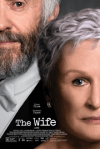 The film “The Wife” is based on this reality. Although a total fictional story, we can see it could be a true one (maybe it is and we are still to discover it). Glenn Close plays the role of the wife of a man who has just been awarded the Nobel Prize of Literature. It turns out, as we learn at the end of the film, all his books were written by her. And yet, it was he who got published, who got famous, and who got recognition for high-quality books. Why did she accept that situation? She wanted to be published and read, but realized it was not going to happen because she was a woman.
Orwell’s wife got sick and endured that situation, bleeding profusely and in much pain, for five years. She had much to do: earning money to pay the bills and taking care of her husband so he could have all the conditions he needed to focus on his writing. Then, they adopted a baby boy and Orwell decided to go to continental Europe as a journalist. She was left alone, again. No one really knows why she took a drastic decision without telling anyone: to do an operation to solve her health issue with a medical doctor that was willing to operate her even though she was not fit for that. It was an especially risky operation, to which she indeed did not have the strength to endure, and she died on the operating table.
Later, Orwell recognised himself that he had not treated her very well. Why she did not divorce him is not clear. She proved that she could have found financial independence and she had the opportunity to marry another man. Georges Kopp, who she had met in Spain, loved her until she died, but she did not love him back. She dedicated her life to a man who cheated on her repeatedly, abandoned her at least two times, and did not acknowledge her, not even in his non-fictional writings. She was ignored and erased, and she also cancelled herself.
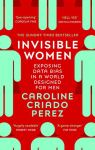 Caroline Criado Perez showed how women are systematically ignored and erased through hard data. In daily life, in workplaces, in health care issues, in public life, everywhere there are numbers proving that women are discriminated against systematically, like they do not exist, like they are a kind of weird man. Adequately, the book is called “Invisible Women”.
Sources:
- Article: “Finding Lost Voices: Eileen Blair (1905 – 1945), who helped write Animal Farm, Wifedom, and an Interview with Australian author Anna Funder”, Iris Jamahl Dunkle
- Ten Intriguing Facts about Fearless Writer Sanora Babb
- Film: “The Wife”
** YOUR WORDS AND IDEAS **
By Isabella Muir | On 25 February 2026 at 15:50
Absolutely fascinating article about women, literature, and bravery, with reminders throughout that perceptions and accepted ‘norms’ need to be constantly challenged and questioned! Roughly half the world’s population is female, and yet we are often squeezed into a forgotten corner.
By Words in Ideas | On 26 February 2026 at 12:40
Thank you, Isabella! Indeed, we should read more authors like these women to realise how much of such ‘norms’ are man-made. It’s really eye-opening!
This article is part of the THE INTREPID BOOK SOCIETY series
The Intrepid Book Society is a fictional book club. Every month, a book (or more) is recommended and/or discussed according to a keyword.

 WORDS IN IDEAS