
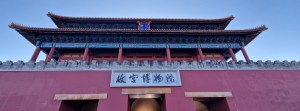
Key place: CHINA | Mandarin – the language and the person


Before the era of colonialism exploded in the 17th century, the Portuguese were already sailing the seas and establishing commercial ports on the coast of Africa (West and East), India and many other Asian countries, including China and even Japan. In China, despite the Chinese dislike for foreigners, they managed to be accepted as trading “partners” (it is not clear how) and built a very successful trading port in Macau. This port was in connection with other Portuguese ports in the area, for example in Japan, India, Malaysia, and Indonesia. The final aim was, of course, to ship many riches to the capital of the Portuguese empire, Lisbon.

“Mandarim” is originally a Portuguese word (mandarim), meaning a Chinese public official of a higher rank. Rumour has it that the Portuguese used to make fun of these bureaucratic officials, who were considered pedant, thus, the word mandarim could be used in a depreciative way. The Portuguese adopted this word from the Sanskrit mantrin via Malay mĕntĕri, meaning “counsellor”, as in “the one in charge”.

In truth, the term “mandarin” does not really exist in China, it is a European term. “Mandarins” were actually public servants that existed for as long as emperors existed. To become a public servant, one had to pass a very strict and demanding exam called 科举 [Keju], meaning “imperial examination”. The candidates would be (literally) locked up in cells for three days, dressed with a robe given to them (to avoid cheating) and would answer all kinds of questions from different fields of knowledge. Some would die during that time; many would fail the exam. However, those who passed the exam had a lifelong job waiting for them. The candidates could take the exam at any given age, so many would repeat it until old age.
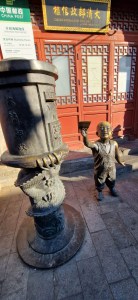
Education has always been very important in China, thus, these public servants (which were also scholars) were highly regarded by society. They were also examples and defenders of moral values, studying the arts, science, law, and politics throughout their lives. Confucius was one of those public servants in the law field. Things did not work very well for him in such a role and he ended up going back to his hometown to become a teacher. As a teacher, however, he was a success and his teachings set the basis for the entire moral framework of China, until our days. He lived at the same time as Sun Tzu, the one who set the military framework of China.

As part of the imperial staff, public officials spoke the language of the imperial court, which much later has become the standard language for the entire country. For Europeans that is “Mandarin Chinese”, which is named after those public officials. In Chinese, it is 中文 (Chinese language/writing). The first character is an abbreviation for 中国 (China or China-related). Some people say there are different languages in China, others say they are just different dialects. Standard Chinese is based on the language/dialect of Beijing (the old imperial court “language”), whose written version has been simplified in the 20th century to make it easier to teach it to the whole population and facilitate its spread throughout the country. Generally, this is the “language/dialect” learnt by foreigners.

Some decades ago, business people from outside China were encouraged to learn the Cantonese language. Cantonese comes from “Canton”, which originates from the Portuguese word Cantão, which was how Portuguese merchants would pronounce Guangdong, the Chinese province where Macau and Hong Kong are located. As both these cities became international trading ports (Macau was Portuguese and Hong Kong was British), during a period of time the international Chinese language for business was Cantonese. Not so much anymore.

Yet, “Mandarin” can have other meanings. It can refer to a type of orange, originated from Asia and similar to a tangerine, probably named after the Chinese imperial public officers due to their orange robes. The public offices also “gave” their name to a bird: the Mandarin duck that is very adorned, like the imperial mandarins…

 
Sources:


This article is part of the WORD CHRONICLES series

Word Chronicles are articles where the meaning of words, concepts, and perceptions are discussed.



Celebrating 2 years – Unlocking some articles

 
“Words in Ideas” was launched two years ago and to celebrate it we have a present for you: we are unlocking the articles that were for subscribers only. Here they are, ranked by popularity:


You can find these and other articles from the first two years compiled in Words in Ideas Book 1: “Articles 2024-2025”. Check here where you can buy it.



Highlights of the day from 16 to 22 February 2026

 
22.02.2026
Meanwhile, at the centre of the Milky Way, a black hole is eating stars and shooting beams of light. Its behaviour is puzzling astronomers and making a dazzling spectacle for years and years to come.


21.02.2026
Language is more than just words and grammar, it is a cultural identity. Celebrating International Mother Language Day is celebrating multilingualism and cultural diversity. Check the 2026 theme – Youth voices on multilingual education.


20.02.2026
The Intergovernmental Science-Policy Panel on Chemicals, Waste and Pollution was created last year and had their first meeting this February. This is an independent body of scientists aiming to advise on solutions regarding consequences of pollution and chemicals.


19.02.2026
Due to natural disasters and war, dates, a typically desert fruit, nearly vanished in Iraq. Now, a group of scientists are bringing them to life and flourishing through lab work.


18.02.2026
After people have massively shifted to the cities for centuries, it is time now for nature and agriculture to shift to cities as well. Impossible? Not to Marcia Mikai, an innovation-driven urban architect.


17.02.2026
Tourism can be a nightmare when it becomes out of control, but it can also be a source of development for a region, as long as it is sustainable. Today is Global Tourism Resilience Day, to promote solutions to face crises and disasters.


16.02.2026
Online services are only possible due to 1.7 million kilometres of submarine cables connecting countries around the world. A global and joint effort is necessary to maintain them in good shape. Challenges are diverse and multiple.


There are so many places to travel to, where to start? Let’s follow the tips of journalists around the word. Here are the tips for this month:


News, actualités, Nachrichten, noticias, notícias

Reading the news in the language we are learning is a wonderful way to train that language and get to know the culture and the way speakers of that language see the world. News media around the world usually organize themselves in an identical structure. Furthermore, some of the world news is the same, so one can read the same news in newspapers from different countries. This will give you the chance to compare the way each country sees the world, what they value, and the words they use to describe the same things.

Nowadays, some reference media have versions in different languages. For example, Euronews is available in 17 languages, including Arabic and Persian. However, be aware that it doesn’t necessarily mean that all versions have the same news or, if they have, the article will be exactly the same. Editions are independent from each other. National media may also have news available in different languages. For example, Deutsche Welle (DW) is a German TV channel and its website is available in 29 languages.

Below, we compare the basic structure of news media in English, French, German, Spanish, and Portuguese.

Let’s start with the basics. How do you say “journalism” and “journalists” in French, German, Spanish, and Portuguese?

. (EN) journalism | journalists
. (FR) journalisme | journalistes
. (DE) Journalismus | Journalisten
. (ES) periodismo | periodistas
. (PT) jornalismo | jornalistas

And what types of news media there are?

. (EN) newspaper | magazine | radio | television | online
. (FR) journal | magazine | radio | télévision | en ligne
. (DE) Zeitung | Zeitschrift | Radio | Fernsehen | Online
. (ES) periódico | revista | radio | televisión | en línea
. (PT) jornal | revista | rádio | televisão | online

Journalists are always looking for the latest news, preferably before all the others. So, all news media have a main sector, on the front page, for this kind of news.

. (EN) Breaking News | Latest News | Top Stories | Live
. (FR) En Continu | à la Une | Dernières | Direct
. (DE) Aktuellste Meldung | Neueste Meldungen | Im Fokus | Live
. (ES) Lo último | Últimas historias | Destacados | Directo
. (PT) Últimas Notícias | Destaques | Direto

Journalists can write different types of pieces. Each one has its rules, for example, a specific number of words.

. (EN) Articles | Reportages | Investigative | Opinions
. (FR) Articles | Reportages | Enquêtes | Opinions
. (DE) Artikel | Reportagen | Investigatives | Meinungen
. (ES) Artículos | Reportajes | Investigación | Opiniones
. (PT) Artigos | Reportagens | Investigação | Opiniões

The news are divided into different sections, each one with their own journalists and somewhat independent. Each news media have their own sections and even the same sections may have different names. The “traditional” sections (let’s call them like that) are:

. (EN) World | Politics | Society | Business | Sport
. (FR) International | Politique | Société | Économie | Sport
. (DE) Welt | Politik | Gesellschaft | Wirtschaft | Sport
. (ES) Internacional | Política | Sociedad | Economía | Deportes
. (PT) Internacional | Política | Sociedade | Economia | Desporto

Then, news media have more specialised themes, like the following:

. (EN) Technology | Health | Science & Environment | Culture | Travel
. (FR) Technologie | Santé | Science & Environnement | Culture | Voyage
. (DE) Technologie | Gesundheit | Wissenschaft & Umwelt | Kultur | Reise
. (ES) Tecnología | Salud | Ciencia & Medio Ambiente | Cultura | Viajes
. (PT) Tecnologia | Saúde | Ciência & Ambiente | Cultura | Viagens

Places, lieux, Orte, lugares

When learning a foreign language, it is advisable to use it in context. That is why books and classes have simulations of situations such as “in the airport”, “meeting new people”, “daily routine”. You can do the same in real situations. Imagine you are going to travel. You can recreate the “in the airport” scenes and write and perform them in the language you are learning. All you need is the vocabulary, simple sentences, and a willingness to practice.

The airport is a good place to start. From there, you can go to different countries and different sceneries. You can make up travels, describe trips you have already made, or journeys you are about to start. You can also talk about your city or your country. The possibilities are endless.

Below we provide a list of vocabulary that you can use (in a pdf, which you can download) and some examples in English, French, German, Spanish, and Portuguese. You can compare and get inspired.


Let’s start with a very simple example, which can be completed step by step.

(EN) I live in a city.
(FR) J’habite dans une ville.
(DE) Ich wohne in einer Stadt.
(ES) Vivo en una ciudad.
(PT) Vivo numa cidade.

A city is located in something bigger, like a municipality:

(EN) I live in a city, which is located in a municipality.
(FR) J’habite dans une ville située dans une municipalité.
(DE) Ich wohne in einer Stadt, die zu einer Gemeinde gehört.
(ES) Vivo en una ciudad, que está situada en un municipio.
(PT) Vivo numa cidade, que se situa num município.

Instead of going from smaller to bigger, you can go from bigger to smaller:

(EN) The world has five continents. Each continent has several countries. Each country has several regions. Each region has several municipalities. Each municipality has several cities.
(FR) Le monde compte cinq continents. Chaque continent compte plusieurs pays. Chaque pays a plusieurs régions. Chaque région compte plusieurs municipalités. Chaque municipalité compte plusieurs villes.
(DE) Die Welt hat fünf Kontinente. Jeder Kontinent hat mehrere Länder. Jedes Land hat mehrere Regionen. Jede Region hat mehrere Gemeinden. Jede Gemeinde hat mehrere Städte.
(ES) El mundo tiene cinco continentes. Cada continente tiene varios países. Cada país tiene varias regiones. Cada región tiene varios municipios. Cada municipio tiene varias ciudades.
(PT) O mundo tem cinco continentes. Cada continente tem vários países. Cada país tem várias regiões. Cada região tem vários municípios. Cada município tem várias cidades.

You can talk about your favourite places in the world:

(EN) I love the beaches in the Dominican Republic, but every winter I go to the mountains in Switzerland.
(FR) J’adore les plages de la République Dominicaine, mais chaque hiver je vais dans les montagnes en Suisse.
(DE) Ich liebe die Strände der Dominikanischen Republik, aber jeden Winter gehe ich in die Berge in der Schweiz.
(ES) Me encantan las playas de la República Dominicana, pero todos los inviernos voy a las montañas de Suiza.
(PT) Adoro as praias da República Dominicana, mas todos os invernos vou às montanhas na Suíça.

You can play with the cardinal points:

(EN) Switzerland is located in the centre of Europe. In the north is Germany, in the east is Austria, in the south is Italy and in the west is France.
(FR) La Suisse est située au centre de l’Europe. Au nord se trouve l’Allemagne, à l’est l’Autriche, au sud l’Italie et à l’ouest la France.
(DE) Die Schweiz liegt in der Mitte von Europa. Im Norden ist Deutschland, im Osten ist Österreich, im Süden ist Italien und im Westen ist Frankreich.
(ES) Suiza está situada en el centro de Europa. Al norte está Alemania, al este Austria, al sur Italia y al oeste Francia.
(PT) A Suíça está situada no centro da Europa. A norte fica a Alemanha, a leste a Áustria, a sul a Itália e a oeste a França.

Once you have enough practice in building isolated sentences, you can start building little texts. You can also build your own list of vocabulary. The best way to do this is by topics.