
Suggestions for Portuguese readers – Part I

Portuguese version

A criadora do site “Words in Ideas” é, na verdade, uma tradutora, especializada em tradução literária. Atualmente, é a tradutora de português de Isabella Muir, uma autora britânica independente com raízes italianas. Inspirada em Agatha Christie, principalmente na sua personagem Poirot, escreve uma série policial cuja protagonista é uma mulher muito especial…

Janie Juke é uma típica mulher da década de 1960: terminou a escola, apaixonou-se e casou-se. Porém, preza a sua independência e quer trabalhar. Os seus intentos tornaram-se realidade quando é convidada a gerir a biblioteca itinerária. É o trabalho perfeito já que ela adora ler, especialmente os livros da Agatha Christie com o Poirot, que a inspiraram no Livro 1 a resolver um caso que lhe era pessoal. À medida que a investigação avança, ela apercebe-se de vários preconceitos, nela e nos outros. Como resultado, ela muda a sua perspetiva e desafia a visão tradicional da realidade.

English version

The founder of the website “Words in Ideas” is actually a translator, specialized in literary translation. Currently, she is the Portuguese translator of Isabella Muir, a British independent author with Italian roots. Inspired by Agatha Christie, especially her character Poirot, she writes a crime series whose protagonist is a very special woman…

Janie Juke is a typical woman of the 1960’s. She has finished school, fell in love and got married. However, she cherishes her independence and wants to work. Her wishes come true when she is invited to manage the mobile library. This is a perfect job for her as she loves to read, especially Agatha Christies’ books with Poirot. This inspires her in Book 1 to solve a case that is personal to her. As her investigations advance, she becomes aware of several prejudices, in herself and in others. As a result, she changes her perspective and challenges the traditional view of reality.
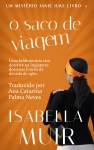


BOOK 1: “The Tapestry Bag”

Janie Juke está a adaptar-se à sua vida de casada e como bibliotecária profissional. Um dia, encontra Zara, uma boa amiga que ela não via há anos. A amizade delas é retomada e reforçada até Zara desaparecer sem deixar rasto. Janie aplica todas as suas competências detectivescas para descobrir o que aconteceu.

Janie Juke is settling in her married life and as a professional librarian. One day, she crosses paths with Zara, a good friend she hasn’t seen for many years. Their friendship is resumed and reinforced until Zara disappears without a trace. Janie applies all her detective skills to find out what happened.

TRADUÇÃO para português: “O Saco de Viagem”. Disponível em:
BARNES & NOBLE: ebook | paperback
BOOKSHOP: paperback
BLACKWELL’S: paperback
WATERSTONES: paperback
KOBO: ebook
Quem mora na Austrália e no Reino Unido também pode procurar na app BorrowBox
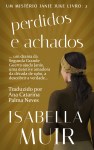
 
 
BOOK 1: “Lost Property”

Janie Juke está grávida e toda a gente lhe diz que ela deve parar de trabalhar e preparar-se para ser mãe, mas ela não quer saber: continua a gerir a biblioteca itinerária como sempre. Entretanto, a sua reputação como solucionadora de mistérios espalha-se e um estranho está disposto a pagar-lhe para resolver um puzzle ligado a um velho segredo.

Janie Juke is pregnant and everyone is saying she should stop working and prepare herself for motherhood, but she doesn’t listen: she continues managing the mobile library as before. In the meantime, her reputation of solving mysteries spreads out and a stranger is willing to pay her for solving a puzzle that is connected to an old secret.

TRADUÇÃO para português: “Perdidos e Achados”. Disponível em:
BARNES AND NOBLE: ebook | paperback
BOOKSHOP: paperback
BLACKWELL’S: paperback
WATERSTONES: paperback
KOBO: ebook
Quem mora na Austrália e no Reino Unido também pode procurar na app BorrowBox
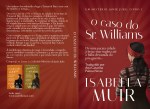
 
 
BOOK 3: “The Invisible Case”

Janie acabou de ser mãe e a sua tia Jessica está de regresso após ter viajado pela Europa por nove anos. Luigi acompanha-a desde Itália e traz sarilhos com ele: uma pessoa morre e ele parece ser o culpado. Janie tenta descobrir a verdade, mas desta vez ela tem a ajuda de um aliado improvável.

Janie just became a mother and her Aunt Jessica is returning home after travelling through Europe for nine years. Luigi comes with Jessica from Italy and brings trouble with him: a person dies and he seems the culprit. Janie tries to find out the truth, but this time she has a little help from an unlikely ally.

TRADUÇÃO para português: “O Caso do Sr. Williams”. Disponível em:
BARNES AND NOBLE: ebook | paperback
BOOKSHOP: paperback
BLACKWELL’S: paperback
WATERSTONES: paperback
KOBO: ebook
Quem mora na Austrália e no Reino Unido também pode procurar na app BorrowBox

 
BOOK 4: “A Notable Omission”
TRADUÇÃO para português: em progresso | previsto em 2026


As it was not enough for men to mistreat and harm women in the physical world, now they also do it digitally. For all the observance days, the International Day for the Elimination of Violence against Women is the one which should not be necessary to exist but it is of the most pressing. Let’s turn things around.

 
Check the website daily to read the highlight of the day.



Investigation

When reading or watching a crime story we know there is always someone who investigates the crime and, at the very end, solves it. We follow that person’s investigation and sometimes we try to solve the crime before the character. After all, there are clues scattered around and the idea is to build the puzzle piece by piece until we get the big picture. Real police investigations are like that: they follow certain procedures that have been proven to be the best ones to solve the crime. In this case, they also need to gather evidence to put the criminal in jail.

Academic investigation, also known as research, follows certain procedures in order to find new knowledge. In this case, the procedures are different because the purpose is different. Well, sometimes it also involves dead people, if it is an historical or medical research. In pathology, the dead person could have been the victim of a microbe. These microscopic creatures can be truly serial killers.

According to the Cambridge Dictionary, an investigation is “the act or process of examining a crime, problem, statement, etc. carefully, especially to discover the truth”. There are two main components at play here: it implies a process and it aims to uncover the truth. Research, according to The Britannica Dictionary, is “careful study that is done to find and report new knowledge about something”. The difference is very thin, but it does exist.

Apparently, the first police department was set by an Egyptian pharaoh in 3000 BCE, but murder is as old as humans. As society evolved, the police methods, forensic science and research methods (especially the scientific method) also evolved and they gradually became the norm to all forms of investigation. We hear that a company is opening an investigation on some wrongdoing, crashes (airplanes, trains, boats) are also being investigated, and banks are investigating financial frauds.

Sometimes, common people do their own little investigations in order to find out the truth in their lives. For example: who ate all the butter? If you don’t have guests in the house, the culprit must be one member of the family. So, you start to gather evidence and ask questions. You establish the timeline of everyone to discover who was the last person to leave the kitchen… Sadly, scientifically identifying the fingertips on the knife is too expensive, so you can only apply empirical methods…

Maybe inspired by this, British crime writers, like Agatha Christie, created a very peculiar sub-genre: cosy mysteries. These stories are characterized to have an amateur detective (or sleuth), who is minding his/her own business until a crime occurs in his/her little village and it’s up to him/her to find out who the culprit is. The main character doesn’t have access to forensics, so he/she only has his/her brains to figure out the solution. In the case of Agatha Christie, she invented a sweet old lady called Miss Marple who is nosy, but lovely.


Keyword: MONASTERY | “The Name of the Rose” by Umberto Eco

In the Middle Ages, Friar William of Baskerville arrives at an Abbey to address a matter related to a dispute within the Catholic Church. Shortly after, dead bodies start to surface in a very sudden and mysterious way and soon it becomes clear that those friars were murdered. A serial killer is on the loose and William of Baskerville is put in charge of the investigation. He can only count on his analysis and deduction skills, and the help of Adso of Melk, a novice travelling with him.

As the investigation unfolds, we learn that the dead men have strange ink stains on their bodies and that they were poisoned. What the ink means and which was the poison remains a mystery. A mystery is also the library of the Abbey. This library safeguards some of the rarest editions of valuable books and it is unique in the world. It had been constructed as a labyrinthine, and only authorized persons are allowed inside: knowledge is power and power must be contained.

Time is running out. Bodies keep showing up and Inquisition is on William of Baskerville’s heels. In the meantime, all paths of the investigation lead to the library. The dead bodies seemed to be related to the library and, to solve the crimes, William and Adso must solve the library riddle.

Umberto Eco was a Professor at the University of Bologna specialized in medieval literature and philosophy. This period of history and his great interest in sign processes and meanings influenced not only his academic work, but also his work as a writer. “The Name of the Rose” was his first and most famous novel, which combined all these elements. It was a success so great that a film was made only six years after the book was published. Sean Connery played the role of William of Baskerville and Christian Slater (a very young actor at the time) played the role of Adso of Melk.

Six novels followed this first book and many literary awards. He also developed work as a translator and was a brilliant scholar. His private library was so unique that it was the subject of a documentary. The most peculiar characteristic is that the content of all books in his library was false. Umberto Eco thought false books were far more interesting than books narrating true facts because they were more imaginative. After his death, the books were donated by the family to the University of Bologna.


Key place: LONDON, UK | “The Cuckoo’s Calling”, by Robert Galbraith

Cormoran Strike is a former military policeman who lost part of his leg in Afghanistan. He became a private detective without much success and now he has a huge debt to pay. On top of that, he has just ended his troubled relationship with his long-time love and, as he lived with her, he now has nowhere to live. Therefore, he spends his nights in his own detective office. To make things worse, he found out that the temp agency he used to work with has just sent him a new temporary secretary without asking him. He doesn’t have any money to pay her, but he feels bad for her, as it is not her fault the agency got mistaken. He decides to employ her for the week she was promised.

Robin Ellacott has just moved to London to live with her boyfriend and she is looking for a permanent job. In the meantime, she is taking temporary jobs while she goes to interviews. Strike’s office is her most recent post and her first day there is also her first day as a bride to be; her boyfriend had proposed to her the night before. Although she arrives overwhelmed with happiness, the first impression of her temporary employer is not very pleasant and she can’t wait for the week to be over and leave.

London is the stage of all the action. Strike’s office is located in the trendy Soho, at the heart of the city. On the same day, the brother of his childhood, and dead, best friend knocks on the door to ask him to investigate the murder of his sister, which was ruled a suicide. The case has nowhere to go, but the client promises him a lot of money, enough money to pay Strike’s debt and the one-week salary of his new employee. He reluctantly accepts the case and heads to Mayfair, the city’s poshest borough, where the wealthiest people in the country, and maybe in the world, live.

Throughout the story, the reader follows Cormoran and Robin as they walk, and sometimes take the tube, around London to find out the truth about the affair. Not everything is what it seems and all details matter. During one week, the case gets solved and both our protagonists change their lives.

“The Cuckoo’s Calling” is the first book of a series by Robert Galbraith, the pseudonym of J.K. Rowling for crime fiction. After the huge success of the Harry Potter series, she wanted to write something different. She wrote “The Casual Vacancy”, a fictional story about the events that follow the death of a parish councillor in a rural town. This was a success, but what she really wanted was to write detective stories. However, she wanted to test if she was good enough, if her detective stories were not sold just because J.K. Rowling wrote it. So, she sent the book anonymously under the name of Robert Galbraith and got published. However, the journalists found out the truth and the sales of the books escalated. The freedom of anonymity is gone, but the series is solid and growing.