
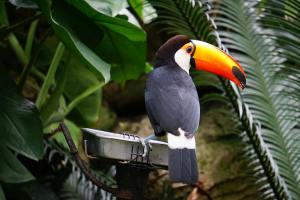
Contrary to what is believed, the Amazon is not the lung of the world, the ocean is. In fact, the oxygen produced by the forest is totally consumed by the forest. Yet, if it were to disappear, the Planet would be unbalanced and it would probably collapse. Knowing this, the Amazon’s Indigenous peoples fight to defend their home and their family. They protect the rivers and the trees such as Westerners protect their children and their parents. Therefore, when Amazon is hurting, each member of each Indigenous tribe is also hurting. And they send the warning to those who are inflicting the wounds: sooner or later, nature will seek revenge.
Troubles started when Europeans first navigated the second longest river in the world (right after the Nile, in Egypt), back in the 16th century. Completely unaware of what they were going to find, they glimpsed a tribe of warriors that looked like women to them. If those Europeans actually saw a tribe of warriors or not, and whether they were women or not, it is not certain. However, rumours have it that this episode gave rise to its name: the Amazons were female warriors in Greek mythology, that may or may not be inspired by real women. Several stories were written, glorifying this women-only society, skilled in horse riding and arrow throwing, both fierce and feared. Both the river and the rainforest were named after them.
Forests know no borders and, although the majority of its area belongs to Brazil, Amazon spreads across eight other countries: Bolivia, Colombia, Ecuador, French Guiana, Guyana, Peru, Suriname, and Venezuela. This is a perfect ground for criminal activities, trafficking all sorts of illegal goods from one country to another, as it is not possible to keep watch at such an extensive border. The National Foundation of the Indigenous Peoples (FUNAI – Fundação Nacional dos Povos Indígenas) was created in 1967 with the aim to protect the native tribes, especially those who have little or no contact with the “external world”… and protect them from these criminals.
Bruno Pereira was a Brazilian national that worked with the FUNAI. He was collaborating with Dom Phillips, a British journalist, who had given up of everything to dedicate himself in the writing of the book “How to Save Amazon”. On June 5th, 2022 they both disappeared. The news hit the world and a search was carried out. Finally, it was revealed they had been killed by a poaching leader, exposing to the world the dramatic situation unfolding in some parts of the Amazon. This was exactly the reality Dom Phillips wanted to reveal in his book. He paid that effort with his life. Luckily, the book was almost finished when he was killed and it was later published. You can hear the whole story through the podcast “Missing in the Amazon” (check the link below), recorded by Dom’s colleague and friend Tom Philips. It’s a chilling story.
The destruction of Amazon is devastating at many levels and all the warnings seem to fall on deaf ears. Indigenous peoples have been shouting about it for decades and, despite few people in power actually listen to them, they do not give up. They shout a little louder, they manifest, they talk to people in power as many times as necessary. The interview of Wajã Xipai, an Indigenous journalist, to the Secretary-General of the United Nations, António Guterres during the COP30 was one of those opportunities. Published in The Guardian, the article and the video is worth reading and watching (check the link below). At some point, the Secretary-General stated that “If I’ve learned anything from the Indigenous peoples I contact in so many parts of the world, it’s this concept (…) Of Mother Earth. Indeed, between nature and humanity there is a single family.”
It was not by chance that Belém was chosen to host the COP30 in Brazil. The Amazon is a symbol of the importance and the urgency of fighting climate change and respecting nature and the environment. It is ironic though that when a group of Indigenous people broke in to protest and demand to be heard, security had been reinforced after they were expelled (not in a nice way). It reflects reality as it is: people in power lock themselves in fancy rooms to discuss matters that concern the world population, but block the very people who know how to solve those problems.
We often take nature for granted. Just as the sun raises every morning, we believe the Amazon forest will always be there, unblemished. Yet, people from the so-called developed world often forget that we need to take care of what we cherish and if we fail to do that, everything comes tumbling down…
Sources / more information:
- Article: “I am the first Indigenous journalist to exclusively interview António Guterres. How many others will listen?”, by Wajã Xipai – The Guardian
- Article: “The world’s largest rainforests”, by Rhett A. Butler – World Rainforests
- Article: “Why the Amazon doesn’t really produce 20% of the world’s oxygen”, by Katarina Zimmer – National Geographic
- Article: “Amazon Women”, by Mark Cartwright – World History Encyclopedia
- A Funai
- Podcast: “Missing in the Amazon”, by Tom Phillips – The Guardian
- Video: “Protesters force their way into Cop30 climate summit”, The Guardian

World Toilet Day seems like a laughing matter… but it is not! Sanitation is hugely important to keep our society clean and healthy. Where there is no toilet, there are diseases and other types of dangers. Fight for the right to everyone have a safe toilet everywhere.
Check the website daily to read the highlight of the day.

 WORDS IN IDEAS