Every year, Heads of State and/or their representatives (for example, Foreign Affairs Ministers) travel to the headquarters of the General Assembly of the United Nations (UN) for the opening of its annual session. Besides high-level meetings and events, the week includes the General Debate, where all 193 countries integrating the UN have the opportunity to make a speech to the General Assembly.
In the UN General Assembly all countries are equal and each represents one vote. Of the 193 countries, 130 (67%) were colonized by European countries. Of these 130 countries, 45% (58 countries) were colonized by the United Kingdom (UK) and 18% (24 countries) by France. The other 48 countries were colonized by both, by other countries, or by more than one other country. To be noted that the UK and France are 2 of the 5 permanent members of the UN Security Council and have the right of veto.
The General Debate speeches this year clearly shows a division between the countries:
Group 1: Those justifying some kind of war and stating that the UN is going through an existential crisis.
Group 2: Those defending peace (ending all conflicts through diplomacy) and thankful for the work of the UN, which have been helping their countries overcome their struggles and challenges (mainly related to climate change and the improvement of their population’s living conditions). They are fierce defenders of the UN, stating, however, that the seats at the table are unevenly distributed.
Colonization is still an open wound. Ex-colonies have many complaints regarding ex-colonizers, of interference in their sovereignty and financial aid that keeps them in poverty. However, these countries, that fought and successfully achieved their independence, are not giving up. They are finding ways (most of them as alternatives to those provided by the Western countries) to solve their problems. Organizations aiming at international collaboration are being established between them and funding in alternating channels is being sought for their innovative projects.
The United States of America (USA) is leading Group 1. In his speech, which lasted for 56 minutes, the President of the USA stressed the need for protectionism, threats, and war (both domestically and internationally). No country was spared: all of them were on a wrong path, according to him, especially in what climate change was concerned. He also stated that the UN was useless.
China, leading Group 2, made a point to contradict the USA’s statement. In 20 minutes, the Premier of the State Council of China advocated for peace, international cooperation, and the need to fight climate change. Although recognizing that the UN is in need of a reform, especially to distribute more seats to non-Western countries at the table, he reinforced how important the role of the UN is to the world. He also showed that alternatives to the Western rules and initiatives are being developed. In sheer contrast to the USA’s statement, China summarized their achievements on the path to peace, international cooperation, and fight against climate change. The Premier of the State Council said:
As a founding member of the UN, China has all along taken an active part in Global Affairs and worked for the betterment of humanity. Over the years, President Xi Jinping has put forward the vision of building a community with a shared future for humanity: the Global Development Initiative, the Global Security Initiative, the Global Civilizacional Initiative, and the Global Governance Initiative.
The fact that Heads of State from 193 countries can make a speech at the same podium shows that the UN is a place where everyone can have a voice. Whether that voice is heard or not by the other countries is another matter. Countries from Group 1 do not listen to anything but their own voices whereas countries from Group 2 pay attention to everything everyone is saying… and they learn. Interestingly, the UN principles were set by the countries of Group 1, but they are followed and advocated by the countries of Group 2. Countries from Group 1 vowed never again to go down the very same path they are walking on now. And countries from Group 2 are warning them to leave that path and go back.
As it was repeated abundantly in the General Debate, this year marks the 80th year of the end of World War II and the establishment of the UN Charter. German Nazism and Italian fascism were defeated by France, Russia (then Soviet Union), the UK, and the USA in Europe (with repercussions to the rest of the world due to the colonies) and Japanese fascism was defeated by China in Asia (with repercussions to neighbouring countries). These victorious countries are the permanent members of the UN Security Council with the right to veto and the ones that created the UN Charter and defined the rules for its implementation and operation.
Since then, many countries were divided into more countries and many colonies gained their independence. In 1945, of the 193 current UN countries, 91 countries (47%) were still under the sovereignty of one or more founding members as colonies, protectorates or under a UN trusteeship. These countries have a total of 30,556,569 km2 of surface area, which correspond to 23% of the total surface area of all 193 UN countries (which is 133,663,404 km2).
Of these 91 countries, 67 countries (74%) were under the direct administration of the UK (45 countries, 49%) and France (22 countries, 24%). The other 24 countries (26%) were under the administration of the UK together with France and/or other countries, the USA (3 countries), or the direct administration of other countries. On the other hand, when the Soviet Union collapsed, 12 countries (6% of the total of the current UN countries) gained their independence. As the Russian Federation was the “heir” of what was left from the Soviet Union, in a way these 12 countries were under Russian administration. This means that 82 countries out of the current 193 countries were, in 1945, integrated in 4 (out of 5) of the permanent members of the UN Security Council. It corresponds to a total of 22,671,758 km2 of surface area, 17% of the total surface area of the 193 current UN countries
As we can see, the world has changed. Or, better yet, the political world has changed. Nature is still the same, resources are still in the same place. Yet, those precious resources have changed hands. Until 1945, the world was divided between those that would provide the resources (the colonies) and those that would transform the resources and get wealthier and wealthier. Now that the ex-colonies are independent, they are looking to learn how to transform their own resources and create wealth. And the wealthier countries are losing ground.
Of the 49 remaining UN founding countries (Czechoslovakia and Yugoslavia gave rise to new countries), 22 countries are from America (45%), 12 countries are from Europe (25%), 9 countries are from Asia (18%), 4 countries are from Africa (8%), and 2 countries are from Oceania (4%). Now, in 2025, 54 countries are from Africa (28%), 47 countries are from Asia (24%), 43 countries are from Europe (22%), 35 countries are from America (18%), and 14 countries (7%) are from Oceania. It is obvious that the weight of African countries has shifted. Actually, the weight of African countries in the UN grew from 4 countries to 54 countries, which corresponds to a 1150% increase in representation. Oceania is the second continent with the greatest increase: from only 2 countries to 14 countries, it had a 600% increase in representation. Asia increased 422% and Europe increased 258%. America was the continent with the smallest increase: 59%.
Due to the loss of their colonies, the UK and France have considerably shrunk their territory and influence in the world. Their surface area is 242,495 km2 (UK) and 551,500 (France), which corresponds to 0.2% and 0.4%, respectively, of the total surface areas of all 193 UN countries. On the other hand, Russian Federation is still the largest country in the world (17,098,246 km2 of surface area, which corresponds to 13% of the total surface areas of all 193 UN countries), even after the collapse of the Soviet Union, and it remains an important player in world politics. The USA is the third largest country in the world (with 9,833,517 km2, which corresponds to 7% of the total surface areas of all 193 UN countries) while China is the fourth (with 9,600,000 km2, which corresponds to 7% of the total surface areas of all 193 UN countries).
Therefore, the 5 permanent members of the UN Security Council (those with the right to veto) have together a surface area of 37,325,758 km2, corresponding to 28% of the total surface areas of all 193 UN countries. African countries have a total of 30,023,968 km2 (22%). If the surface areas of Oceania countries (a sum of 8,488,032km2, corresponding to 6% of the total) are added, then these two continents surpass the 5 permanent members of the Security Council because they have 29% of the total.
Europe includes the Russian Federation in its statistics. However, and considering that most of Russian territory is in fact located in Asia (Siberia), if we take out Russian surface area from Europe’s, the sum of the surface area of all other countries is 5,886,912 km2, corresponding to 4% of the total surface areas of all 193 UN countries. European countries, especially the UK and France, which used to rule the world, are now facing their real dimension. It is scary and it is no wonder they are trying their best to remain relevant. Unfortunately, their continued arrogance is not doing them any favors. In the meanwhile, the USA is relying on their wealth and military power to keep its hegemony, but the Russian Federation and, especially, China have already understood the figures. And the figures are saying that African countries, together with the islands in the Pacific, all the countries south of the USA, and China’s Asian neighbours are rising. Independence was just the first step. Now, they are climbing the other steps, regardless of having the support or the opposition of their former masters.
Sources:

The finalists of the Earthshot Prize 2025 have been announced. Founded in 2020, the Earthshot Prize aims to finance every year the best initiatives that effectively help tackle climate change and environment issues. It’s truly remarkable how many people are working to make the planet a better place for all of us to live in.
Check the website daily to read the highlight of the day.


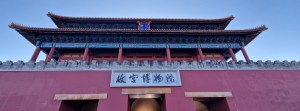
 Education has always been very important in China, thus, these public servants (which were also scholars) were highly regarded by society. They were also examples and defenders of moral values, studying the arts, science, law, and politics throughout their lives. Confucius was one of those public servants in the law field. Things did not work very well for him in such a role and he ended up going back to his hometown to become a teacher. As a teacher, however, he was a success and his teachings set the basis for the entire moral framework of China, until our days. He lived at the same time as Sun Tzu, the one who set the military framework of China.
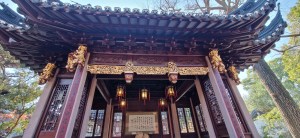 As any (good) translator will tell you, translating is not about translating words, it is about translating an entire culture. Language is closely related to culture and it reflects the environment and the landscape in which such language was developed. The classic example is Greenland. Inuit languages are the ones which have more words for different types of snow and ice. It is literally a matter of life or death to know exactly what kind they are encountering.
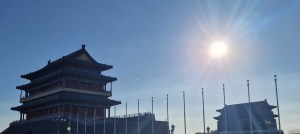 The history of China is full of this kind of destruction to construct better or different. The skyline of this city, as its name, has changed several times since it was founded.
 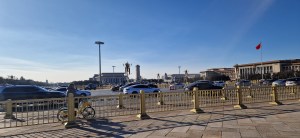 Beijing is not in danger of being invaded anymore. However, just in case, China has modernised its military forces and every now and then holds a grand military parade on the avenue between the former Imperial City and Tiananmen Square. The Chinese armed forces may still use
  Nevertheless, international economic development is dependent on international reputation and nothing shows how efficient and respecting other cultures a country is as organising big events like the Olympic Games. So, Beijing set itself to organise not one, but two Olympic Games: Summer Olympics in 2008 and Winter Olympics in 2022. They did not merely organise a flawless event, they planned jaw-dropping ceremonies and built iconic facilities. The Bird Nest (the National Stadium) and the Water Cube (the National Aquatics Centre) have become landmarks.
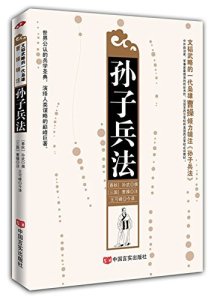 For thousands of years, rulers and governments have used war to reach their political goals. Warfare has evolved, and still does even today, with new tactics and new equipment, although it has developed differently in each country or region. “The Art of War” was written in China, in the 5th century, in a time of chaos. These strategies were game-changing and all kings who used them added territory to their realms. Later, the book left China and travelled the world. Nowadays, it is part of the military curricula of many countries and it is even used in other areas, such as business.
 The mother of a Chinese child dies. A stranger takes the little boy to London to give him an education. The boy goes with the stranger because he is suffering and there is nothing left for him in his hometown. The boy changes his name and becomes an Englishman. His tutor enrolls him in a special university in order for him to get a degree in translation. And there is where things turn sour. A secret organization, the true nature of his work as a translator, the return to his hometown, the bond with his friends, all collides in a spectacular and unexpecting ending.
 WORDS IN IDEAS