Best of “Foreign Lands”

Dear Readers,

After renewing its website, “Words in Ideas” is preparing its 3rd year of fresh new articles, starting in October. While you wait, you can read (or re-read) the best articles under the category “Foreign Lands”. These articles aim to compare languages and cultures.


During the first year, articles described some traditional food around the world. Here are the 5 best:


In the 2nd year, we followed the discoveries of a group of language learners. Here are the 5 best:


This 3rd year, “Words in Ideas” will discuss some cultural crossroads.

 
If you wish to comment or send suggestions, please fill in the form at the end of each website page.

Thank you!
Words in Ideas
https://wordsinideas.com/
 

The beauty, la beauté, die Schönheit, la belleza

“Did anyone research beauty?”, asked Jack as soon as everyone sat down. “I’ll start. The English word ‘beauty’ comes from the French word ‘beau’. Therefore, I give you the floor, Elizabeth”.

“Thank you, Jack. I thought you were going to start… Well, the French word ‘beauté’ also comes from the word ‘beau’, which in turn comes from the Latin word bellus. The meaning is the same, there was no great change over the centuries”, said Elizabeth.

“In Spanish it is ‘belleza’, in Italian it is ‘bellezza’, and in Portuguese it is ‘beleza’. All these words also come from Latin. No surprises there”, said Leo.

“The German word is ‘Schönheit‘, which comes from ‘Schön’, an old German word”, said Michael.

“The Nordic languages follow the same logic and are not that different from the German word. However, the sound seems much different than the writing: ‘skönhet’, in Swedish, ‘skønhed’, in Danish, and ‘skjønnhet‘, in Norwegian. Nothing very exciting”, said Sophia.

“Yeah, very boring. I don’t know if you looked up the opposite word. In English it is ‘ugliness’, which comes from ‘ugly’. Now, ‘beauty’ comes from Latin, but ‘ugly’ comes from Old Norse, which, back in the day, meant ‘dreadful, fearful’”, said Jack. “So, I guess someone ugly was someone who was feared. In today’s Nordic languages, the word should be similar to this one, no?”

“Well, actually I did that exercise too. Interestingly, the words are different in Norwegian (‘stygg’), Danish (‘grim’), and Swedish (‘ful’). None of them is closer to ‘ugly’. Maybe it is closer to the German word?…”, asked Sophia, looking at Michael.

“No”, replied Michael, looking at his computer. “I didn’t look for ‘ugly’ before, but I did it now. In German it is ‘hässlich’. What about Latin languages?”, said Michael.

“The Spanish word (‘feo’) and the Portuguese word (‘feio’) are similar, but in Italian it is ‘brutto’. This is curious because, in Roman times, ‘Brutus’ was a name. Remember Cesar’s son who stabbed him? It also meant ‘stupid’ in Latin. In Portuguese and in Spanish there is also ‘bruto’, which means someone who is not very bright, but very aggressive”, clarified Leo.

“In French it is also different from everything you said: ‘laid’. It can also be ‘moche’, in a more informal way”, said Elizabeth.

“I guess ‘beauty’ is pretty much the same in every language whereas ‘ugly’ depends on the culture”, comment Jack.

“Ok, this is great”, said Elizabeth, “but I have a presentation to give you all. Ah, yes, I got carried away when doing this research. At first, I thought of a presentation about art and beauty, but that could become a bit technical and you could all get bored. Then, I thought that beauty is usually related to well-being. Therefore, I gathered information about famous beauty rituals around the world”.

Everyone was delighted and sat comfortably in front of her in expectation. Elizabeth stood up, prepared her notes, and started her presentation.

“So, Leo mentioned the Roman Empire. At that time, there was no plumbing providing water to private houses. As Romans liked to imitate the Greeks, and the Greeks liked to bathe, they developed the habit to bathe in public spaces, which were built for that purpose. The Greek public baths were small and Romans, as was their nature, wanted to make them big. They built these luxurious public baths where people would socialize and participate in numerous activities. They called it ‘thermae’ and, besides having a bath, Romans could do physical exercise, enjoy hot rooms, use the swimming pool, and stroll through the gardens for relaxation. A true health centre of Ancient Times.”

“I guess that’s where the concept of gyms with saunas and SPAs came from. By the way, SPA is the abbreviation of Sanus Per Aquam in Latin (healthy through water). That’s how the thermal springs were known in the Roman Empire, right?”, commented Leo, very proud of himself.

“Wrong”, said Elizabeth. “Spa is the name of a town in Belgium where a very famous thermal spring was built. Throughout their Empire, the Romans had discovered the places where the water had special mineral characteristics, hence the term ‘thermae’. In the 18th and 19th centuries, the Roman concept of luxurious healthy centres was revived. New buildings were constructed, with new social activities, like balls. They also built houses and hotels to lodge (rich) people from all over Europe. True towns emerged around those thermal springs. Spa was one of the most famous, but there were many others, like Bath, in England, where the Roman Baths are still a tourist attraction and are still operating. UNESCO now has a heritage category called ‘Great Spa Towns of Europe’ to help preserve these historical landmarks.”

“Spa has also a famous car racing circuit”, said Michael suddenly.

Elizabeth nodded and continued.

“The Roman thermae were built everywhere in the Empire, including in North Africa and in what is now Turkey. There, ‘hot baths’ evolved into what are known nowadays as ‘hammam’, or ‘Turkish baths’. Some people may confuse these with Sauna. Basically, while in Turkish baths we are in a room full of very hot steam, in the Sauna we are in a heated room where you sweat. Both aimed to expel the toxins from our skin. Like I said, Turkish bath is an evolution from the Roman thermae. Sauna is a Scandinavian tradition. While you are sweating from the heat, you can also hit yourself (gently) with birch twigs to help the process. Afterwards, you get out of the wood panelled room and jump to the very cold waters of the nearest lake or sea. The extreme difference in temperature does wonders for the skin, if you can handle it.”

Elizabeth stopped talking while everyone was shivering.

“Public baths were not an exclusive idea of Europeans. Japanese people made good use of the natural hot water that emerged to the surface everywhere throughout the country. They built Onsen (meaning ‘hot spring’) of different types. In other parts of the world, beauty rituals were not about going to public baths, but using special ingredients from Nature. In Africa, it’s tradition to use Shea butter to take care of skin and hair, in Polynesia it’s coconut oil. Traditions are linked to what nature provides in each land. In other countries, it’s not about the ingredients, but the process. For example, in Korea, a 10-step skincare routine was developed to maintain the skin healthy, which is now considered a world reference. And that’s all I had for you today.”

“Brilliant! Thank you so much, Elizabeth. Anyone has anything to add, have any questions?…”

Jack waited for someone to say something, but as everyone kept silent, he ended the meeting.

 

Keyword: BEAUTY | Beauty is in the eye of the beholder

The Cambridge Dictionary online has different definitions for beauty:

  • 1. “the quality of being pleasing and attractive” or “a person or thing that is pleasing and attractive”;
  • 2. “the business of making people look attractive, using make-up, treatments, etc.”;
  • 3. “something that is an excellent example of its type”.

1.
Beauty does not exist by itself; it is linked to what we value. For example, it is proven that we value symmetry, thus, humans who have a symmetrical face are considered more beautiful than all others. The same is true for architecture, especially buildings dating back to Classical Antiquity. However, symmetry by itself is not enough. Proportions are also important and the study of the Golden Ratio has confirmed that it was crucial for constructing the most beautiful buildings and representations of the perfect human body.

Other features are also important, for example, expression. Statues that are perfect, but have empty eyes and a neutral posture can be considered less beautiful than those which show some emotion, whether it is suffering, joy, fury, or expectation, for instance. People feel more attracted to what they can identify with and we all have emotions. And, of course, the more pleasurable those emotions are, the more they catch our eye. Colour is also another characteristic to consider. It is not by chance that the most famous paintings are colourful. However, the balance between colours is also important. Too much red and yellow in the Western countries might be considered tasteless. On the other hand, in China, these two colours are hugely appreciated.

Purpose has also some influence. Obviously, you can have objects with the sole purpose of being pretty, but this is not usually the case. Decorative objects usually have a theoretical function, even if they would never be used as such. Natural landscapes can also have purposes: to get fresh air, to escape from city life, to go hiking, to climb (the mountains), to connect with nature and feel energized. As long as it is enjoyable in some way, it is beautiful. For example, the image of chimneys spewing dark smoke in a bleak city is not enjoyable at all; it can actually make us feel miserable. However, not everyone enjoys the same landscapes. Some people prefer beaches to mountains, snowy fields to forests, historical buildings to modern buildings. Or the way around.

Although a major contribution, physical attraction is not enough for someone to be considered beautiful. Other qualities such as honesty, sense of humour, confidence, courage, kindness, and intelligence, are crucial. In fact, characteristics considered “bad”, like hypocrisy, being sullen, insecurity, cowardice, arrogance, stupidity, can taint the beauty of a perfect body. Of course, the way we dress and present ourselves matters. Dressing properly is equally important to make a good impression.

2.
Hair dyeing, make-up, perfume, beauticians and barber shops, SPAs, lotions of all kinds, fashionable clothing and glittering jewellery, gyms and health centres… Natural beauty is a wonderful thing, especially if it has a little (big) help. The richer you are, the more chances you have of becoming beautiful. If everything fails, you can always resort to plastic surgery. Money can make you slimmer, younger and more radiant. It can also pay psychologists or coaches (or both) for you to learn how to look happier, more confident, and more accomplished. It can also pay for luxury holidays for you to enjoy the most spectacular places on earth… as long as there is a swimming pool and massages and all kinds of treatments.

The beauty industry is based on an image that was created by the industry itself. For example, companies that sell pills and diets for people getting slimmer, present slimmer bodies as an ideal body. If you look at the paintings in Art Museums, we see women posing as models who today could be considered “fat”. However, you do not see many “old” women with wrinkles, so skin care companies may be right to want to eliminate wrinkles on the faces of modern women. As for men, the ideal image still stands: strong, powerful, and wealthy (regardless of how ugly and old they might be). Yet, some decades ago, the beauty industry thought it was a good idea to help men in such a quest (and make men less fat, less ugly and less old, just in case).

3.
We aim to be perfect and we aim to achieve perfection. Perfection is the ideal solution, the benchmark against which all other possible solutions are compared. Sometimes perfection is unattainable, but when it is achieved it is considered a “beauty”. In truth, it does not have to be perfect (but almost) to be considered a beauty: a beautiful music, a beautiful mathematical equation, a beautiful gourmet meal, a beautiful archive, a beautiful book, a beautiful adventure. In some fields, excellence is generally recognized the same way, like in sport, but in others fields it depends on each one’s perception. For example, a person can consider that a living room totally white (walls and furniture) with very few objects is excellent, and the person living in the apartment next door may think that warm colours, wood furniture and a lot of objects are what makes a perfect living room.


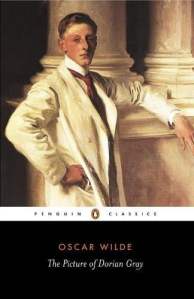
Keyword: BEAUTY | “The Picture of Dorian Gray”, by Oscar Wilde

“The book for this month was written by Oscar Wilde, an Irish writer who lived in the last half of the 19th century, during the last years of Queen Victoria’s extensive rule. His famous playwrights wittily characterized the society at the time and surpassed his numerous poems and short stories. His only novel, ‘The Picture of Dorian Gray’, tells the story of a beautiful young man throughout his increasingly decaying life. At the beginning of the story, a friend paints his portrait, forever preserving its untainted beauty. This painting will have a crucial role in his life”, said Ms Clara Smartest.

“Thank you, Clara. Now, who wants to be first?”, asked Mr John Booklish.

One by one, the members of The Intrepid Book Society gave their opinion about the book. In general, they thought the story was about vanity and how important appearances are in society, which is to say how someone who is very rich and very beautiful is beyond reproach, no matter what he does behind the scenes. The painting allowed him to maintain his youth beauty undamaged, giving him a free pass: he could do whatever he wanted that nothing would ever happen to him.

“The portrait would absorb all his ugliness, so Dorian Gray would remain immaculate before other people in society”, said Ms Abigail Vooght. “I know a lot of people who wish that could happen, even though they still can get away with a lot of ‘ugliness’. If only people knew what happens in the background…”

“I think Johanna made an important point: Dorian Gray was negatively influenced by Henry Wotton”, said Miss Amelia Matterfis.

“Yes, but he made his own decisions and, by realising he could get away with anything, he stopped restraining himself”, said Mr Jeremy Toughready. “It was his choice, no one forced him.”

“Maybe he was traumatised by the death of his fiancée; he felt guilty about it. So, all the wickedness was a result of that”, said Miss Martha Lovefeelings.

“That is just excusing him. He has no excuse. He became an evil man and that’s the end of it. Maybe he had always been evil. He certainly was very vain; only his beauty mattered to him”, said Mr Mark Mindhearting.

“Well, people around him were always praising him. That didn’t help…”, commented Miss Amelia Matterfis.

“I think it shows the hypocrisy of society. People would praise him because he was beautiful and rich. However, behind his back, the story was different. Many close friends had stopped speaking to him and they were spreading rumours about his bad conduct”, said Mr Mark Mindhearting.

“Except Basil, the painter, who actually wasn’t part of his social circle. He saw what was going on and he went there to warn him. Look what he got in return…”, said Mr Jeremy Toughready.

“Basil turned out to be his only true friend. All others, and especially Henry Wotton, weren’t really his friends. No one really cared about Dorian Gray. Only Basil, who had been cast out of his life”, said Ms Johanna Practicewell.

Then, they discussed the ending, how appropriate it was and how the story could have ended differently. Some thought the ending was perfect, others said that they would have preferred it if the story could have had a twist of some kind.

“We have to consider the time in which the novel was written. It shows the people’s mentality then”, said Mr Matthew Barnepy. “Besides, police work was different in those days, although police are mentioned in the book.”

“I don’t think people’s mentality is that much different today, to be honest”, said Ms Abigail Vooght.

“One thing is certain: nowadays no one would paint a portrait. They would just take several photos with the smartphone making funny faces”, laughed Miss Amelia Matterfis.

“When photography first appeared, it was believed it would capture people’s souls. If Oscar Wilde had written the novel at the beginning of the 20th century, instead of a painting maybe the story would be about a photo…”, said Ms Johanna Practicewell.

“I think he was inspired by the time he was living with a painter, at the beginning of his professional life. He had just graduated from Oxford and moved to London to pursue his literary career”, said Ms Clara Smartest.

“Well, nowadays, Dorian Gray wouldn’t be able to go so unnoticed. Someone would have taken pictures of him with the smartphone. Then, it would all be blown up on social media”, said Miss Amelia Matterfis.

The group went on discussing other scenes and other characters of the book and how they influenced the story. They also compared the differences and the similarities between the Victoria Era and the present day.

Wrapping up, Mr John Booklish announced that the book for next month would be “Tierra” [Earth], by Eloy Moreno.