
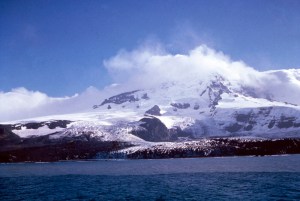
Bigger than Europe and Australia together, Antarctica is the southernmost continent on planet Earth. Home of penguins, seals, and whales (but not of polar bears and reptiles), humans are visitors for research and tourism purposes only. It is the coldest place in the world and is permanently covered in ice. It does not have trees, but has many mountains. The photos available are breathtaking and reveal a white desert, full of icebergs… and life. Although it may seem static, the landscape is always changing and there is always something happening.
Officially, Antarctica was discovered in 1820. There were some sights reported before, but no one ever dared to get closer until the middle of the 19th century. After some expeditions, adventurous explorers took upon themselves the mission to conquer that harsh place, giving rise to the “Heroic Age”. Between 1899 and 1922, pathfinders like Scott, Amundsen, and Shackleton were immortalised in history. They were considered “heroes” because most of the time they were reckless and ill-prepared, but they went there anyway. Death was a reality well familiar to them. Scott died when trying to go back to base and Shackleton died of a heart attack during his fourth expedition. Amundsen died in the Arctic.
Later expeditions had more support and were more contextualised. Explorers were also better prepared and more conscious of what they were doing. Soon, research and scientific bases were established, sponsored by governments of different countries. The purpose ceased to be purely discovery and competition and turned into scientific aspirations. And due to the extensive research carried out, scientists have discovered the crucial role Antarctica plays within the huge system that is planet Earth: it is the global temperature regulator. As ice reflects more sun radiation than land or sea, this immense ice sheet helps avoid the planet overheating. Plus, its cold waters press warm waters to the surface and, together with the wind, make them circulate around the planet, balancing the ocean.
In 1959, twelve countries were claiming pieces of Antarctica’s land. However, instead of fighting between themselves for territory and resources, they recognized the value and importance of protecting this continent. Therefore, they decided to do something different and innovative: signing the Antarctic Treaty, committing themselves to protect this area in a joint effort. Plus, all research facilities would be available without restrictions to everyone, regardless of their nationality. Over time, 46 other countries have signed the Treaty and a Secretariat was created for administrative purposes.
Yet, good intentions are not always sufficient to enforce treaties. In the 1970s, Jim Barnes heard rumours that the parties of the Antarctic Treaty were negotiating between themselves the exploitation of Antarctic’s natural resources. As the meetings were secret and there were no reports, no one really knew what was going on. Jim Barnes decided to act and the first thing he did was to talk to Sir Peter Scott, the son of explorer Sir Robert Falcon Scott, who died in Antarctica trying to beat Amundsen in reaching the South Pole. Then, Barnes founded the Antarctica and the Southern Ocean Coalition and began his tireless work in the defence of this land and its natural inhabitants.
Their advocacy was based on campaigns that aim to both raise awareness of the general public and put pressure on governments and decision-makers. The Coalition not only revealed the secret plans, but also got an opportunity to talk to governments of other countries, forcing a debate at the United Nations level. It worked. The parties of the Antarctic Treaty were forced to cancel their Machiavellian schemes. Furthermore, the meetings have become more open and public and reports are now published. Everything changed. As more countries signed the Antarctic Treaty, more organizations joined the Coalition.
One victory at the time, the Coalition has become increasingly more relevant. In 1991, after many years of failed attempts, it was granted the Observer status in the Antarctic Treaty System. Nowadays, they work together with the signatory parties to make sure Antarctica remains unchanged. However, this task is getting more difficult due to climate change.
A major recognition of their work was achieved in July 2025 when the Coalition was awarded the Gulbenkian Prize for Humanity. Besides a medal, they were given one million euros to further develop their activities, which includes advocacy and public campaigns, and also research and education initiatives.
Sources:
- Antarctica and the Southern Ocean Coalition (ASOC)
- Article: “Antarctica”, by National Geographic
- Exploring Antarctica – a timeline
- The Antarctic Treaty
- An Interview With James N. Barnes, by Alan AtKisson
- Antarctic and Southern Ocean Coalition receives €1m Gulbenkian Prize for Humanity

 WORDS IN IDEAS