Keyword: ANTARCTICA | Words about frozen deserts

Photo by Kate Kloza (Australian Antarctic Division)
Antarctica actually means “not Arctic”. Not very original, true, but its designated name was already taken by the time this land was finally discovered. Terra Australis Incognita was a Latin expression literally meaning “Unknown South Land”. Since ancient times, it was believed that there was a land at the southernmost tip of the planet, but no one knew where it might be. During the colonial process, what is now Australia was first “discovered” by the Dutch, who named it as New Holland. Then came the British and they assumed this was the “unknown south land” our distant ancestors were looking for and, at the beginning of the 17th century, not long before the discovery of Antarctica, the English explorer Matthew Flinders thought “Terra Australis” was too long and that “Australia” sounded better. Australia is also known as “down under”, which conveys this idea of that land at the bottom of the planet.

So, when the true “terra australis” was found, they had to come up with a different name. “Arctic” comes from the Greek word arktikos, a reference to arktos, which means “bear”. In the old days (and even today, for those who are willing to skip GPS), people were guided by Polaris (the North Star), which indicates North for those located in the North Hemisphere. Polaris is a star right above the North Pole and, because of that, barely moves in the night sky. To find Polaris, one would only have to identify the constellation Ursa Minor (literally meaning Little Bear) and follow its tail. Therefore, as the Arctic was up in the north, near Polaris, then it was the land near the bear. The fact that the Arctic has polar bears, while Antarctica does not, may or may not be a coincidence.

Partly inside the Arctic Circle, there is Greenland, a huge island permanently covered by ice and with no trees. So, why is it called a land of green? Because it was, thousands of years ago, when the Vikings disembarked there. However, its true name is actually Kalaallit Nunaat, which means “the land of the Kalaallit”. The Kalaallit are the native Indigenous people of “Greenland”. They are Inuit, which means “people” (please note that “Eskimo” is a term European people used to use that is nowadays considered highly offensive). There are different tribes of Inuit. The Kalaallit are the ones from Greenland, or better yet Kalaallit Nunaat. There are also Inuit in Northern Canada and in Alaska. By the way, “Alaska” comes from the Aleut word alaxsxaq, which means “the object towards which the action of the sea is directed”. The Aleut are the Inuit of Alaska.

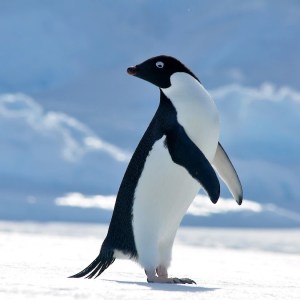
In the Arctic and in Antarctica there are no Indigenous people, but there are plenty of unique animals. Polar bears can only be found in the Arctic regions and penguins can only be found in cold regions in the southern hemisphere, especially in Antarctica. “Penguin” is a curious word… It comes from the Welsh words pen gwyn, meaning “head white”. In reality, it meant “great auk”, “auk” being a bird similar to the current penguins, but not related. Auks have become extinct in the 19th century. Back in the Arctic, narwhals are a type of whales perfectly adapted to these icy waters. Their name comes from Old Norse nāhvalr, a composition of the words nār and hvalr. This last word means “whale”, the first means “corpse” … but in the sense of having a colour similar to the one a corpse has. Another Arctic whale that was named according to its colour is the beluga. “Beluga” comes from the Russian word belyĭ, which means “white”.

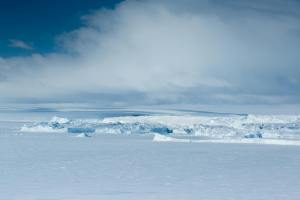
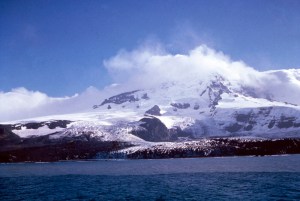
Many other animals have adapted themselves to the extreme cold of the Poles. However, Antarctica, like Kalaallit Nunaat, was once green and warmer. In a continent roughly the size of Europe and Australia combined, there are high mountains like the Alps, glacier-carved valleys, flat plains and even an ocean. Researchers have recently succeeded in starting to figure all this out using technology (read the article “Landscape beneath Antarctica’s icy surface revealed in unprecedented detail”, from the link below). The problem for these researchers is that Antarctica’s landscape is covered by a thick ice sheet, just like Greenland. Ice sheets are similar to glaciers, but the former have a much greater extension. They consist of layers of snow that have not melted. Each layer of snow is compressed by the layers above and turns into a kind of ice-rock. As the snow keeps being added above, the snow-turned-ice-rock below moves slightly and very slowly. That is why glaciers carve valleys and ice sheets find their way to the ocean. Those high ice walls, typical images of Antarctica, are the edge of the ice sheet.

Researchers are studying ice sheets to understand how Antarctica is formed and how it will react to climate change. Essential for them are ships. Yet, these ships are not ordinary ships. They are icebreakers. Icebreaker ships are more resistant than a normal ship and have a special design in order to be able to cut the ice. Without this capacity, the ship may get trapped in the ice. That was what happened to Endurance, the famous ship of Captain Shackleton. Another famous Polar explorer ship is Fram. Fram went both to the Arctic and the Antarctica at the end of the 19th century and the beginning of the 20th century and “lived” to tell the tale. This ship is now “parked” inside a museum, where we can get in and have an idea what it was like to travel inside it. Around it, there is plenty of information about its missions and about other missions during that time.

In the nutshell, there is a lot to discover about Antarctica, about the Arctic, and about Kalaallit Nunaat (Greenland).

 
Sources / more information:

 
Check the ongoing research:


Keyword: ANTARCTICA | Books about heroic adventures

Photo by Sergey Torbik – Retrieved from Pexels
Antarctica has been synonymous with heroic adventures since the 19th century, when this land was officially discovered. The first explorers knew nothing about the place and had to guess on how to conquer it. Most of them got it wrong and died. Actually, death is a very familiar reality among those who spent time there, even today. And yet, people are still willing to go to Antarctica and explore it.

Read the article: “A frozen graveyard: The sad tales of Antarctica’s deaths”, by Martha Henriques (BBC).

The first Antarctic explorers are pictured as heroes, who went to an inhospitable and unforgiving place trying to beat it. The most famous ones, Shackleton and Scott, died there, although Shackleton died on his fourth mission. Amundsen died in the Arctic. Scott and Amundsen are especially famous for their race to reach the South Pole and Shackleton is especially famous for leading the ship Endurance, which got stuck and then sank in Antarctica (all crew members miraculously escaped alive). Besides many books about these heroes, there are many others about late explorers.

Check: “The 50 best books about Antarctica”, by Paul Clammer (Swoop | Antarctica blog).

Nowadays, it is possible to go to Antarctica as a tourist. It is not for everyone due to the physical health conditions needed and also the wealth requirements. Besides, there are not many vacancies. Yet, this has triggered authors to write about it. Fiction books set in Antarctica are increasingly abundant, whether about tourists (usually trying to run away from something), researchers, or even police officers looking for a peaceful place to work (but not finding it…).

Check: “Ten Great Books set in ANTARCTICA”, by TripFiction.

Ah, but you don’t have time to read or just prefer to watch films. Great, there are plenty of that too. Between documentaries, animation or fiction (based on true events or not), there are plenty of films and tv series for all tastes.

Check: “The best films about Antarctica”, by Paul Clammer (Swoop | Antarctica blog).

And also: TV series set in Antarctica (TMDB).

Whatever you choose, enjoy!


Keyword: ANTARCTICA | The crucial role of Antarctica

Photo by UNESCO
The story of Antarctica and the Southern Ocean Coalition is one of success, but also of hard work, persistence, and resilience. It took them 13 years to be recognised as the right organization to defend the interests of Antarctica and to have a seat at the decision-making table. Founded in 1978, they fought against the powerful economic interests (whose parties were meeting in absolute secret in order to exploit the natural resources of this continent). They hit the streets with numerous campaigns to influence public opinion. And they won.

Bigger than Europe and Australia together, Antarctica is the southernmost continent on planet Earth. Home of penguins, seals, and whales (but not of polar bears and reptiles), humans are visitors for research and tourism purposes only. It is the coldest place in the world and is permanently covered in ice. It does not have trees, but has many mountains. The photos available are breathtaking and reveal a white desert, full of icebergs… and life. Although it may seem static, the landscape is always changing and there is always something happening.

Officially, Antarctica was discovered in 1820. There were some sights reported before, but no one ever dared to get closer until the middle of the 19th century. After some expeditions, adventurous explorers took upon themselves the mission to conquer that harsh place, giving rise to the “Heroic Age”. Between 1899 and 1922, pathfinders like Scott, Amundsen, and Shackleton were immortalised in history. They were considered “heroes” because most of the time they were reckless and ill-prepared, but they went there anyway. Death was a reality well familiar to them. Scott died when trying to go back to base and Shackleton died of a heart attack during his fourth expedition. Amundsen died in the Arctic.

Later expeditions had more support and were more contextualised. Explorers were also better prepared and more conscious of what they were doing. Soon, research and scientific bases were established, sponsored by governments of different countries. The purpose ceased to be purely discovery and competition and turned into scientific aspirations. And due to the extensive research carried out, scientists have discovered the crucial role Antarctica plays within the huge system that is planet Earth: it is the global temperature regulator. As ice reflects more sun radiation than land or sea, this immense ice sheet helps avoid the planet overheating. Plus, its cold waters press warm waters to the surface and, together with the wind, make them circulate around the planet, balancing the ocean.

In 1959, twelve countries were claiming pieces of Antarctica’s land. However, instead of fighting between themselves for territory and resources, they recognized the value and importance of protecting this continent. Therefore, they decided to do something different and innovative: signing the Antarctic Treaty, committing themselves to protect this area in a joint effort. Plus, all research facilities would be available without restrictions to everyone, regardless of their nationality. Over time, 46 other countries have signed the Treaty and a Secretariat was created for administrative purposes.

Yet, good intentions are not always sufficient to enforce treaties. In the 1970s, Jim Barnes heard rumours that the parties of the Antarctic Treaty were negotiating between themselves the exploitation of Antarctic’s natural resources. As the meetings were secret and there were no reports, no one really knew what was going on. Jim Barnes decided to act and the first thing he did was to talk to Sir Peter Scott, the son of explorer Sir Robert Falcon Scott, who died in Antarctica trying to beat Amundsen in reaching the South Pole. Then, Barnes founded the Antarctica and the Southern Ocean Coalition and began his tireless work in the defence of this land and its natural inhabitants.

Their advocacy was based on campaigns that aim to both raise awareness of the general public and put pressure on governments and decision-makers. The Coalition not only revealed the secret plans, but also got an opportunity to talk to governments of other countries, forcing a debate at the United Nations level. It worked. The parties of the Antarctic Treaty were forced to cancel their Machiavellian schemes. Furthermore, the meetings have become more open and public and reports are now published. Everything changed. As more countries signed the Antarctic Treaty, more organizations joined the Coalition.

One victory at the time, the Coalition has become increasingly more relevant. In 1991, after many years of failed attempts, it was granted the Observer status in the Antarctic Treaty System. Nowadays, they work together with the signatory parties to make sure Antarctica remains unchanged. However, this task is getting more difficult due to climate change.

A major recognition of their work was achieved in July 2025 when the Coalition was awarded the Gulbenkian Prize for Humanity. Besides a medal, they were given one million euros to further develop their activities, which includes advocacy and public campaigns, and also research and education initiatives.

 
Sources: