
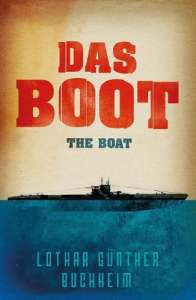
 Lothar-Günther Buchheim was born in 1918. He was 15 years old when the Nazis took power and, while attending the Hitler Youth’s meetings, where he had military training, he seized the opportunity to take photos and write articles about the activities of the organization. When World War II broke out, he was studying art, but he left his studies to become a war reporter for the regime. The Ministry of Propaganda had created military structures (called Propagandakompanie, known as PK) to train and employ war reports in the service of propaganda. These reporters would transmit information for the general public about what was happening in the front line (according to the Minister’s guidelines, obviously) via photography, cinema, and written articles.
After finishing his PK training in Potsdam, he was sent to Baule-les-Pins, 15 kilometres away from the port of Saint-Nazaire, to report about U-Boots. In the meantime, the U-96, whose Commander was Captain Heinrich Lehmann-Willenbrock, arrived there around that time and the first photos Buchheim took in the port was precisely of its return from its 3rd mission in the Atlantic, in March 1941. Both men met later and, in October 1941, Buchheim was assigned to participate in the 7th mission of the U-96 submarine. A dedicated, thorough, and enthusiastic “PK man” (as he was known), Buchheim took 5000 photos, documenting everything and everyone. The result was unique and historical. His photos were published in several newspapers and magazines, influencing many young men to enlist in the Navy as submarine crew.
The mission began in October 1941 and ended in December 1941. During those months, Lothar-Günther Buchheim lived in the submarine alongside the crew and became a great friend of Captain Heinrich Lehmann-Willenbrock and First-Engineer Freidrich Grade. Years after the war had ended, when he wrote a book about this experience, the two military officials were paramount to review the details of “Das Boot”. Although it was a novel, he wanted the story to be as authentic as possible. Freidrich Grade corrected and explained all the technical details of a submarine and Heinrich Lehmann-Willenbrock gave him all the detailed information about the chain of command and how orders were given.
The book became an international bestseller precisely due to its detailed and authentic description of how life was inside a U-Boot. It starts with a scene at a hotel, as a way to describe the military setting. This was probably inspired by what Buchheim witnessed in the Hotel Majestic, where the U-Boot officials stayed when they were not on mission. The second chapter is dedicated to the submarine itself, how it was constructed, how it operated, how people would move around performing their routines, where they would sleep and eat, how they would relate to each other. The description of each post is detailed and we get an idea of the role that each man played inside the submarine. Then, the author tells what they did when there was nothing to do. Contrary to what one might expect, this is actually very interesting due to the mastery of the narrative.
The action itself (the attack on a convoy and the attempts to escape from the British Navy) are so vivid it seems the readers are there, alongside the military personnel, feeling the same emotions. The encounter with another U-Boot in the middle of a storm actually happened. In fact, the attacks and the escape also happened, as did the stopover in the Port of Vigo and the attempt to enter the Mediterranean Sea through the Strait of Gibraltar. Impressive is also the description of being inside of a submarine during a storm. It’s something similar to being inside a washing machine.
The book was published in 1973 and in 1981 a film was released, aiming to meticulously depict the book. A documentary entitled “U-96 – The true story of Das Boot” was released in 2022 with accounts from people who were involved in the production of the film. It also includes an interview with the First-Engineer Freidrich Grade himself, the last survivor of the U-96, who was still alive at the time.
The film was faithful to the book just as the book had been faithful to reality. After watching the film, submariners were surprised at how much the film captured what they actually lived. The aim of the book’s author was to show the military’s point of view, those who were fighting the war inside the German submarines and had just on mission: sinking British ships. Some say it was an antiwar story. Regardless of whether this is true or not, the book (and the film) is a remarkable historical document, even though it is fiction.
By reading the book and/or watching the film, we learn what those German military went through during the Battle of the Atlantic. About 70% of the U-Boots’ crew died.
The book for next month will be “Le Petit Prince”, by Antoine de Saint-Exupéry.
Discover more from WORDS IN IDEAS
Subscribe to get the latest posts sent to your email.
 WORDS IN IDEAS